
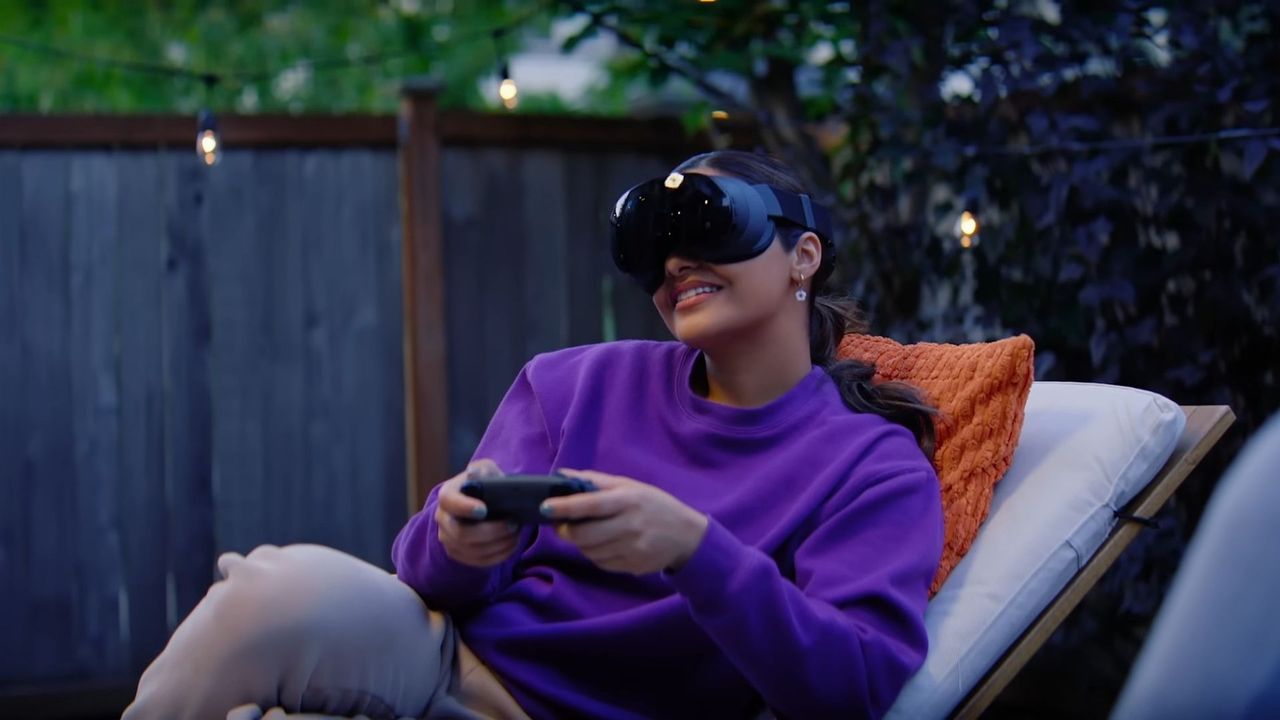
Valve has just shared a much-needed update on the arrival and pricing of its new wave of hardware. The Steam Frame, Steam Controller, and Steam Machine release date were all slated for an early 2026 window, but it's just been revealed in a blog post that the brand isn't ready to share pricing and specific launch details yet due to the ongoing RAM supply shortages and price apocalypse.
This knock-on effect was expected by many, I think. While it might not be having such a big impact on the VR headset world, the AI-induced memory and storage market upheaval is projected to continue until at least 2028, and it's already wreaking havoc on the gaming PC world. The latest rumors even suggest that the next generation of Sony and Microsoft consoles could be delayed as a result.

All that to say, we still don't know a specific price and release date for Valve's Steam Frame, but we do know the brand is still on track to deliver a launch in the first half of 2026.

I think there's nothing more vital for the Steam Frame's success than its price. Meta may be taking a backward step from the VR gaming sphere, but its Quest 3 and 3S devices are still some of the most feature-rich and affordable headsets ever made. That gives the Steam Frame some serious competition out of the gate, and by all accounts, Meta has been selling the Quest 3 headsets at a loss in an attempt to get the Metaverse within people's grasp until now.
That likely makes things very tricky for Valve when it comes to pricing the Steam Frame, even without RAM inflation to contend with. But despite everything, part of me still thinks that if the chips fall correctly, Valve's headset could have the same impact on the VR gaming market as the brand's Steam Deck had on the handheld gaming world back in 2022.

Now, before you call me a Valve shill, hear me out. I'm aware that the VR market is a volatile one, as we've seen already in a still-young 2026 with Meta laying off a big chunk of its Reality Labs workforce. But I do think the VR market is in a similar place to the handheld market back in 2021.
In recent times, you've had brands like Apple, PlayStation, and Samsung show that there is a mainstream demand for this type of technology, but its pricing is a continual barrier. Meta comes along and makes things more affordable but with a pretty keen eye on exclusivity for its platform, and a larger audience suddenly appears. For me, that's like Nintendo laying the groundwork for a revitalised handheld market with the original Switch.
What happened next? Valve came along and made that type of gaming even more appealing to PC gamers with the Steam Deck, pricing it accessibly, and providing an alternative to the drawback of the Switch - its Nintendo exclusivity.

VR isn't as well-established as handheld gaming, but I think there are a lot of similarities here that Valve has likely picked up on.
You may be reading this thinking, "but every other news story about VR talks about how 'the death of VR gaming' is nigh". Funnily enough, similar things were said of handheld gaming before the Switch and Steam Deck came along. When the 3DS was discontinued, and PlayStation abandoned the Vita, everyone was hearing death knells.
Admittedly, the catch with all of this was that the Steam Deck was priced so affordably that it enticed people to try out a form of gaming they hadn't properly dabbled in for years. But it paid off; Steam Deck became the face of an emergent handheld PC market long after its release. We can see that Valve priced its handheld correctly because more premium options like the Rog Xbox Ally X feel completely unobtainable for most players.
While Nintendo laid the groundwork, Steam Deck reignited the current mass appeal we're seeing for best gaming handheld scene we see today, and the more I hear about the Steam Frame, the more excited I get about history repeating (if it's priced fairly).

In its new hardware blog, Valve shared updated pages that give us more details about the Steam Frame, Steam Machine, and Controller. The headset's page goes into detail about the differences between foveated rendering and streaming, gives us a closer look at the pancake lenses and speakers, and even details how its infrared LEDs can make tracking better in low-light scenarios.
Its controllers have TMR thumbsticks and a split-pad approach, which means playing non-VR games is going to be a big part of the headset's appeal. Not to mention, Steam has the biggest library of VR titles to support the device as soon as it launches - no problems with a lack of support here like there are with PSVR 2.
But once again, this all hinges on pricing. People are so quick to dismiss VR technology at this point that as soon as the Frame is outwith the reach of most people, it's going to be another HMD that never lived up to its potential because it won't reach the faces of enough gamers for the Steam Deck bug to spread.
No, that wasn't a subtle dig at the Apple Vision Pro.
As a VR gaming fan, I'm really excited for the arrival of the Steam Frame. With Meta seemingly withdrawing from the space (despite what its execs might be saying), Steam Frame could still become the headset to beat in the next five years.
For more on VR, take a look at the best Meta Quest accessories, and for more on RAM shortages, take a look at the best RAM for gaming, and the best gaming PCs.