
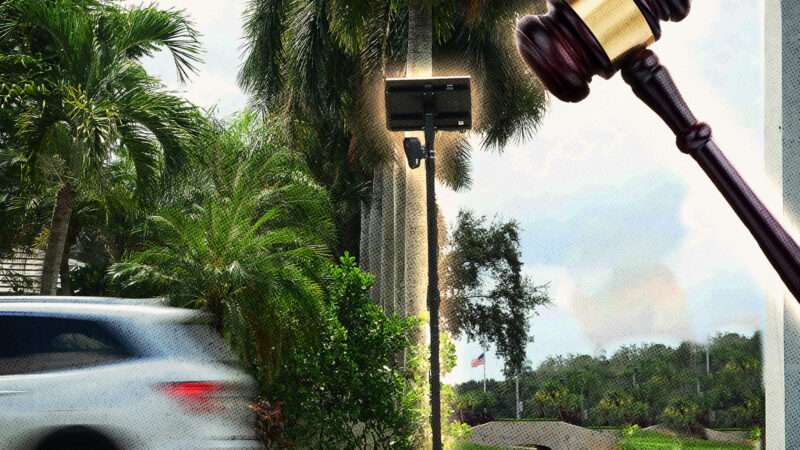
Last week, a federal judge in Oklahoma ruled that querying a database of information collected by automated license plate readers (ALPRs) counts as a search under the Fourth Amendment. As Reason's Elizabeth Nolan Brown noted, that decision was welcome news for critics who argue that warrantless access to ALPR data threatens the privacy of innocent motorists across the country. But a decision that a California judge issued the following day, which dismissed a lawsuit arguing that San Jose's ALPR network violates the state constitution, is much more typical of litigation in this area, which so far has been almost uniformly unsuccessful.
The contrast between those two decisions suggests the challenges such lawsuits face as judges grapple with the implications of Supreme Court precedents involving cellphone location data. Although the relevance of those precedents might seem obvious, state and federal courts generally have perceived important differences between cellphone tracking and police use of roadside cameras that record images of passing cars.














