
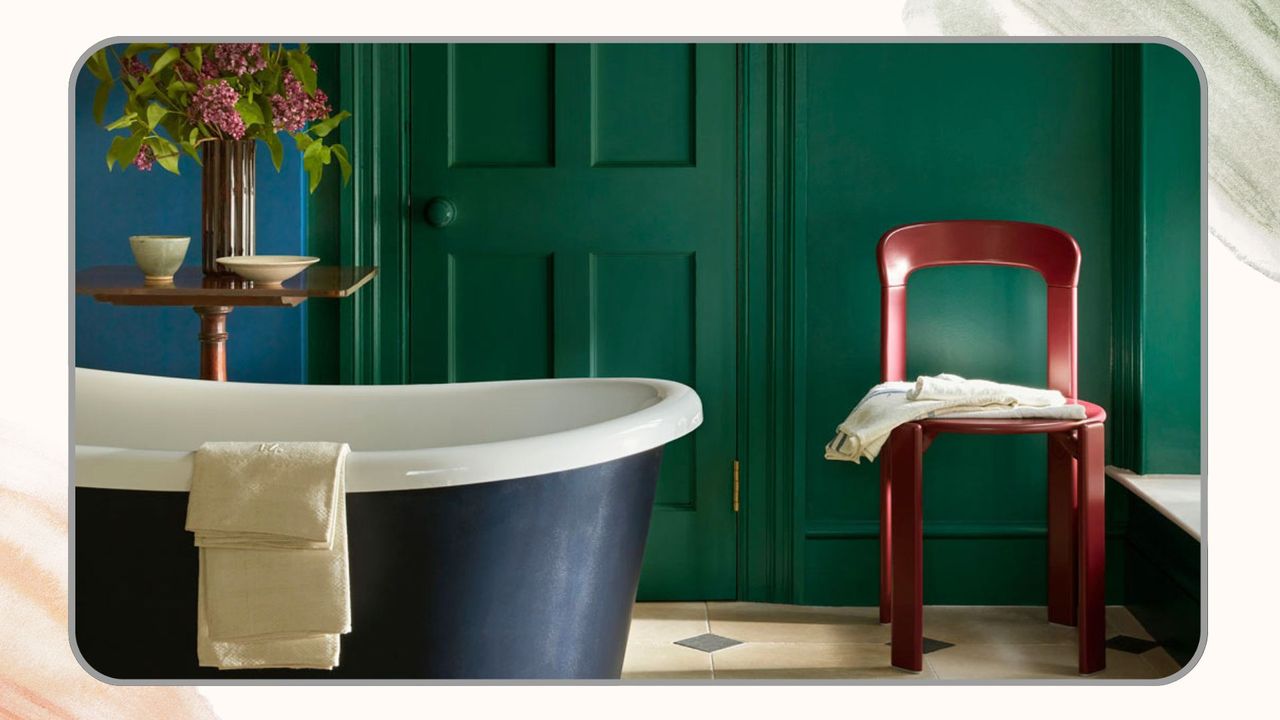
Decorating any small space requires a considered approach if you want to avoid it feeling oppressive or seeming smaller than it already is, but that doesn't mean you have to play it safe when it comes to colour ideas for small bathrooms.
If your bathroom is petite, view this as your opportunity to create a room that showcases your individual style. Colour is the ideal way to do this and add personality to the space.

Our round-up of expert-approved ideas provides plenty of inspiration to get started.
9 bold & beautiful colour ideas for small bathrooms
"With current bathroom trends leaning towards personality and character, a small bathroom becomes an ideal place to be more expressive and confident with colour," says James Mellan-Matulewicz, creative director and interior designer at Bobbi Beck.
"Bold colours can work extremely well in small bathrooms and are often better suited to compact spaces than larger ones."
Here are 12 beautiful ideas that show compact doesn't have to mean conventional when it comes to bathrooms...
1. Use colour with confidence

Every single designer we spoke to agreed that using bold colours in a small space is a fantastic idea, but they were all also keen to highlight that a half-hearted approach won't work here.
"Bold colour can work extremely well in a small bathroom, but it has to be handled with confidence," picks up Camilla Masi, interior designer at Otto Tiles. "Smaller spaces actually allow you to be more expressive, because the room is experienced as a whole rather than in fragments. The key is committing to the colour, rather than using it tentatively."
This means considering colour or tile drenching as a way of injecting drama, or choosing a bathtub or vanity unit in an adventurous shade that you love – white is definitely not the only option these days.
2. Embrace a lack of natural light

Sometimes, rather than trying to distract from the small proportions of a space or downplay a room lacking in natural light, it is actually better to sink into and embrace these unavoidable features.
This can mean selecting deep, moody shades that wrap the space up in a way that feels cosy and warm. Plus, these kinds of colours look great when lit up using layered lighting, which includes well-placed wall lights.
"Dark colours, often the realm of the bold and brave, can be an excellent choice for a small room, especially if you are looking to create a cosy and intimate scheme," says Patrick O’Donnell, brand ambassador at Farrow & Ball.
"Even nuanced blacks such as Railings, our blackest blue, can be super-smart. Dark shades are surprisingly effective in naturally poorly lit rooms, too, as darker walls tend to recede. They can also create a wonderful backdrop for pictures on the wall, allowing them to register in a new light."
3. Create a different space from the rest of your home

There is much to be said for using a cohesive colour scheme when trying to make a small room look bigger. However, when it comes to small bathroom design, it can actually be a better idea to introduce an element of surprise.
"Small bathrooms are often forgotten about, but possibly the best place to have some fun and use bold colours," says interior designer Sandra Flashman of Sandra Flashman Studio. "Use a colour opposite to the rest of the home, to give a nice contrast and eye-popping moment," she says.
This is also the ideal treatment for cloakrooms, particularly those leading off an otherwise neutral hallway or landing, where guests will really benefit from the unexpected pop of colour that awaits.
4. Use rich shades for a cocooning effect
This is an idea that works just as well in small bedrooms and living rooms as it does in bathrooms. Rich, deep jewel-like tones are perfect for creating a space that feels like it is there to give you a great big hug.
“Small bathrooms are the perfect place to be bold with colour. Because the space is compact, richer shades like deep blues, moss greens or warm terracotta can actually feel cocooning rather than overwhelming," explains Cathryn Sanders, head of creative at Earthborn Paints.
"Don’t be afraid to colour-drench walls, ceilings and woodwork, such as doors and skirting, as it helps to blur boundaries and makes the room feel more intentional."

Ruth Mottershead, creative director at Little Greene, has some more advice for those keen to use these rich shades. "If you want to balance both bold colour and a restful space, green and blue are colours commonly found in nature, evoking the tranquillity of forests, fields, skies and oceans," she explains.
"This natural combination can bring a calming and soothing effect to interiors, making spaces feel more serene and connected to the outdoors. This sense of relaxation is perfect for a bathroom, where these colours can be used in a colour-drenching scheme to help to create a calming retreat whilst still delivering design impact."
This is such a confident shade that really shows you have committed to using a bold colour – it also pairs really well with both neutral shades and deep ocean blues.
One of Dulux's Rhythm of Blues trio for 2026, this shade is the perfect night sky blue and is sure to bring a sense of balance and tranquillity to your bathroom scheme.
Conjuring up a sense of the Mediterranean, this terracotta shade will instantly create a warm, inviting vibe in the bathroom – it works surprisingly well with inky blues too.
One of the biggest bathroom renovation mistakes people make is using the wrong type of paint. You need to choose one that can withstand high levels of moisture and fluctuating humidity levels. If you are decorating a family bathroom you should also look at how easy the paint is to scrub clean.
5. Add warmth with grounding, earthy hues

As interior paint colour trends go, brown is definitely a shade enjoying huge popularity right now – and the good news is that it is a truly versatile shade that works brilliantly in boutique-style bathrooms.
"Browns as a colour family are making a comeback and will make a beautiful, elegant statement in any room, but especially smaller rooms," reveals Patrick O'Donnell. "They add warmth and work effortlessly with pinks, greens and blues.
"Earth tones offer comfort and gentle warmth without creating an overpowering statement, ultimately creating a tranquil space," continues Patrick.
A beautifully rich brown with lots of black in the mix, this is the perfect shade for creating a cocooning effect in a small bathroom in a way that feels soft as opposed to overwhelming.
If you want to feel utterly enveloped in your bathroom, this is the shade for you. Used all over, this would create a sumptuous finish — particularly when lit with wall sconces.
If you fancy combining a deep earthy brown with something a little lighter, this cafe au lait shade is perfect – with stony undertones that keep it nice and warm.
6. Try 'tonal decorating'
The concept of tonal decorating is actually a really useful one to master, as it works just as well in small spaces as in larger ones. Kitchen trends these days are all about open spaces that incorporate living areas and tonal schemes really can come into their own here.
"Using strong shades in a small bathroom is less about holding back and more about exerting a little control," explains James Mellan-Matulewicz. "When applied thoughtfully, bold colours can feel immersive and practical rather than overwhelming. The key is cohesion, making the most of the space available and choosing a tone that can work consistently across the room.
"One effective approach is colour blocking or tonal decorating," continues James. "Applying a bold colour throughout a small space helps everything feel connected and unified.
Painting the walls in a single tone sets a strong foundation for the space. Carrying that colour through in matching or closely related tiles or bathroom cabinetry helps the room feel balanced and visually complete."
7. Introduce pattern for visual movement
Where once wallpapering a bathroom was seen as a terrible idea, due to the effect moisture-laden air could have on the papers of old, new developments in this area mean it is now a brilliant way to introduce colour and some really eye-catching effects into even the tiniest of spaces.
"Wallpaper is a really effective way to introduce bold colour without overpowering a small bathroom," explains James Mellan-Matulewicz. "Pattern and movement help break up large areas of solid colour, adding personality and preventing the space from feeling flat. This creates a layered, intentional look rather than one that feels overly saturated."
"To bring character to a bathroom, consider adding a textural element through the use of wallpaper," agrees Ruth Mottershead. "Our wallpapers can be used in well-ventilated bathrooms on walls that do not come into direct contact with water.
Select a design that can be used alongside complementary paint shades for a coordinated finish and be bold. Bathrooms are spaces where you can indulge in strong patterns and colour without upsetting the flow of your overall interior design.”

8. Be thoughtful with your colour combinations
Understanding the colour combinations that work best not only in small spaces, but also in bathrooms in general, will ensure that you can avoid creating a room that feels cramped, as well as ensuring it feels warm and welcoming. But which combos did the experts we spoke to recommend?
"Use variations of the same colour family, for example, layering different greens with subtle shifts in tone (a green paint with a green Zellige tile, or a green-toned marble, for example) creates cohesion and calm," advises Camilla Masi. "Pairing bold colours with warm, natural materials such as timber, brushed metals or stone also helps ground the scheme."
"I recommend pairing fern green with warm oak, as the dark green can act as a statement, whilst the wood tones add softness, preventing the space from feeling too clinical," suggests Chole Barrow "If going dark feels intimidating, a saturated sage green pairs beautifully with brass fittings, giving your bathroom that all-important luxe look."
"Colour combinations such as teal and charcoal work especially well in bathrooms, creating contrast without feeling harsh," adds James Mellan-Matulewicz. "Teal adds a beautiful richness, while charcoal grounds the space and prevents it from feeling too bright or cold. In fact, teal continues to rise as a key interior colour trend for 2026, making it a strong choice for bathrooms. Allowing teal to take the lead while charcoal plays a supporting role helps keep the space balanced. Used this way, the tones blend seamlessly, giving small bathrooms character without overwhelming the room."
9. Don't discount colour drenching

Colour drenching is still a huge trend. It basically involves using a single shade throughout a space – walls, ceilings, skirting and woodwork, the lot. While it can seem scary, this actually works better in a small space than in a large one.
"Carrying the same colour across walls, floors and even ceilings removes visual breaks and makes the space feel more intentional," explains Camilla Masi. "I suggest this as a way to stop bold shades from overwhelming a small bathroom – think about continuity and finish."
Alternatively, you might like to get up to speed with the term 'double drenching' where two shades are used throughout – pink works particularly well here, according to Ruth Mottershead.
"In a double drenching scheme, using two or more related colours with differing undertones on every paintable surface, pinks in different hues will work together to create an inviting atmosphere that feels both sophisticated and calming," she explains. "Pink is a fantastically versatile choice that will bring a sense of playfulness and softness to a bathroom."
Don't, in your quest to find bold colours that work in your small bathroom, overlook the importance of the paint finish you choose – this can have an enormous effect on the end result.
"Matte or softly textured finishes are really important," points out Camilla Masi. "They diffuse light and soften the impact of stronger colours."
That said, there is much to be said for combining these soft matte finishes with surfaces that add a little sheen, as Chloe Barrow explains. "Use glossy tiles or large mirrors to help reflect light around the room, keeping the space open and relaxing rather than busy.”