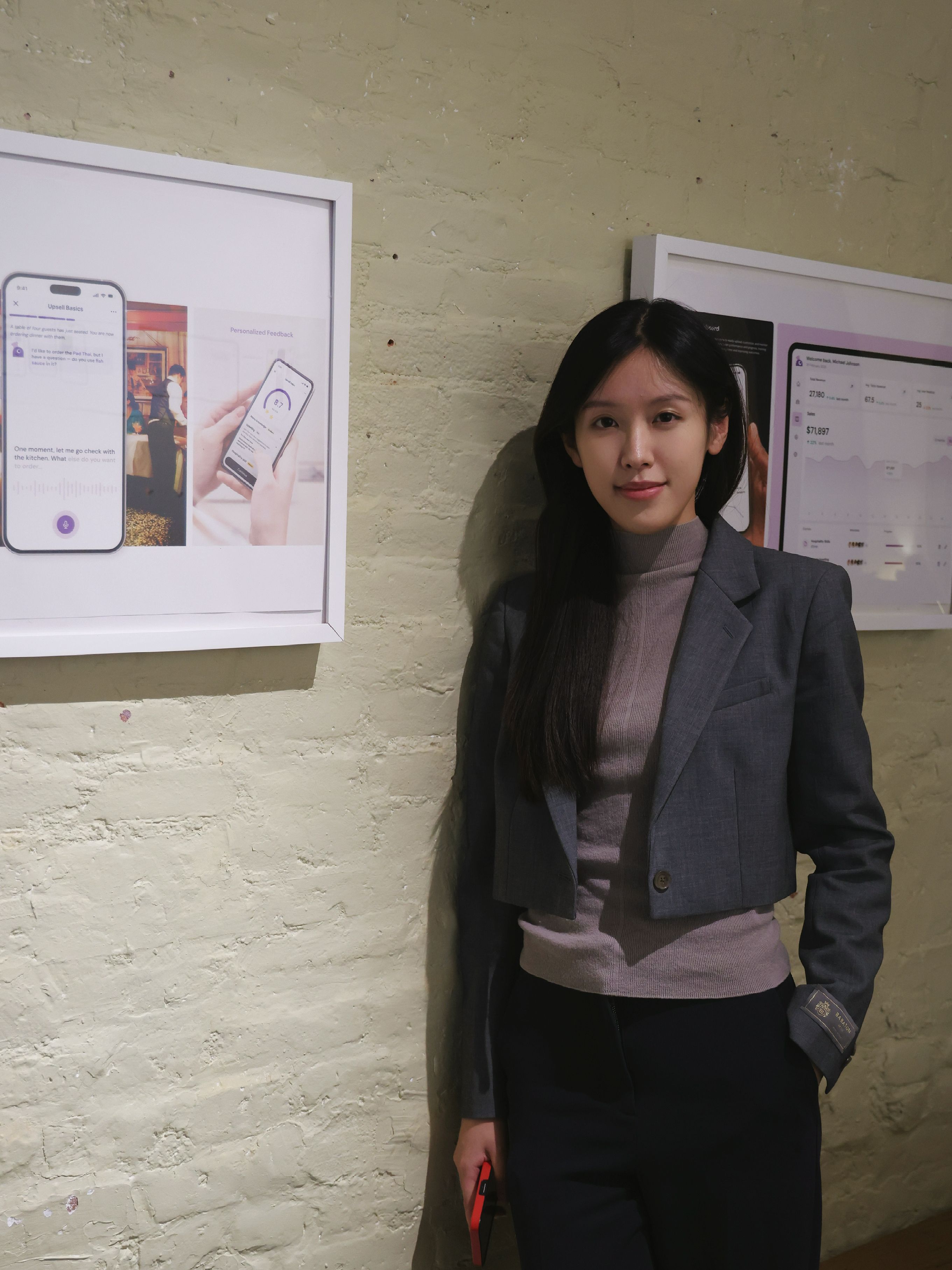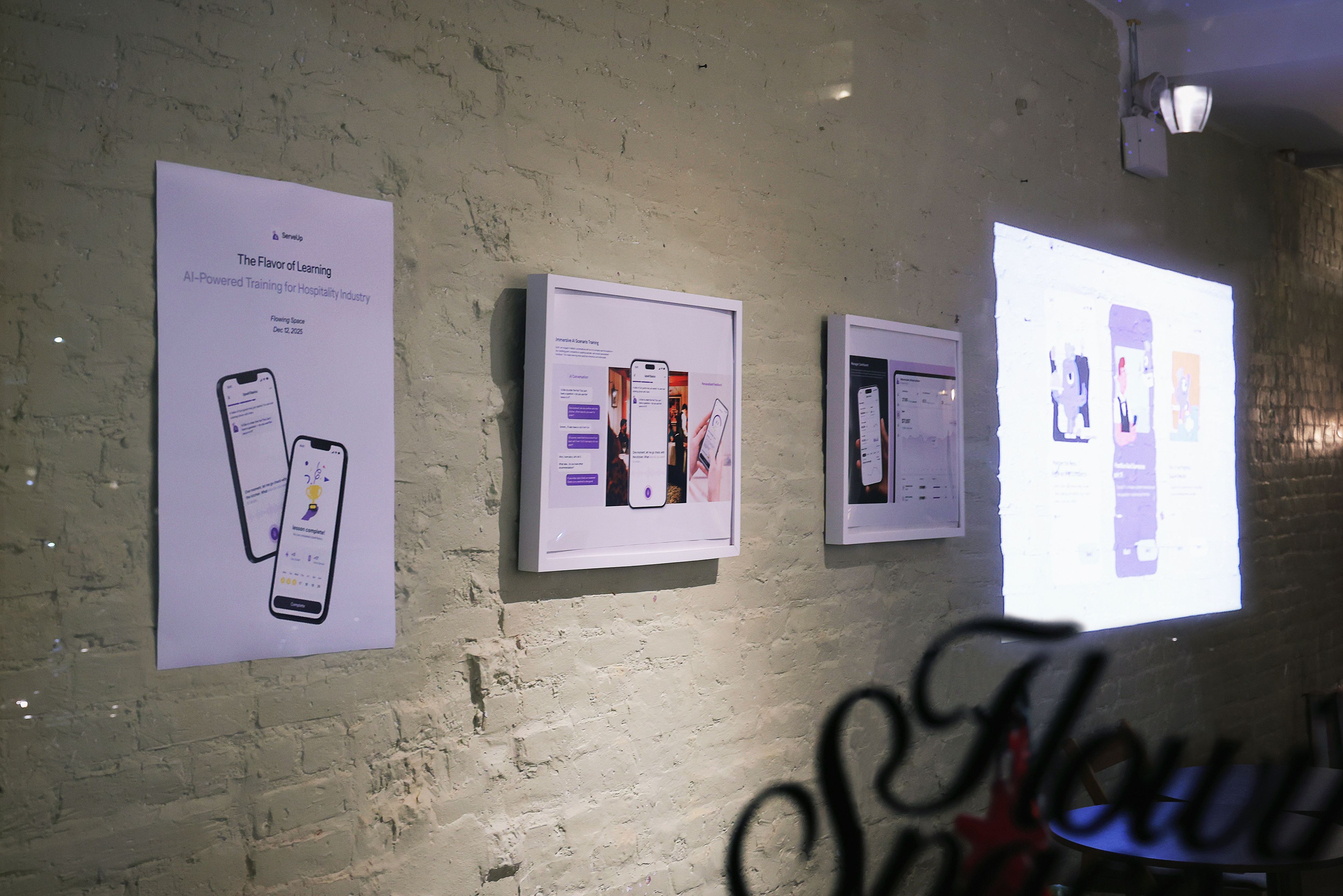
An Immersive Exhibition Redefining the Learning Experience
As 2026 begins, the design world is showing new vitality and trends. Among them, an immersive experience exhibition titled "The Flavor of Learning" held last month at Flowing Space Gallery in New York has attracted particular attention. Opening on December 12, 2025, the exhibition centers on ServeUp, an AI-driven gamified training platform. It was created by three co-founders of the platform, including lead designer Yuqing Zhang. At a time when the restaurant industry faces pressures such as high employee turnover rates and time-consuming training processes, ServeUp offers a refreshingly human-centered solution. It abandons bulky paper manuals and tedious training courses, transforming professional learning into a series of intuitive micro-lessons consisting of conversational AI, real-time feedback, and engaging exploration.
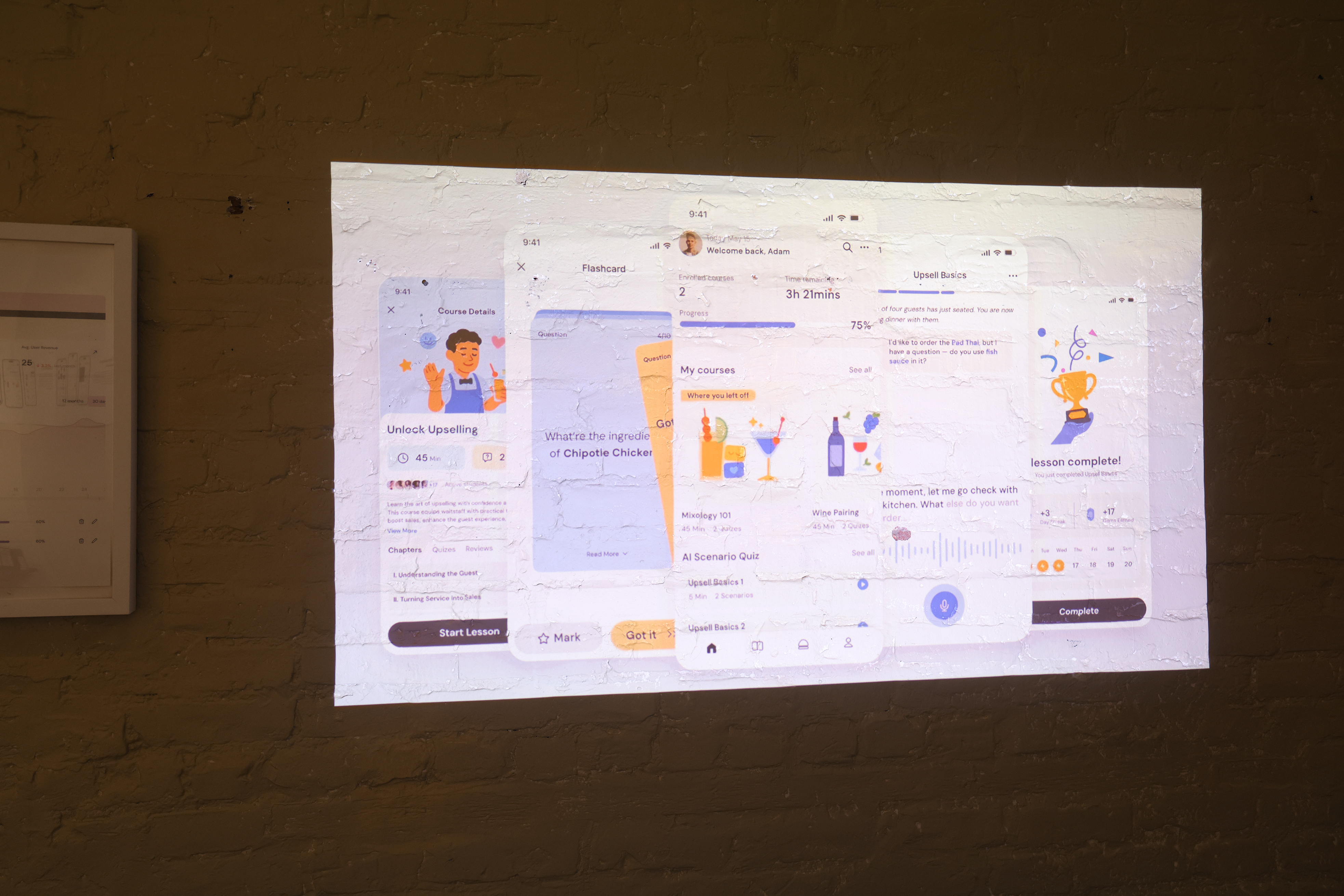
Upon entering the exhibition space, visitors feel as though they've stepped into the world of the ServeUp platform. The exhibition reveals in detail the design process of this platform: vibrant interface design, vivid animation, and the iconic purple monster mascot. This charming virtual guide leads employees through various learning modules in a warm and humorous way. Through interface displays, interactive demonstrations, and behind-the-scenes design materials, "The Flavor of Learning" intuitively presents the real challenges facing restaurant industry training today, such as lengthy training times, inconsistent instruction, and easily outdated materials. In response, ServeUp combines micro-learning, gamification mechanisms, and AI-driven personalization to create an attractive, fair, and efficient training system that benefits both frontline employees and managers. Notably, ServeUp not only focuses on training efficiency but also emphasizes sustainability and social impact. By reducing dependence on paper materials and expanding access to quality training resources, this platform creates a more inclusive and environmentally conscious future for the service industry. The entire exhibition is set in Flowing Space's serene and elegant tea room, creating a distinctive atmosphere that invites people to imagine an ideal workplace environment no longer dominated by stress and repetition, but filled with clear guidance, encouragement, and joyful learning. The exhibition poses a thought-provoking question: What if employee training could be designed as a caring experience? Through this experience, visitors see that thoughtfully designed solutions combined with emerging technology can not only change work processes and efficiency, but also enrich the emotional experience of daily work.
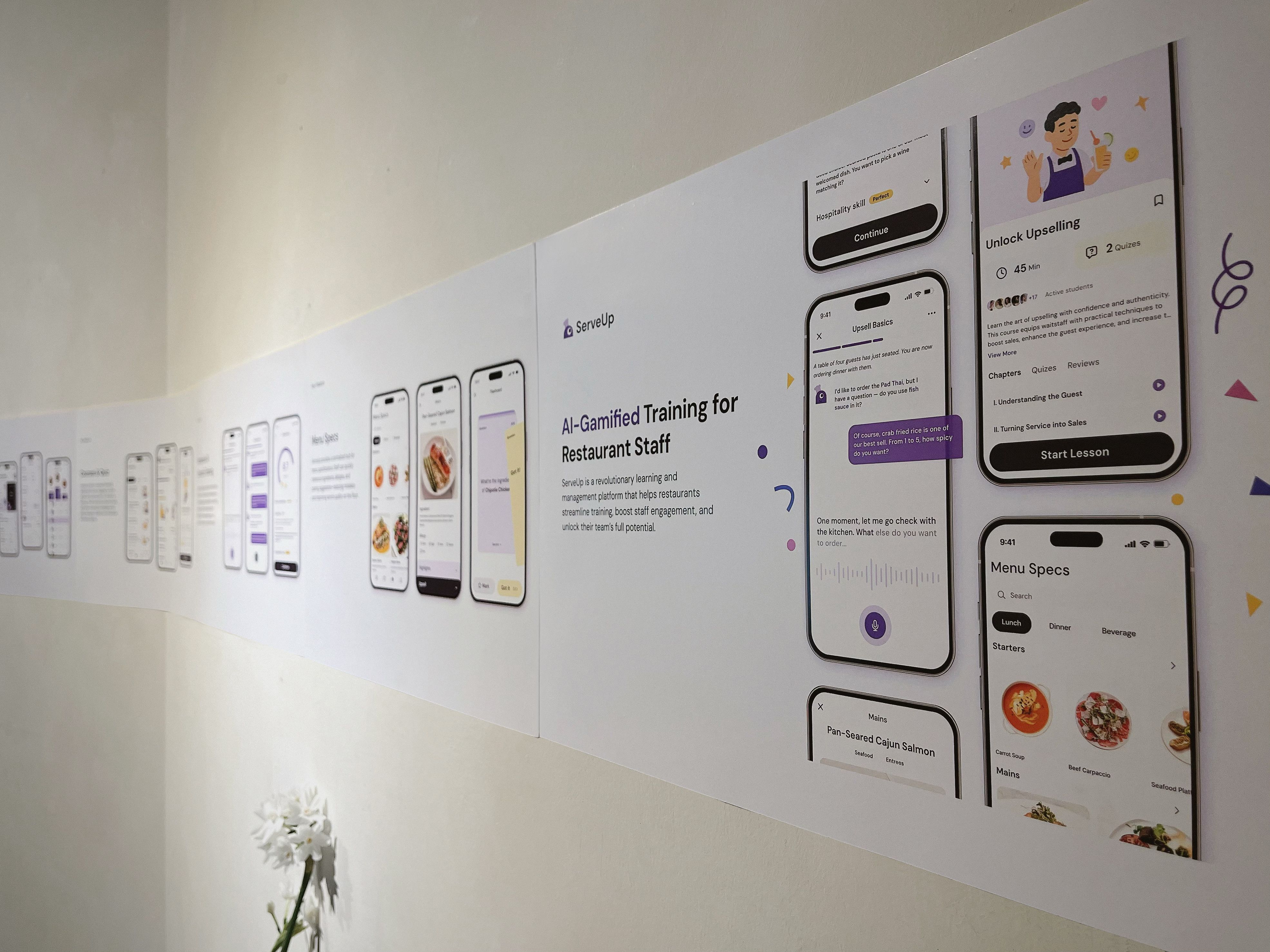
Deep Audience Engagement and Enthusiastic On-Site Response
During the exhibition, "The Flavor of Learning" attracted a diverse audience, including designers, educators, technology professionals, students, and the general public. Many visitors lingered in the interactive areas of the exhibition hall, participating in various experiential activities for extended periods. This phenomenon indicates that audiences were not merely passive viewers of the exhibits, but were deeply engaged in interactive exploration. Industry professionals, especially those in user experience, product design, and educational training, showed strong interest in how the project transforms abstract AI concepts into tangible learning experiences.
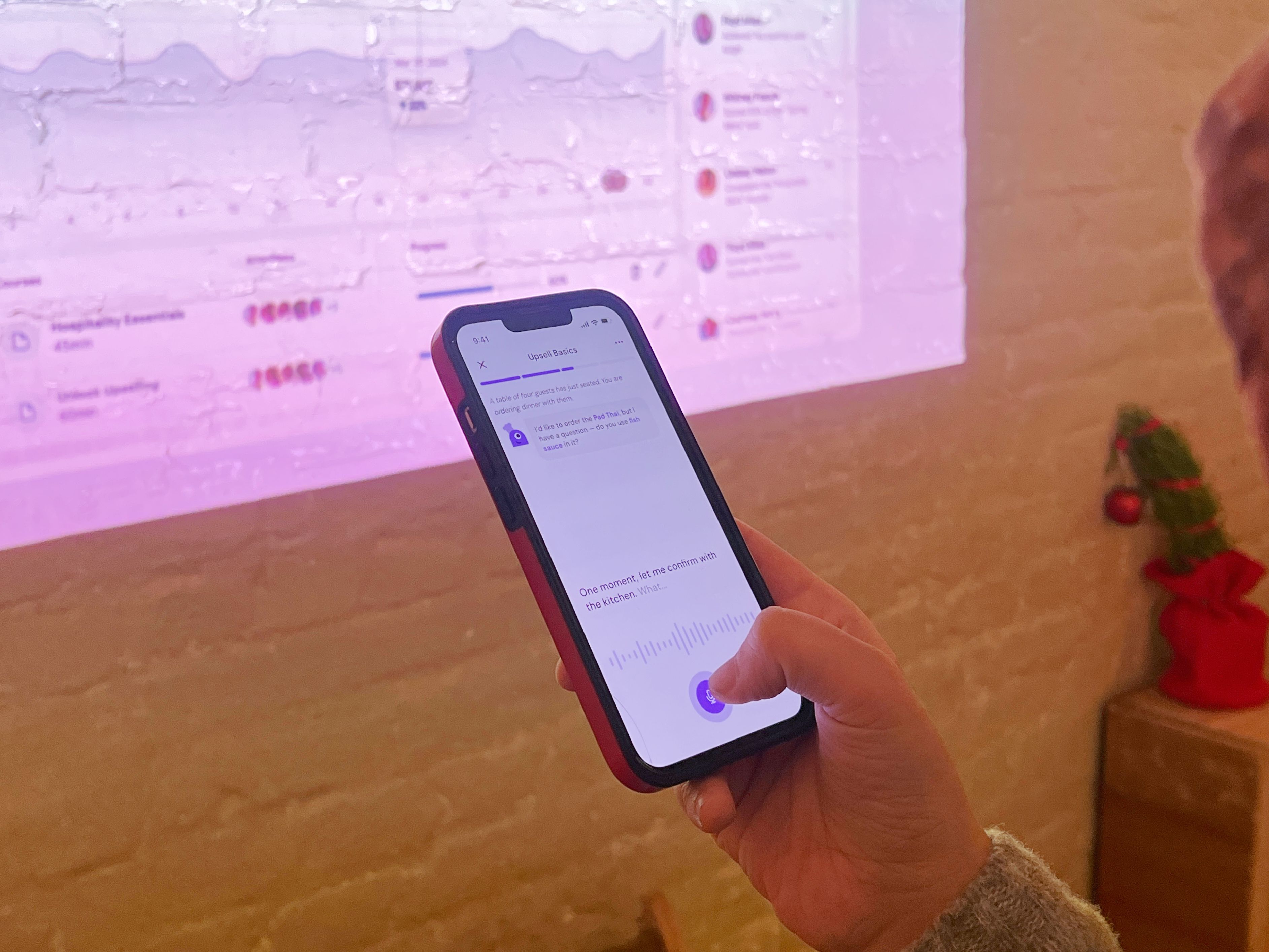
A highlight of the exhibition was the live interactive demonstration of the ServeUp platform. Visitors could personally operate this AI-driven training system: they could simulate real restaurant work scenarios, learn how to respond to various service challenges by interacting with conversational AI, and receive real-time feedback from the system. Many participants said this immersive demonstration experience felt more like "learning by doing" rather than traditional rote training. This point fully highlights the value of experiential design in educational tools. As one visitor who experienced the ServeUp demonstration commented: "The whole process made me feel like I wasn't passively receiving training, but actively participating in a gamified exercise. This approach is much more interesting than rigid courses and left a deeper impression on me."
"Learning Can Be Warm": Human-Centered Design Sparks Industry Reflection
Audience feedback repeatedly mentioned the clarity and approachability of the exhibition's narrative. The curatorial team did not limit the focus to the technology's cool features, but skillfully presented AI as a supporting tool within a carefully designed learning system. Many visitors admitted that this exhibition made them rethink the relationship between training and workplace technology. A visitor from the restaurant operations field said: "This exhibition completely changed my view of employee training. Here, learning no longer feels like an obligation; the entire process is filled with a sense of support and empowerment." A UX designer noticed the fusion of technology and emotion: "What impressed me was how smoothly the AI technology was integrated. It didn't overshadow everything, but enhanced the overall experience. This design made a complex system approachable and human." An education professional evaluated from a broader perspective: "This isn't just about the restaurant industry. This actually provides a model for how to reimagine workplace learning across all industries." These authentic audience voices indicate that human-centered design has resonated across fields, allowing people to see more possibilities for future training methods.
As the principal designer of ServeUp, Yuqing Zhang's outstanding performance in this exhibition once again proves her leading position in the industry. She excels at integrating cutting-edge technology with human-centered design, solving real-world problems with clear vision and empathy. Notably, the innovative design of the ServeUp project has received international recognition in 2025, winning multiple honors including the MUSE Design Gold Award, French Design Award, and International Design Awards. In September 2025, Zhang showcased ServeUp on a global stage at the AI for Humanity Spotlight exhibition—a centerpiece of the GOSIM Hangzhou summit. Her selection for this prestigious spotlight underscored how her design philosophy aligns with international efforts to leverage AI for the greater good. As an outstanding representative among product designers, Yuqing Zhang has been exploring how to create intuitive, personalized, and emotionally resonant product experiences through AI and interactive design. The success of "The Flavor of Learning" exhibition not only gives the public an opportunity to appreciate her design vision and work, but also sets a new benchmark for the creative field in 2026, one that merges technology with humanistic care. Looking forward, the insights brought by this exhibition will continue to influence the design and education fields. When design is human-centered and technology is infused with emotion, the ways we work and learn can be redefined. As 2026 unfolds, "The Flavor of Learning" has undoubtedly become a vivid footnote to the creative industry, indicating how design can use new technologies like AI to bring more warmth to people's learning and work experiences.