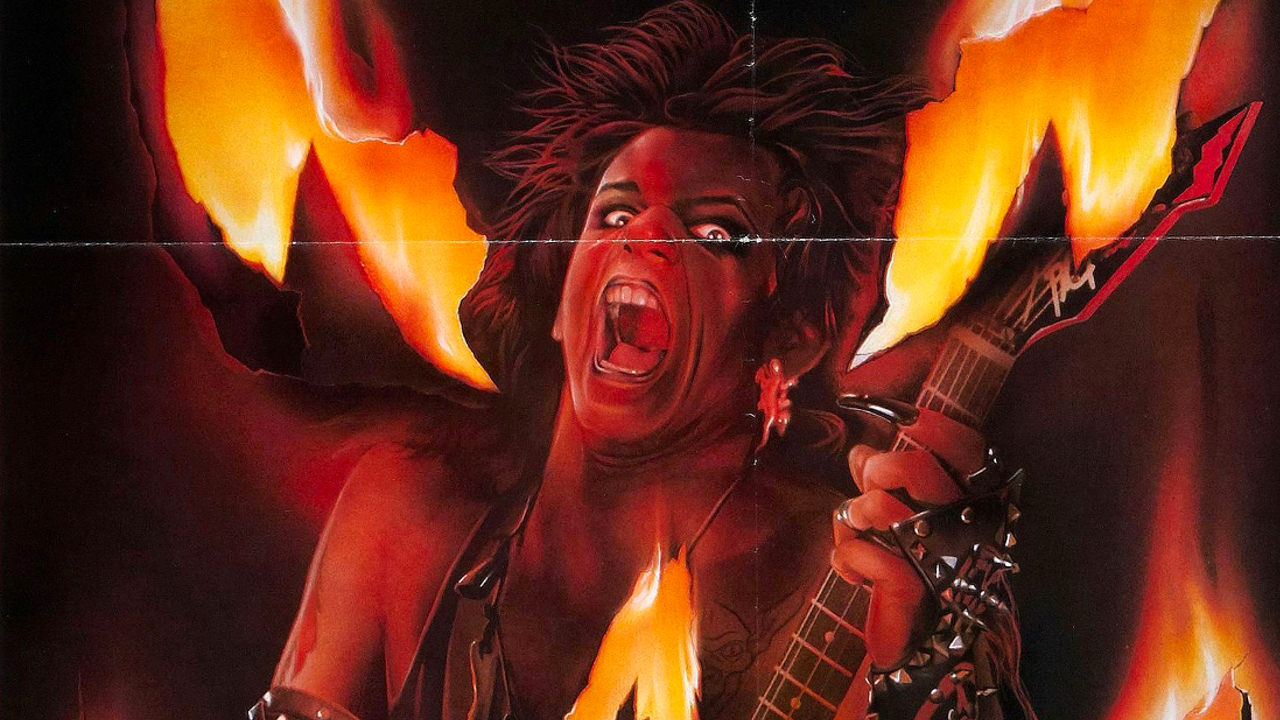
Screenwriters have always gleefully exploited social anxieties to ratchet up the tension in horror movies. George A. Romero’s landmark 1968 zombiepocalypse, Night Of The Living Dead, famously drew parallels to the racism and violent social unrest of the day, for example. But, both before and since, scores of horror films have demonstrated that an era’s greatest cultural fears can inspire some bloody good movies. Across the US in the ’80s, talk show hosts, tabloids, televangelists and the self-appointed moralists of the day declared all-out war on what they perceived as an imminent threat to American decency: heavy metal.
Metal certainly wasn’t the only bogeyman of the 80s, but it was easily the most captivating, with an army of leering, painted and highly-sexualised musicians relentlessly beamed into households across the globe (thanks, MTV!). Bands like Mötley Crüe, Poison, W.A.S.P., Skid Row and others did little to downplay the condemnations, raising their “sex, drugs and rock ’n’ roll” ethos to heroic new levels. Baseless rumours of Satanic cults committing human sacrifice and ritualistic sexual abuse fuelled the now-debunked phenomenon known as the Satanic Panic, with metalheads accused of being the Dark Lord’s most committed emissaries. In response, then-Senator Al Gore’s wife Tipper co-founded the Parental Music Resource Center (PMRC), which advocated for aggressive censorship of metal and hip hop. Their efforts mostly included the arbitrary inclusion of parental warning labels on albums that they deemed morally offensive.