
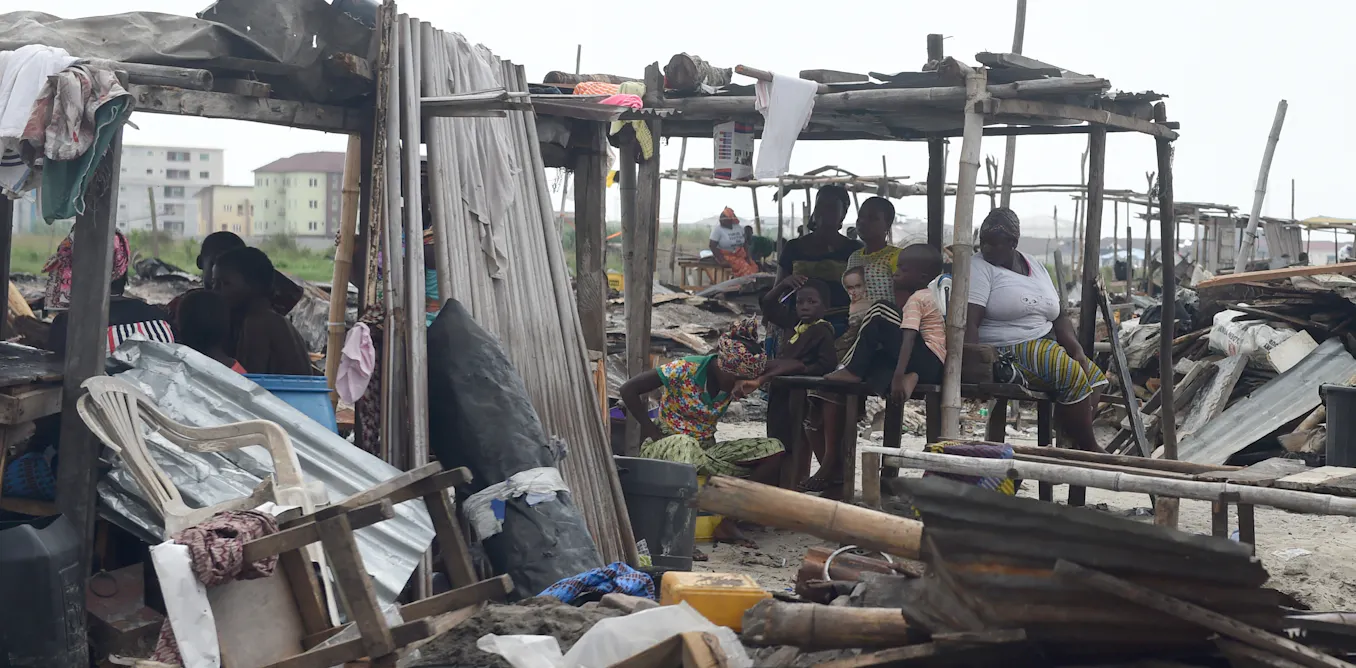
In a waterfront settlement in Lagos, Nigeria, I watched from the shoreline as two men worked a stretch of lagoon from their canoe. One held the boat steady. The other dived underwater a few metres, then surfaced with a bucket full of sand, emptied it into the canoe, and went under again for more. They did this for hours, collecting as much sand as the canoe could hold without sinking before returning to shore.
That sand is sold to households and building sites across Nigeria’s largest city, including neighbourhoods much wealthier than the one the divers live in. It gets packed around foundations and under floors to lift land and structures above water. In a city where more than 40% of the surface is water or wetland and climate change is increasing flooding, sand is a flood defence.












