Get all your news in one place.
100's of premium titles.
One app.
Start reading
The Times of India
The Times of India
World
TOI World Desk

Deep beneath New Mexico, an isolated cave microbiome contains bacteria resistant to multiple antibiotics, suggesting resistance predates modern medicine

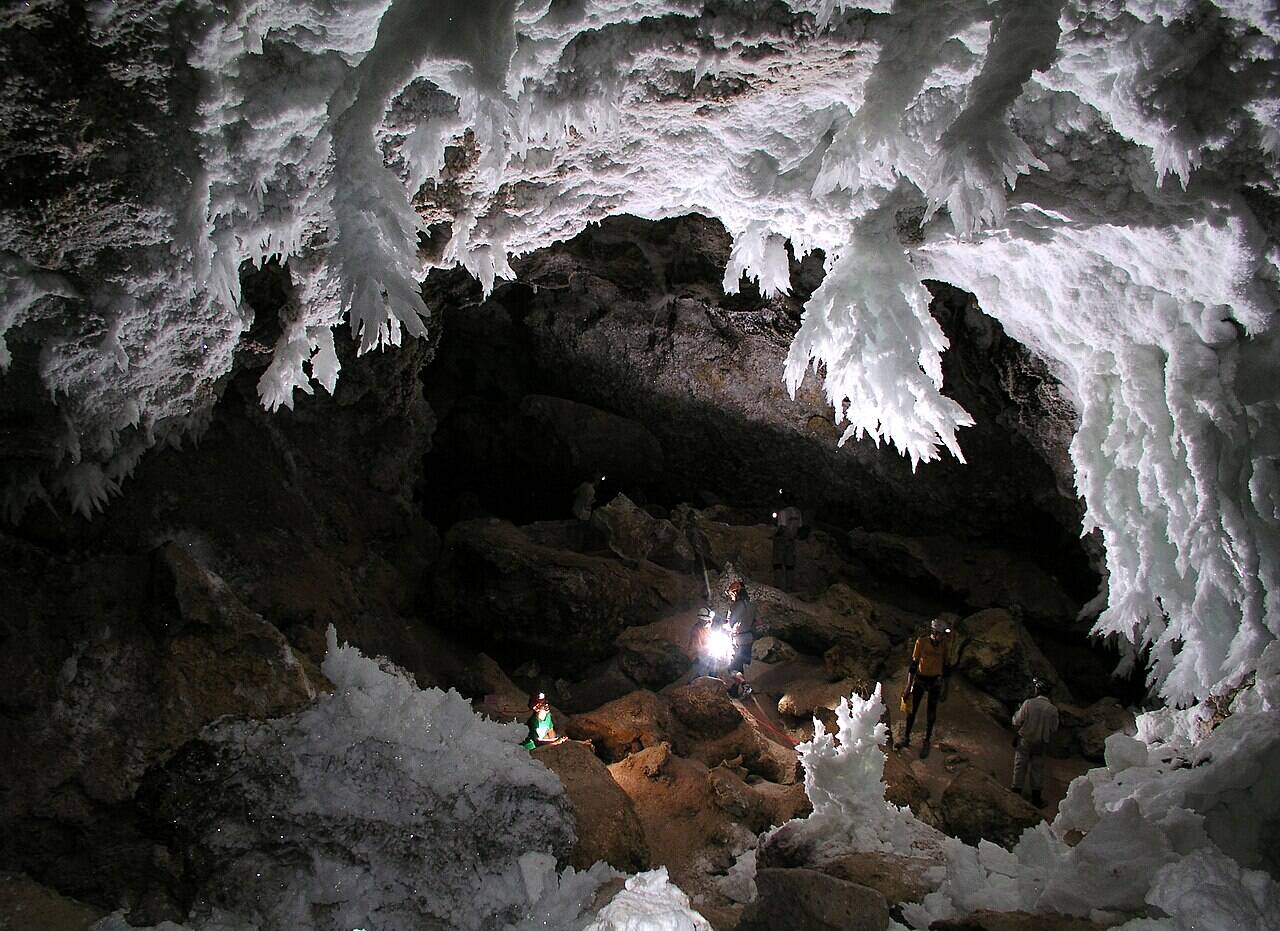
Deep beneath Carlsbad Caverns National Park in New Mexico lies Lechuguilla Cave. Known as Lechuguilla Cave, this enormous labyrinth stretches hundreds of feet deep within the rocky Earth's crust, through dark passages and fragile crystal formations that have remained undisturbed for millions of years. According to the study Antibiotic Resistance Is Prevalent in an Isolated Cave Microbiome , for about four to seven million years, large sections of the cave have remained cut off from the outside world. There is no light here, no rainfall in its deepest chambers, and no evidence that people had previously entered this area.

Get breaking news anytime, anywhere. Download the TOI app now!

When microbiologists entered these sealed chambers to collect samples, they made a discovery that deepened scientists’ understanding of antibiotic resistance.

The study suggests antibiotic resistance is not only a modern phenomenon driven by antibiotic use. Rather, it may be an ancient survival strategy that predates modern antibiotics.

For the study, researchers sampled the cave’s microbiome, which had been isolated for over four million years. From more than 500 unique cultures, they randomly selected 93 bacterial strains to test. They found that some strains resisted 14 commercially available antibiotics, including daptomycin, and identified enzyme-based resistance to macrolides, along with a novel macrolide kinase and an inducible daptomycin hydrolase.

Secrets hidden beneath the desert rock

To collect the bacteria, scientists targeted pristine, undisturbed chambers far from known entryways. They studied isolated chambers in Lechuguilla Cave with no signs of human presence, such as scuffs or footprints, indicating they were untouched by people. The chambers are sealed off, which likely limits outside contamination.

When researchers screened 93 bacterial strains from the isolated cave against 26 distinct drugs, every single isolate proved resistant to at least one antibiotic class, with most showing resistance to multiple classes. Analysis of the Gram-positive bacteria revealed that, on average, roughly 70 per cent of the strains were resistant to three to four distinct classes of antibiotics. While some strains were resistant to last-resort drugs like daptomycin, they remained sensitive to synthetic drugs like ciprofloxacin and linezolid.

Because these microbes were isolated millions of years ago, their resistance likely evolved long before the advent of modern human medicine. Instead, this resistance may have evolved through millions of years of competition underground. Nutrients in caves are extremely scarce, so microscopic organisms produce chemical compounds that inhibit competing microbes. To protect themselves from these natural compounds, nearby microorganisms develop molecular defences.

What ancient microbes tell us about modern medicine

This discovery fundamentally altered how scientists view drug resistance, indicating it is an ancient evolutionary trait rather than a purely modern crisis. Before this study, many clinical models treated antimicrobial resistance as a side effect driven largely by human medicine and agricultural overuse. While antibiotic overuse can promote resistance, the study found resistance mechanisms in the cave microbiome.

The study also identified resistance mechanisms not previously documented in hospital settings. Some of the isolated bacteria inactivated antibiotics with enzymes that modified the drug molecules. Others produced proteins capable of breaking down synthetic drugs before they could take effect.

Understanding these bacterial defences may help researchers study superbug resistance more effectively. Studying these defence mechanisms may help scientists anticipate how resistance could evolve. This knowledge may help pharmacologists design treatments that bacteria find harder to evade.

By studying these ancient underground survivors, pharmacologists hope to uncover novel mechanisms of resistance today—giving medicine a head start in designing drugs that future superbugs cannot easily evade.

Stay updated with the latest news on Times of India. Get all the trending City News, India News, Business News, and Sports News. For Entertainment News, TV News, and Lifestyle Tips, visit Etimes.
Sign up to read this article
Read news from 100's of titles, curated specifically for you.
Already a member? Sign in here
Related Stories
Top stories on inkl right now
Our Picks
Fourteen days free
Download the app
One app. One membership.
100+ trusted global sources.