
Get all your news in one place.
100's of premium titles.
One app.
Start reading
Ideal Home
Ideal Home
Jenny McFarlane

The best decluttering methods – 25 tried and tested ways to maintain a tidy and organised home

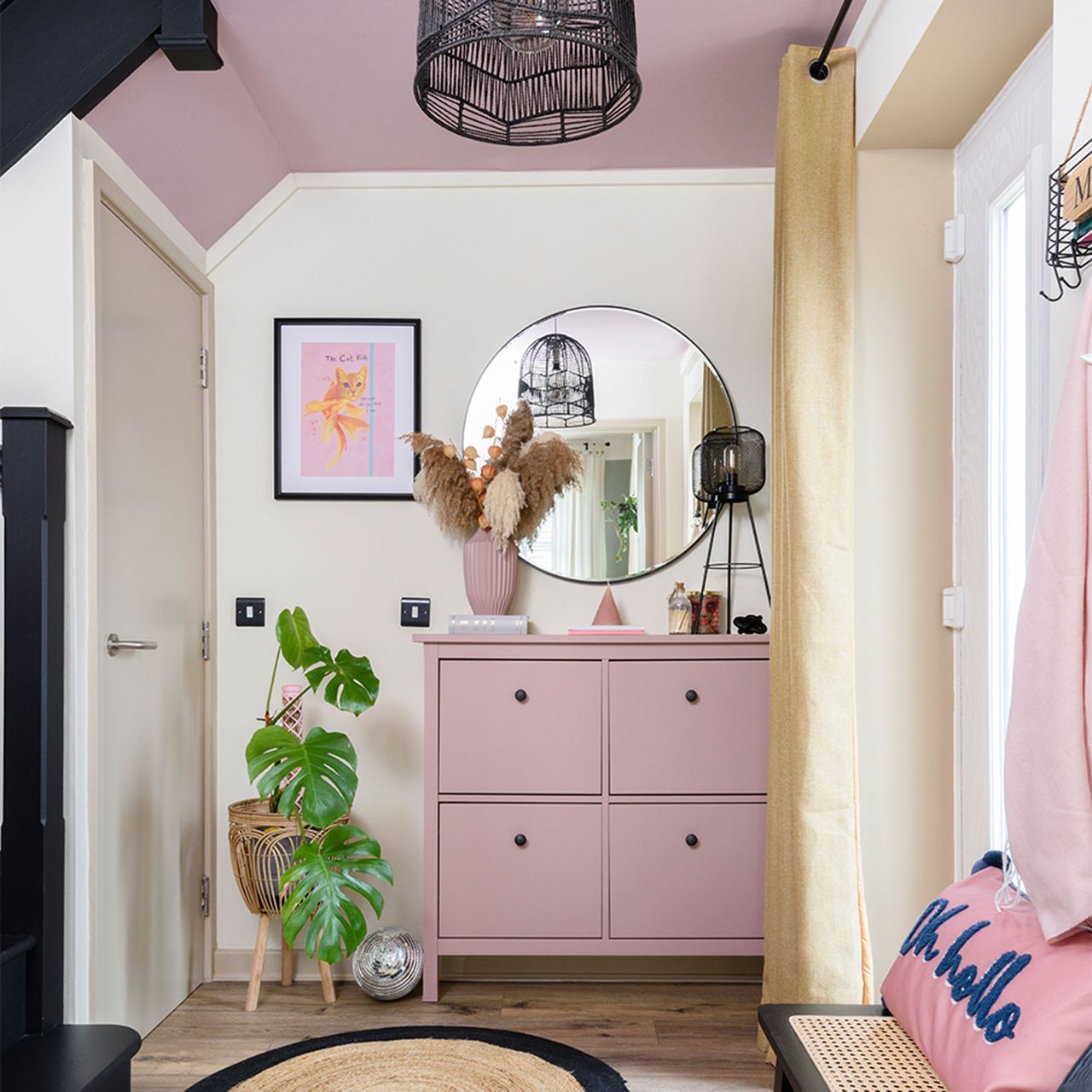
Hallway with pink shoe storage and round mirror.

Clear surfaces, organised drawers, everything in its rightful place… it’s the absolute dream. But in reality, excess clutter makes feel this near impossible. Step forward our list of decluttering methods – one of which is sure to inspire you to tackle unwanted items once and for all.

In a world where we’re constantly inundated with ‘stuff,’ finding the time and motivation to declutter can feel overwhelming. But fear not – these tried-and-tested methods will help you let go of the unnecessary, from the KonMari method to the four-box technique.

At the core of every decluttering method is finding a way to make tackling a decluttering checklist as easy as possible. ‘If you’re struggling to decide what items should stay or go, think about whether they bring you joy or conjure up a happy memory. If the answer is no, then it needs to go,' demonstrates Catharina Björkman, Scandi interiors expert at Contura.

Before you start any decluttering method, arm yourself with an array of storage boxes in various sizes.

No decluttering task is officially finished without clear labelling and these sharpies will come in handy while doing so.

Label like a boss with these printable labels to stick on to your storage boxes.

1. The one-touch rule

Camilla Lesser, development manager at Essential Living suggests keeping on top of clutter by putting things away immediately.

‘Many of us will place something on the side rather than storing it properly, but this can lead to mess building up which can make tidying seem like a big chore,’ she tells us. But the one-touch method puts an end to that.

‘The whole idea revolves around putting things back where they belong the moment you finish using them and making this a daily habit. This technique means rather than touching the items a second time to put them back where they belong, you do it straight away,’ Camilla explains.

(Image credit: Future PLC)

2. The 20/20 rule

Created by Joshua Fields Millburn and Ryan Nicodemus from The Minimalists, the 20/20 rule makes you think about how valuable excess items really are.

Hayley Forster, decluttering expert at Simple Joy explains more about the method, ‘For those who struggle with ‘just in case’ items, the 20/20 rule is a lifesaver. If you can replace an item for less than £20 in less than 20 minutes from your location, you can let go of it. This rule helps combat the fear of needing something after it’s gone.’

3. The 12:12:12 method

This is one of the most popular decluttering methods, originally coined by Joshua Becker at Becoming Minimalist. Lucy Mansey, professional organiser and founder of Organised by Lucy tells us why she suggests this method to her clients, especially those with families.

‘This decluttering method is about locating 12 items within the home to donate, 12 that are broken or beyond repair to throw away and 12 items to be homed in their rightful place. I often find the 12:12:12 rule works well, and the whole family can get involved.’

4. The one in/one out rule

The one in/one out decluttering method is a good one for starting really small; you simply remove one item from your home for every one item you bring into it. For example, buy a new duvet set? Then get rid of the old sheet that isn’t even the right size for the mattress that you’ve kept for ‘emergencies’.

Lucy Mansey explains this method works well for some of her clients, ‘It discourages excessive buying and also doesn’t demand you get rid of lots of items in one go.’

(Image credit: Future PLC/Katie Jane Watson)

5. The 50/50 rule

Lucy also finds the 50/50 rule works well for limiting the amassing of more clutter, ‘This method encourages people to only keep cupboards, storage solutions and spaces 50% full, so that overcrowding doesn't become a problem. It is easier to apply if you are someone who regularly declutters anyway and enjoys a very streamline space,’ she tells us.

6. The four-box approach

Sometimes having the visual of four different boxes to fill can be helpful. Cleaning expert Astonish, Olivia Young explains how the four-box decluttering method works.

‘This involves simply using four labelled boxes to help you organise your belongings. A ‘keep’ box for items you simply can’t part with, a ‘donate/sell’ box to give to charity or a friend, a ‘bin’ box for those that need to go! And an ‘undecided’ box, you can come back to these later.’

(Image credit: Future PLC)

7. The move out method

Moving home is one of the most stressful events in anybody’s life, and a lot of the hassle comes from packing everything up. If you were to look around your home right now, how much of the excess stuff would you really want to cart to a new home? The move out method forces you to think about how important the clutter really is and if you’d bother taking it with you in a move. If the answer is no, why are you still holding on to it all?

Camilla from Essential Living explains that coming to terms with all the things you’d leave behind in a move can be daunting, so starting small can help. ‘Start by clearing out a drawer at a time. Once you get into the habit of ‘moving out’ regularly, it will stop feeling like such a huge chore and make your space less cluttered.'

8. Swedish art of Death Cleaning

Minimalism is at the core of Scandi style, so it only makes sense that decluttering is a way of life in Scandinavian countries. In particular, dö städning, the Swedish concept of ‘death cleaning’, is popular.

‘Death cleaning advocates thinking about your things not only in terms of how they make you feel, but also how they might make your loved ones feel once you’ve passed,' explains Catharina from Contura.

This means being honest with yourself about how much ‘stuff’ you really need to hold on to. ‘The idea is based on the need to change our approach to accumulating more and more stuff every year and at every stage in life,’ Catharina tells us.

‘Think of decluttering as a steady – sometimes even slow – process, rather than a quick blitz of your home followed immediately by the inevitable acquisition of more items.’

(Image credit: Future PLC/Katie Jane Watson)

9. The Clutter Countdown

If you’re someone who enjoys setting yourself a target and a precise timeline, this decluttering method could be the one for you. Feng Shui expert Janine Lowe explains how it works: ‘This is a challenge for yourself, and it really is fun, discarding one item on the first day and then two items on the second day, three items on the third day, etc. Do the challenge for 30 days.’

If you're not sure which method will work best for you, you can give them all a try, which is what our team of editors regularly do. One method won't work for everyone, so keep trying to see which fits in best with how you work.

You can even add some seasonal fun to this decluttering method, as both the snowball decluttering method and the reverse advent method follow similar ideas - but with a Christmas twist.

10. The chaos method

The chaos method is not for the faint-hearted and isn’t your typical tidy-as-you-go approach. The idea is pulling everything out of your space and confronting the overwhelming jumble head-on –perfect if you thrive on creative chaos. it's a whirlwind of intentional mess before ultimate harmony.

As you sift through the piles, you’re forced to reassess every item, sparking a moment of truth: does it still have a purpose, or is it merely taking up space? By the end, you’re left with a space that’s not only free of clutter but also beautifully functional and tailored to your lifestyle. It’s bold, it’s messy, and it works.

11. The 'packing party' method

If you're feeling overwhelmed by the idea of tidying up your space, the packing party method is a great option. Think of it as a fresh start: you pack up all of your things into boxes labelled by category. Think of it as if you’re moving house. Over the next few weeks, only unpack the items you truly need or love.

Everything else stays boxed up, waiting for a second look – or better yet, a trip to the charity shop. It’s a brilliant way to rethink your relationship with your possessions and rediscover what really adds value to your life. Plus, the visual of tidy, labelled boxes can be surprisingly motivating.

(Image credit: Future PLC/James Gardiner)

12. The 'didn't know' method

The 'didn't know' method offers a surprisingly liberating perspective. It’s simple: as you sort through your belongings, ask yourself, "If I didn’t know I owned this, would I miss it?"

This mindset cuts through the emotional attachment we often place on items and makes you think about what truly adds value to your space. A lot of the time we hold onto things out of habit or guilt, but if their absence wouldn’t leave a noticeable gap in your life, it's time to let them go. However, you have to be decisive and that means no overthinking or regrets.

13. The 333 method

Created by Courtney Carver, this clever concept challenges you to curate just 33 items of clothing, accessories, and shoes to wear for three months.

If, like us, you find it hard to declutter your wardrobe over anywhere else in your home, the ruthless Project 333 method will help create a carefully edited collection of pieces you genuinely love, while saying goodbye to the guilt of unworn items. Think of it like the ultimate capsule wardrobe.

By simplifying and limiting your choices, you’ll not only streamline your mornings but also create more space for the things that truly matter.

(Image credit: Future PLC/Tim Young)

14. The 1-3-5 method

Think of the 1-3-5 decluttering method as your daily plan for progress: you tackle one big task, three medium ones, and five smaller jobs.

Whether it’s clearing out the junk drawer, finally sorting the spare room, or tidying up the bookshelves, this method keeps you focused and productive over a long period of time and will help to minimise any sense of overwhelm.

15. The delivery box decluttering method

The delivery box decluttering method starts with a sturdy delivery box – one leftover from your online shopping sprees. Designate it as your temporary decluttering companion and as you tackle a room, quickly gather items that don’t belong or haven’t found a proper home and pop them into the box.

Once the space is cleared, take a moment to reassess each item: does it serve a purpose, or belong elsewhere in the house? If not, it’s time to part ways.

16. The Doom Diamond method

The ‘Doom’ Diamond decluttering method is ideal for those who live in smaller homes where clutter can become overwhelming, and those who struggle with clutter overwhelm and decision fatigue. Meaning ‘didn’t organise, only moved,’ this method helps you find a permanent home for the ‘doom’ items that often float around your house.

This method requires you to place all of these items in the middle of four boxes, each one representing rubbish, action items, items without a home, and items with a home. Then, you go through each item and place it in the relevant box.

As Max Wilson, Co-Founder at Pocket Storage, explains, ‘The Doom Diamond approach emphasises quick wins, which immediately gives you a sense of visual satisfaction and motivates you to keep going. This method is ideal for anyone paralysed by ‘all-or-nothing’ thinking.’

(Image credit: Future PLC/Kristy Noble)

17. The 5/7 method

Many people assume that decluttering decisions need to be made instantly, but the 5/7 decluttering method lets you take a bit more time to decide whether something is worth keeping. This can make it feel less overwhelming and intimidating.

To try this out for yourself, think about what you use regularly. If you use an item five out of seven days a week, you should definitely keep it and store it somewhere practical and convenient. If you don’t, you can either decide to declutter it completely or rehome it.

18. The micro-decluttering method

The micro-decluttering method turns what could be a stressful and overwhelming experience into a smaller, more manageable task or tasks. It allows you to tidy and organise your home in smaller bursts lasting around 10-15 minutes - just enough to make a difference to small areas of your home, but not so long that it takes over your day.

The idea here is to focus on one specific area, like your kitchen cabinets, your TV unit, your chest of drawers or another smaller area that will benefit from short bursts of attention.

(Image credit: Future PLC/Anna Stathaki)

19. The Core 4 method

Created by professional organiser Kayleen Kelly, the Core 4 decluttering method allows you to turn the big task of decluttering and organising into smaller chunks. This then makes it easier for you to maintain the tidiness of your home.

As its name suggests, the Core 4 method focuses on four steps: Clear Out, Categorise, Cut Out, and Contain. So, you take some time to clear out an area, putting like-for-like items together in their respective categories, removing anything that no longer serves you or offers any value, and then find more permanent homes for those that do.

This adds structure and rules to a process that can often leave people frazzled and gives them the chance to tick tasks off the list while decluttering.

20. Visual decluttering method

In small homes, especially, visual clutter is the biggest contributor to a messy home. But the visual decluttering method allows you to remove the ugly visual clutter by incorporating aesthetically pleasing alternatives. For example, decanting boxes of cereal into glass containers or emptying spice packets into nicer jars.

As well as making the space look nicer, Shannon Murphy, Professional home organiser and Founder of Simpl Living Co, says, 'This is also a good time to think about whether you need the item, whether you have something else you prefer to use instead, or whether the item needs to be out or could be stored away.’

21. Smartphone decluttering method

In today’s day and age, everyone has a smartphone. And the smartphone decluttering method allows you to use this to your advantage. The method is simple: take a photo of a problem area of your home, declutter what you no longer want or need, and take another photo to showcase the difference when you’re done. This will provide you with a serious sense of accomplishment.

22. The upside-down decluttering method

The upside-down decluttering method is one of the simplest decluttering methods out there. Simply choose an area to declutter, grab all of the items on or inside it, and place them upside down on a surface. If you use the item regularly, you can keep it and find it a permanent home. If you don’t - and you probably won’t in the future - take that as your sign to get rid of it.

(Image credit: Future PLC/Joanna Henderson)

23. The scavenger hunt decluttering method

Decluttering can be boring, but the scavenger hunt decluttering method aims to turn it into a fun game that’ll be both exciting and effective. The idea is that you make a list of the items you know for sure you definitely don’t need anymore - for example, broken items that have no way of being fixed - and then you make your way around your home to grab them and dispose of them.

You can make the list as long or as short as you want, but this method should make things fun - and you’ll probably find that you’ll want to keep going once you get started.

24. The tidy toss method

The tidy toss decluttering method was masterminded by professional organiser and influencer, Holly Blakey (@breathing.room.home). Her method aims to show people that you don’t have to declutter and organise everything. Instead, you focus on the big-picture items and then use storage baskets for smaller, non-essential items.

She explains, ‘I don't neatly organise my hats, sandals, or swimsuits (among other things). My closet stays tidy because I don't spend the time doing unnecessary organising... I end up tidying because it's NOT a lot of work.'

By realising that your space doesn’t need to look perfect, it’s way easier to maintain an effective level of tidiness that doesn’t feel overwhelming or intimidating.

25. Purge party method

You may have seen 'purge parties' take place on social media, as this decluttering method is both fun and effective. These parties essentially give you the opportunity to give your unwanted items to family members and friends - which can often help in the difficult process of letting go.

The idea is that you go round your house and collect everything you no longer want or need, and then invite your loved ones round to take anything they like home with them. And if you don't feel like you even want to give it to family or friends, you know you should keep it.

And, if you're trying to figure out which decluttering method to choose, remember it’s about finding a strategy that fits your lifestyle, so you can let go of what no longer serves you and create room for the things you actually find useful, easily and sustainably.

Mixed Storage Boxes in Sage, Set of 8 Sharpie Permanent Markers, Set of 2 Multipurpose Labels, 1800 Pack
Sign up to read this article
Read news from 100's of titles, curated specifically for you.
Already a member? Sign in here
Related Stories
Top stories on inkl right now
One subscription that gives you access to news from hundreds of sites
Already a member? Sign in here
Our Picks
Fourteen days free
Download the app
One app. One membership.
100+ trusted global sources.