
When an expert says you need to replace your brakes, you should typically listen to them. The repair may be costly, but it’s worth it to know that you’re driving around safely.
One man’s experience raises the question of what happens when you can’t quite trust what your mechanic is telling you. That’s when a second opinion may come in handy —as it did for him —potentially buying you a bit more time and saving you some cash.

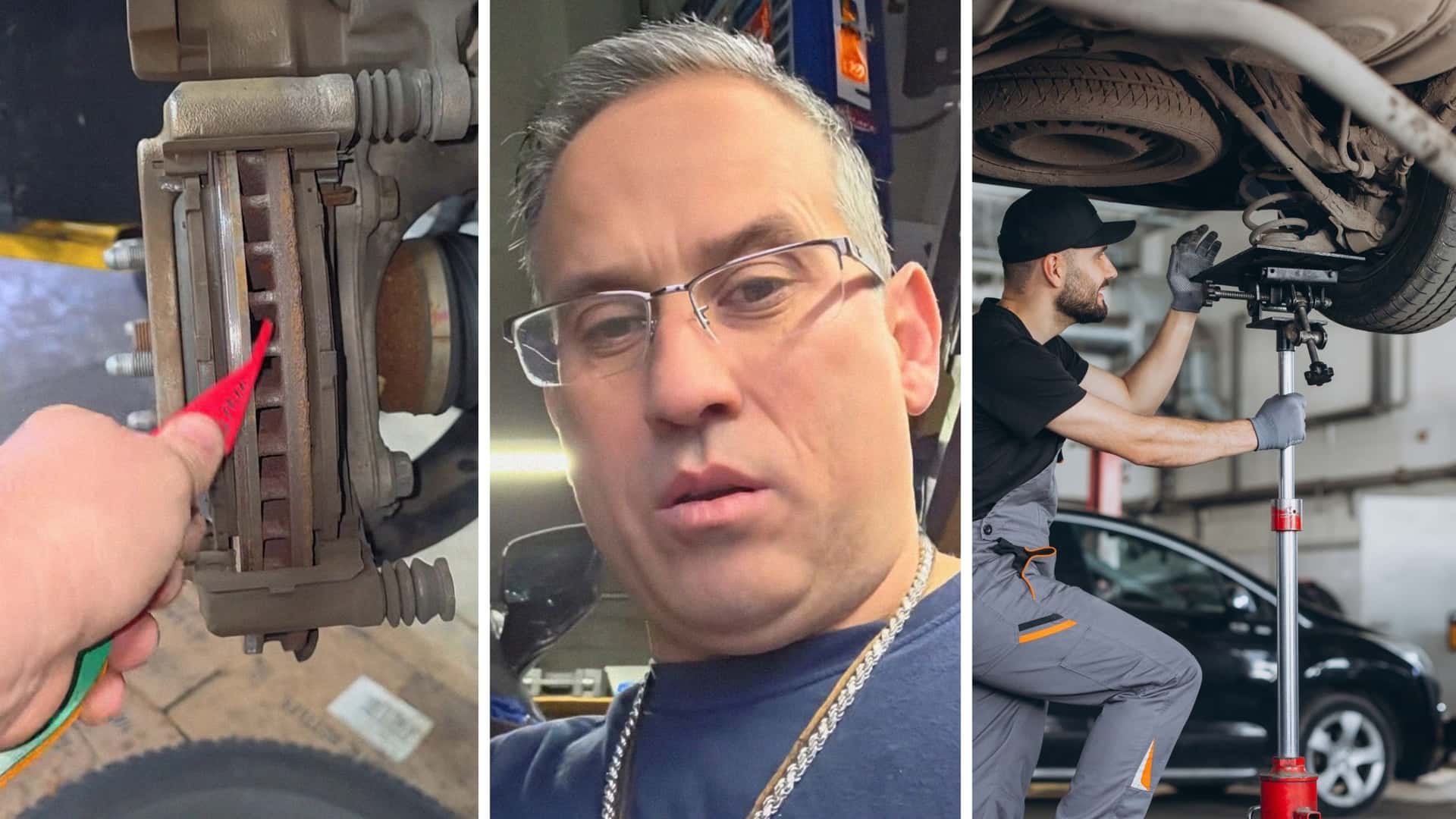
In a recent TikTok, mechanic Jason (@jasons.auto.repair) of Jason's Auto Repair inspected a customer's car after the dealership told them they needed new brakes.
“When dealer tells you [your] vehicle needs brakes,” the text overlay reads.
Jason says dealerships often make this kind of recommendation when someone comes in for warranty work or another service. But the repairs can sometimes be premature.
“This is a bread-and-butter, happens all the time and they’re gonna tell you something the car needs. Is it really a gray area? Yes or no?” he asks.
Jason says the rear brake pads still have plenty of life left. He then examines the front pads, which he estimates are down to approximately 3 millimeters. The pad on the other side appears to be at a similar thickness, he says.
He says if it were his vehicle, he wouldn’t replace the front brakes right away.
“This is probably another easy 5,000 miles left, another oil change over here,” he says.
In the caption, Jason encourages drivers to request evidence before agreeing to recommended work at a dealership.
“ASK FOR PICTURES AND VIDEOS SENT TO YOU WHEN ANYONE SAYS YOUR [VEHICLE] NEEDS SUCH WORK…” he wrote.
How Long Do Brake Pads Usually Last?
There is no single mileage at which every set of brake pads needs to be changed. Two people can drive the same vehicle and get very different mileage out of their brakes.
AutoZone says most drivers get around 30,000 to 40,000 miles from a set of pads. Under ideal conditions, they may last more than 60,000 miles. A driver who spends most of their time in stop-and-go traffic, however, could wear through a set in fewer than 20,000 miles.
The difference comes down to how the vehicle is used. Frequent hard stops wear pads faster than smooth braking. City traffic is usually harder on them than highway driving, while a heavier vehicle or one that regularly tows has more weight to stop.
Weather, the condition of the rest of the braking system, and the pad material also play a role.
Signs Brake Pads Are Worn Out
It’s normal for brake pads to wear down, but you want to catch it before they become so thin that braking suffers or another component is damaged. Here are some signs to look out for, according to AutoZone and AAA:
- Squealing, scraping, or grinding when braking
- A longer stopping distance
- Pulling to one side while braking
- Vibration in the steering wheel, pedal, or vehicle when slowing down
- A brake pedal feeling softer or requiring more pressure
- A brake or ABS warning light on the dashboard
- Pads appearing visibly thin during an inspection
Most pads include a metal tab that makes a high-pitched noise when the material runs low. Other vehicles use an electronic sensor that triggers a warning light.
How Much Does It Cost To Replace Brake Pads?
AAA puts the average cost of brake pad replacement at $150 to $350 per axle. That means replacing the pads on both the front and rear axles will usually cost about $300 to $700.
Pad material can also move that bill up or down. The most common options are organic, semi-metallic, and ceramic. Each has its own benefits and drawbacks, which are:
- Organic pads are generally quiet and affordable, but their softer material tends to wear faster.
- Semi-metallic pads offer strong stopping power and handle heat well, making them a common choice for trucks, towing, and performance driving, though they can produce more dust and rotor wear.
- Ceramic pads typically cost the most, but they offer quiet, smooth braking with less dust and may last longer under everyday driving conditions.
Was The Mechanic Right To Recommend Waiting?
Not everyone agreed with Jason. Some pushed back on what he should tell the customer.
“Of course you would, you fix them. Most people get their cars serviced 2-3 times a year. This car will need brakes before its next oil change most likely, so yes I’m recommending we do it now. It’s in the shop now. Why wait if it needs to be done? Also braking capacity and distance dissipates as the pads get worn down,” one wrote.
“I got a 2012 Tacoma 150,000 miles. I’ve never changed my back brakes! Aren’t back brakes just parking brakes,” another said. (The back brakes are not just for parking. Parking brakes are a separate system.)
Some people agreed that Jason did the right thing.
One wrote, “Let the customer decide. The squeaky is probably the clip rubbing on the rotor.”
Another chimed in, “There's no way I'm changing those. They have a lot of mileage left.”
Motor1 reached out to Jason via TikTok direct message and comment. We'll be sure to update this if he responds.