Get all your news in one place.
100’s of premium titles.
One app.
Start reading
Latin Times
Latin Times
Politics
Héctor Ríos Morales

Cuban Detainees Report Beatings and Abuse After Refusing Deportation to Mexico, Human Rights Watchdog Says

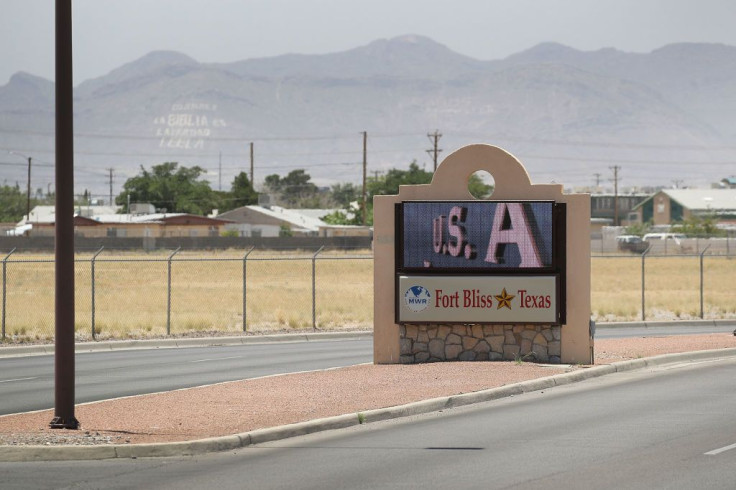
According to testimony from detainees at the Texas' Fort Bliss detention center, dozens of detainees were allegedly driven to the Mexican border and pressured by masked officials to cross or face imprisonment and beatings. (Credit: Photo by Joe Raedle/Getty Images)

An immigration detention center in Texas is under scrutiny after a letter detailed testimony from four Cuban immigrants at the Fort Bliss detention camp in El Paso, who said immigration authorities abused them and tried to coerce them into leaving the United States by warning they'd be beaten if they refused.

According to a letter shared with the American Civil Liberties Union, the four men were among dozens of detainees who were allegedly driven to the Mexican border and pressured by masked officials to cross or face imprisonment and beatings.

In the letter, sent to U.S. Immigration and Customs Enforcement on Dec. 8 and obtained by The Washington Post, two of the men said they were beaten inside the facility when they initially refused to be transported to the border.

The letter is based on interviews with 45 detainees at the Fort Bliss camp and includes claims that the government tried to illegally coerce many of them into leaving the U.S. violating federal guidance for "third country" deportations by failing to provide written notice or a hearing before an ICE officer.

A further Washington Post investigation obtained internal ICE records confirming that the four Cuban detainees resisted removal, though the records did not verify the allegations of abuses because the detainees had little to no way to document their experiences.

ICE also declined the outlet's request to visit Fort Bliss.

The makeshift detention center, which opened in August, had been marked by controversy even before it began operating, facing two investigations into possible improper bidding, two canceled contracts and even a death on the construction site.

The human rights watchdog said the attempted deportations are part of a larger pattern of mistreatment at the facility. In the letter, advocates urged the Trump administration to stop detaining immigrants at Fort Bliss, citing detainee accounts of physical abuse by guards, inadequate food and hygiene supplies, and poor medical care.

Fort Bliss' violations have been well documented in the media. A Washington Post report in September found that ICE's own inspectors concluded the detention center, which can hold nearly 3,000 people, violated 60 federal detention standards during the first 50 days since the contract was awarded.

The four Cuban detainees declared being shackled and taken to the U.S.–Mexico border multiple times in recent months. One of the men, identified by the ACLU as "Abel," said he was locked in a room, physically beaten, and handcuffed after refusing to sign a document in which he was asked to agree to deportation to Mexico.

Of the four Cubans who gave declarations, he was the only one to report receiving written notice before the attempted deportation. One man said he requested written paperwork but was denied. Another said that when he refused to be transported to Mexico, guards slammed his head against a wall, twisted and squeezed his ankles, and crushed his testicles between their fingers.

All four men said that when their buses reached the border, a group of masked men pressured detainees to cross into Mexico. One of the Cuban men said the masked men threatened that anyone who refused would be sent to a jail cell in El Salvador or Africa. Another said those who didn't comply were warned they could face federal charges.

They said many detainees went with the masked men into Mexico. The four Cubans said they refused and were returned to the detention center, explaining their decision came to not knowing whether the masked men were affiliated with ICE or another law enforcement agency.

Another Cuban who refused deportation to Mexico said that when he asked for his medications in September, guards beat his ribs, abdomen, and the back of his head so severely that he lost consciousness and had to be hospitalized.

"Whenever I am allowed to leave this place," he said in his declaration, "I will be leaving it with a great deal of trauma from my experience here."

Advocates say the alleged abuse highlights how ICE's stated protections often fail in practice.

"It is especially cruel that, on top of violating policy, they have threatened, coerced, and beaten individuals who have tried to assert fear-based claims and the minimal procedural protections ICE claims to provide," Trina Realmuto, an attorney who represents the migrants in the Massachusetts case, told the Washington Post.

© 2025 Latin Times. All rights reserved. Do not reproduce without permission.

Sign up to read this article
Read news from 100’s of titles, curated specifically for you.
Already a member? Sign in here
Related Stories
Top stories on inkl right now
One subscription that gives you access to news from hundreds of sites
Already a member? Sign in here
Our Picks
Fourteen days free
Download the app
One app. One membership.
100+ trusted global sources.