Nearly four months after 71-year-old British tourist Lorna McSorley disappeared during a short afternoon walk in northern KwaZulu-Natal, the mystery surrounding her fate has only deepened, dividing opinion between wildlife tragedy and whispered fears of ritual killing.
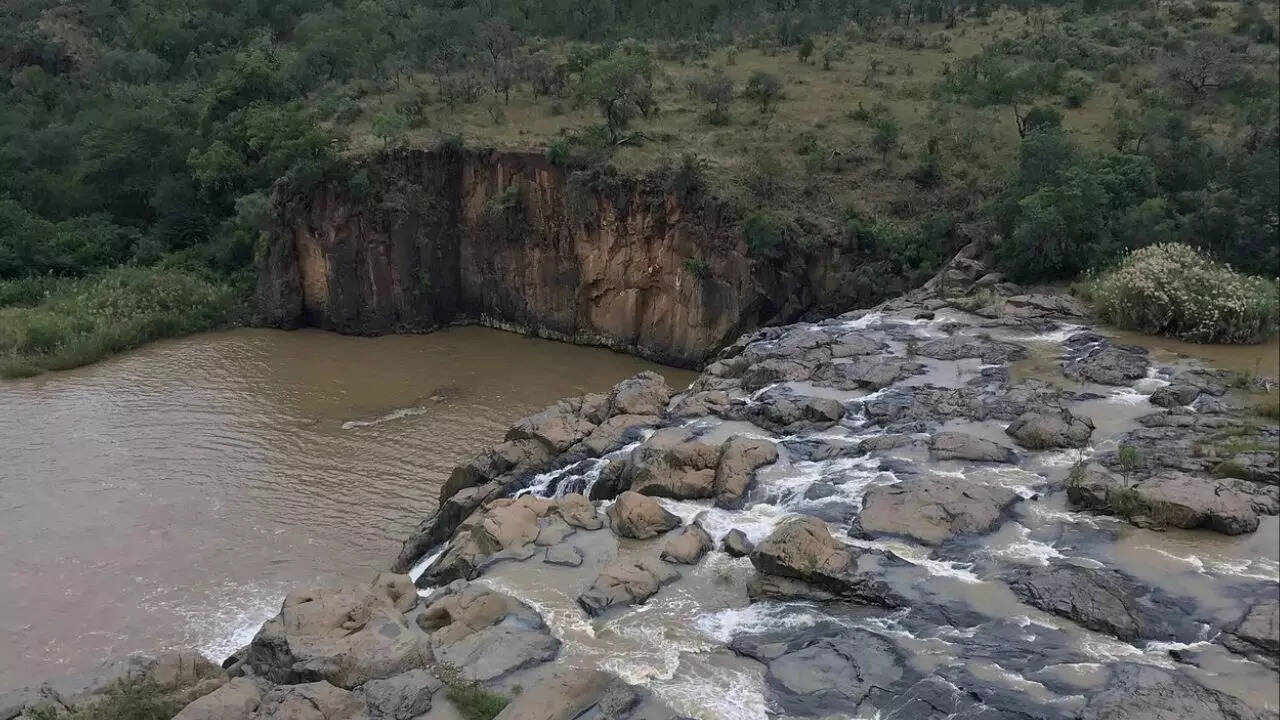
McSorley, from Devon, had arrived at Ghost Mountain Inn with her partner Leon Probert, 81, as part of a Tui package holiday. The couple set off on what was meant to be a gentle three-mile loop to a nearby lake, an area known for hippos and, ominously, crocodiles.

But less than an hour into the walk, Probert turned back, exhausted by the heat. McSorley pressed on alone.
She was last seen at around 3.15pm, calmly asking a local farmer for directions, already off the marked trail. She declined a lift back to the hotel.
By 5.30pm, when she had not returned, the alarm was raised.
No belongings, no trace
What followed was a massive search operation: police, rangers, farmworkers, sniffer dogs, helicopters and boats scoured bushland, sugarcane fields and waterways for days. Crocodile-infested lakes were combed. Her bank card was never used. No clothing, no remains, no sign of struggle.
“It is like she has vanished into thin air,” a senior police official was quoted as saying by The Times.
In a region where crocodiles kill an estimated 1,000 people across Africa annually, one theory suggests she may have strayed too close to the water and been ambushed.
The reptiles can grow up to 20 feet long and are capable of dragging prey beneath the surface within seconds.
Yet seasoned searchers privately admit: even crocodile attacks usually leave evidence. And that absence has fuelled another, far more disturbing line of speculation.
Shadow of “Muti”
Mkhuze sits beneath the jagged Lebombo mountains, dominated by the so-called Ghost Mountain, revered locally as a place of ancestral spirits.
In the nearby town’s markets, stalls openly sell traditional healing ingredients: roots, bark, bones and claws. The practice of “muti”, traditional medicine derived from plants and animals, is widely accepted across South Africa. But a tiny fringe belief holds that the most powerful rituals require human body parts.
So-called “muti murders,” though rare, have been documented in parts of southern Africa.
The Times reported that local sources told investigators several unexplained disappearances had taken place in the wider area in recent years, with some community members privately fearing McSorley may have been targeted after becoming lost and vulnerable.
A parallel private investigation reportedly analysed mobile phone data from the location where her printed map was later found. Three mobile numbers allegedly converged in the area shortly before she was reported missing. Police have declined to comment on the claims.
Traditional healer associations strongly condemn the use of human body parts, calling it a distortion of cultural practice.
A husband’s guilt
Back in Devon, Probert struggles with unanswered questions, and guilt. “If I hadn’t turned back, maybe nothing would have happened,” he said in a phone call.
He has since returned to the UK, supported by the Foreign Office. South African police maintain the case remains active but admit there are no new leads.
Authorities say the area is considered low in violent crime. If McSorley had collapsed from natural causes, search teams believe she would have been found. Which leaves two chilling possibilities: a sudden, silent crocodile strike, or something far more calculated.
For now, beneath the shadow of Ghost Mountain, the question remains: what happened in those missing two hours? Months on, the case remains unsolved.