Get all your news in one place.
100's of premium titles.
One app.
Start reading
The Conversation
The Conversation
Françoise Baylis, Distinguished Research Professor, Emerita, Dalhousie University

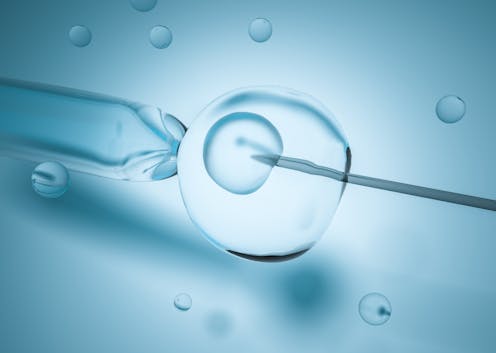
Creating and implanting synthetic monkey embryos could pave the way to stem-cell babies

Scientists created monkey embryo-like structures and implanted them, although no fetuses formed. (Shutterstock)

In January 2017, I met Jiankui He, the now-infamous Chinese scientist who would go on to create the world’s first genome-edited babies. This was at a meeting in Berkeley, Calif., hosted by Jennifer Doudna who, along with Emmanuelle Charpentier, was awarded the 2020 Nobel Prize in Chemistry for her work on CRISPR genome-editing technology.
Sign up to read this article
Read news from 100's of titles, curated specifically for you.
Already a member? Sign in here
Related Stories
Top stories on inkl right now
One subscription that gives you access to news from hundreds of sites
Already a member? Sign in here
Our Picks
Fourteen days free
Download the app
One app. One membership.
100+ trusted global sources.