Get all your news in one place.
100's of premium titles.
One app.
Start reading
Medical Daily
Medical Daily
Health
Elena Vega

COVID Is Growing in 27 States While Free Shots for Low-Income Children Remain Delayed Weeks After Approval

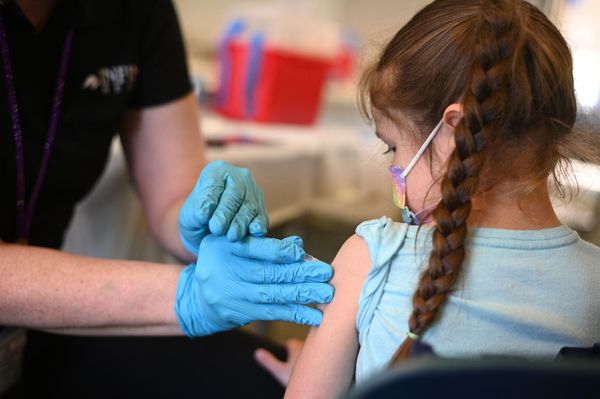
COVID-19 infections are growing or likely growing in 27 states, according to the CDC's latest estimates, while free vaccines for children in the federal Vaccines for Children program remain unavailable weeks after updated shots were approved. The program covers about half of U.S. children, including those who are uninsured, underinsured, or eligible for Medicaid, CNN reported.

Until states can order those doses, many of these children cannot get an updated shot at no cost from their pediatrician, even though doctors and pharmacies have been able to buy doses for privately insured children. On Wednesday, Sept. 23, the CDC posted its 2026-2027 COVID vaccine guidance, and HHS has said the CDC is finalizing decisions on buying vaccines through the children's program.

The risk picture should be kept in proportion. Hospitalizations remain low overall, although COVID hospitalization rates are highest among adults over 65 and babies under 1, according to CDC data cited by CIDRAP. That places the youngest children among the groups with the most at stake.


Infection Trends Point Up in Much of the Country

The CDC's epidemic trend estimates show that as of Sept. 16, infections were growing or likely growing in 27 states, declining or likely declining in 13 and not changing in 10. That is fewer growing states than a week earlier, when 35 states were in the growing column, MedicalDaily reported. The CDC cautions that these estimates show the direction of spread, not how much illness is circulating.

In its Sept. 18 update, the CDC said "COVID-19 activity is elevated and increasing nationally, but hospitalizations remain low overall." That pattern often appears early in a wave: More people are getting infected, but serious illness has not yet climbed.


A Week-Long Gap for Children on Public Coverage

Updated COVID vaccines were approved on Aug. 27, and manufacturers had been shipping them to medical offices since at least Sept. 7, CIDRAP reported. Public health officials in California, Georgia, New York, Pennsylvania and South Carolina confirmed that their Vaccines for Children programs did not yet have the free doses.

"All parents who choose vaccination as protection for their children need to be able to find a healthcare provider offering the vaccine," Claire Hannan, executive director of the Association of Immunization Managers, told CIDRAP. The group's chief medical officer, Dr. Michelle Fiscus, said the gap creates a two-tiered system that leaves low-income children vulnerable longer than wealthier children. Last year, the program's COVID shots were not available until Oct. 6, 40 days after approval.

Federal health officials disputed the urgency. "COVID-19 does not follow the same predictable seasonal pattern as influenza and other respiratory viruses," HHS spokeswoman Emily Hilliard told CIDRAP, adding that "an arbitrary September date should not be treated as a public-health deadline for COVID-19 vaccine procurement."

Part of the delay traces to the CDC's vaccine advisory committee, which normally votes on seasonal shots and on whether they are included in the children's program. The committee has not met this year after a federal judge found in March that HHS Secretary Robert F. Kennedy Jr. likely violated federal law when selecting its members, CIDRAP reported.


New Guidance and Practical Steps for Families

The CDC's new COVID vaccine guidance recommends a 2026-2027 vaccine for all adults 18 and older and for children 6 months to 17 years with moderate or severe immunocompromise. For other children, it recommends shared clinical decision-making between parents and health care professionals, noting that the benefit is greatest for those at higher risk of severe illness. The American Academy of Pediatrics recommends the vaccine for all children 6 to 23 months and for older children and teens at higher risk.

Families with babies, toddlers, and children with chronic health conditions have the most reason to act. Parents who rely on the Vaccines for Children program can call their pediatrician and ask whether free COVID doses have been ordered and when to schedule. In New York, the state health department has allowed clinicians to vaccinate eligible children with privately purchased doses and replace them later with free doses.

Adults caring for older relatives should remember that people over 65 also have the highest hospitalization rates. Checking coverage with a pharmacy or insurer before an appointment can prevent surprise bills.

Common COVID symptoms include fever, cough, sore throat, fatigue, and muscle aches, and children may also have nausea, vomiting, or diarrhea. Home tests can help tell COVID apart from other viruses, and TODAY has outlined current testing and isolation guidance. Seek emergency care for trouble breathing, persistent chest pain, new confusion, bluish lips or skin, or an inability to stay awake. For infants, fast breathing, poor feeding or far fewer wet diapers warrant prompt medical attention.

The key unknowns are when states will be able to order the free doses and how long shipments will take to reach clinics. MedicalDaily will follow state health department notices and the CDC's next trend estimates.

COVID is growing in about half of states, though hospitalizations remain low overall. Families most affected by the vaccine delay, including those with babies and medically fragile children, should call their pediatrician this week and ask when free doses will arrive.


Key Questions Answered

How many states have rising COVID infections?

As of Sept. 16, the CDC estimated infections were growing or likely growing in 27 states, declining or likely declining in 13 and not changing in 10. A week earlier, 35 states were growing.

Is COVID activity high nationally?

The CDC said on Sept. 18 that COVID activity is elevated and increasing nationally, but hospitalizations remain low overall.

Who is most likely to be hospitalized?

CDC data show hospitalization rates are highest in adults over 65 and babies under 1 year old.

When will free COVID shots be available for children in the Vaccines for Children program?

No date has been announced. HHS said the CDC is finalizing decisions on buying the vaccines for the program. Parents should ask their pediatrician about timing.

What does the new CDC guidance say about children?

It recommends the vaccine for children with moderate or severe immunocompromise and shared clinical decision-making for other children 6 months to 17 years.

Published by Medicaldaily.com

Sign up to read this article
Read news from 100's of titles, curated specifically for you.
Already a member? Sign in here
Related Stories
Top stories on inkl right now
One subscription that gives you access to news from hundreds of sites
Already a member? Sign in here
Our Picks
Fourteen days free
Download the app
One app. One membership.
100+ trusted global sources.