A federal judge in Manhattan spent seven months unwinding the Trump administration's ban on immigrant visas covering 75 nations. Four days after she finally struck it down, the State Department replaced it with something far larger: a pause on immigrant visa interviews everywhere, touching every nationality instead of just the list the court just voided, according to immigration-law tracker Boundless. For Latino families who spent those seven months checking whether their country made the original list, the distinction has essentially disappeared.

The Ban That Just Died Already Hit Latino Communities Hard
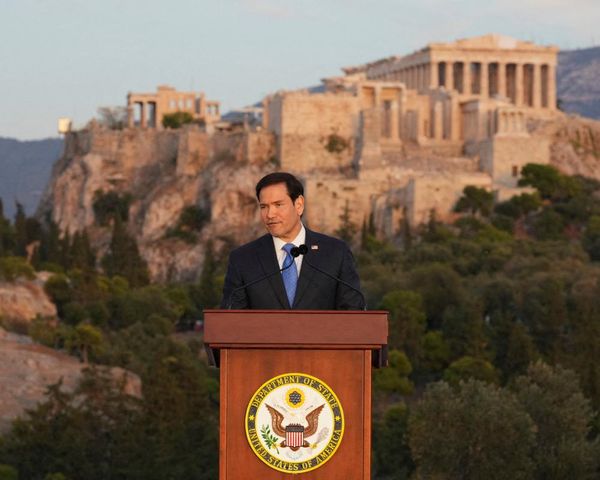
On Aug. 21, U.S. District Judge Jeannette Vargas of the Southern District of New York ruled that Secretary of State Marco Rubio had no legal authority to deny immigrant visas based purely on an applicant's nationality. She set the policy aside as "contrary to law and in excess of statutory authority," finding that Congress, not the secretary of state, gave consular officers final say over individual visa cases.
The vacated policy, in place since January, had frozen green-card processing for citizens of 75 countries the administration flagged as likely to lean on American safety-net programs. Contrary to how the ban is often described, it reached far beyond a handful of Western Hemisphere countries. Along with Brazil, Colombia and Uruguay, the list included Cuba, Guatemala, Haiti, Jamaica, Nicaragua, Belize and seven Caribbean nations: Antigua and Barbuda, the Bahamas, Barbados, Dominica, Grenada, St. Kitts and Nevis, St. Lucia and St. Vincent and the Grenadines, according to case filings compiled by the Western Center on Law & Poverty. That means Cuban and Guatemalan applicants, among the largest immigrant communities Latin Times covers, had already been living under the freeze since January.
The lawsuit that undid it, CLINIC v. Rubio, was brought by the Catholic Legal Immigration Network and African Communities Together on behalf of eleven individual plaintiffs, according to the National Immigration Law Center. Among them were Colombian professionals mid-process on job-sponsored green cards, plus a handful of U.S. citizens who had been trying to bring relatives from Ghana, Ethiopia, Jamaica and Guatemala into the country. CLINIC described the vacated policy afterward as one that "disrupted lawful immigration pathways and separated families around the world." Vargas gave both sides until Sept. 11 to propose next steps for what remains of the case, and the administration can still appeal.
A Broader Freeze Takes Its Place
Rather than narrow its approach to satisfy the court, the State Department went wider. Beginning around Aug. 24, embassies and consulates worldwide started notifying green-card seekers in both family and job categories that upcoming interviews were being pulled, per reporting from Fox News. Tourist, student and H-1B applicants were not included.
A State Department official attributed the pause to staff training rather than a new rule, telling reporters, "we launched a global training initiative at all of our embassies and consulates worldwide" so officers can weigh public-benefits risk more consistently. That detail complicates the tidy narrative that the freeze is a direct answer to the court loss: the department places the training's start in early August, before Vargas ever ruled, even though the two moves became public within days of each other. A separate State Department spokesperson dismissed the ruling itself as the work of an activist judge and said the agency intends to keep pursuing tighter screening regardless of the litigation's outcome. Advocates see it differently: an American Immigration Lawyers Association official said the appointment cancellations "are just really playing with people's lives."
Why This Lands Differently for Latino Families
Because the original ban already covered Cuba, Guatemala, Jamaica, Nicaragua, Belize, Brazil, Colombia, Haiti and Uruguay, the new twist isn't that Latino families are suddenly caught up in a visa freeze. Many already had been for months. What changed is that applicants from countries the first policy never touched, Venezuela, Mexico, Peru, Argentina, Chile, Ecuador, the Dominican Republic, Honduras, El Salvador, Costa Rica, Panama, Bolivia and Paraguay among them, are now, for the first time, waiting alongside relatives who spent nearly a year contesting the narrower ban in court. For mixed-status households across South Florida, Houston, Los Angeles, Chicago and the New York area, that means relatives sponsoring parents, spouses or siblings from almost anywhere in Latin America are now stuck in the same limbo.
No Fixed End Date, Some Local Clues
The department has not published a government-wide restart date. Individual posts have offered fragments instead: the U.S. Embassy in Seoul told applicants their interviews are suspended only through Aug. 31, and separate wire reporting citing U.S. officials has described some posts as canceling appointments through the end of August. Neither detail has been confirmed as department-wide policy, so the safer assumption remains the one the agency itself has given: no fixed date.
Layered on top, a separate Department of Homeland Security public-charge rule for green-card applicants already living in the U.S. takes effect Sept. 18, a different legal track from the consular freeze but one more moving piece for families with cases split between the two systems.
What Affected Applicants Should Do
Save any cancellation notice as proof the interview was missed. Hold off on booking new travel until a post confirms a replacement date. Contact an immigration attorney promptly, especially if a case involves employer sponsorship, since petition deadlines can be affected. And check the relevant embassy or consulate's own website directly, since guidance is changing post by post rather than through a single nationwide announcement.