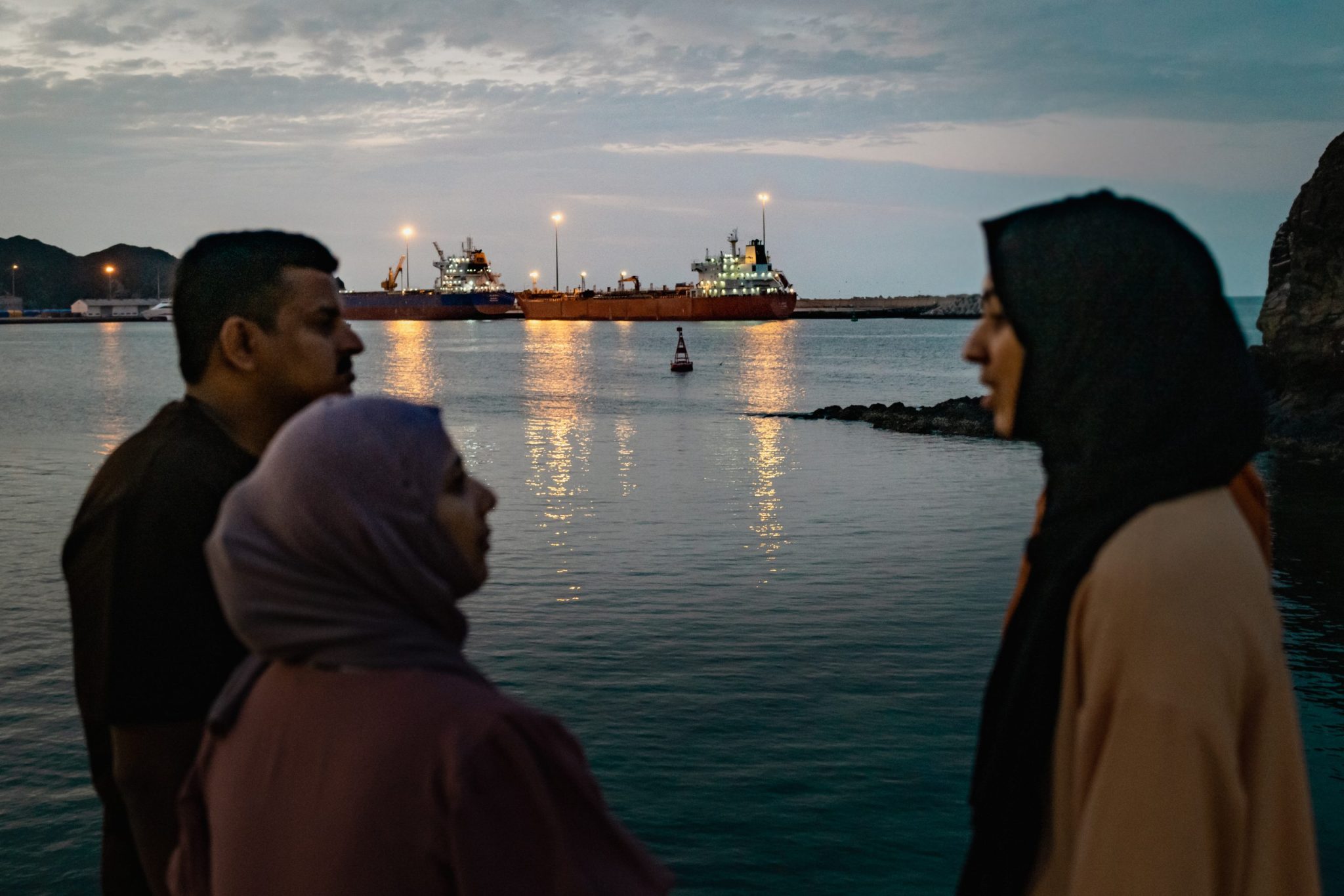
MUSCAT, OMAN - MARCH 22: The Albina Bulk carrier sits anchored on March 22, 2026 at Sultan Qaboos Port in Muscat, Oman.President Donald Trump had threatened to attack Iran's energy infrastructure if it did not end its de facto blockade of the Strait of Hormuz by just before midnight GMT of March 23. A subsequent statement from President Trump said the U.S. and Iran had held "very good and productive conversations regarding a complete and total resolution of our hostilities in the Middle East," and that he would postpone any attacks on Iranian energy infrastructure for five days. Maritime traffic through the strait, which conveys about 20% of the world's oil and gas, has mostly come to a halt after the joint U.S.-Israeli war with Iran that began on February 28. (Credit: Elke Scholiers—Getty Images)
As Donald Trump searches for an exit from the Iran war, the narrow Strait of Hormuz increasingly looks like a labyrinth in which the commander-in-chief has no good options.
Any ceasefire or U.S. disengagement that cedes control of the strait risks creating new problems, including potentially triggering a nuclear arms race among Gulf states, experts say. But taking control of the strait militarily requires massive costs and risks, including a strategic invasion that comes short of occupying the country. Trump said March 31 he wants to leave Iran in two or three weeks, hours after he vented against allies to “go get your own oil!”
Sign up to read this article
Read news from 100's of titles, curated specifically for you.