
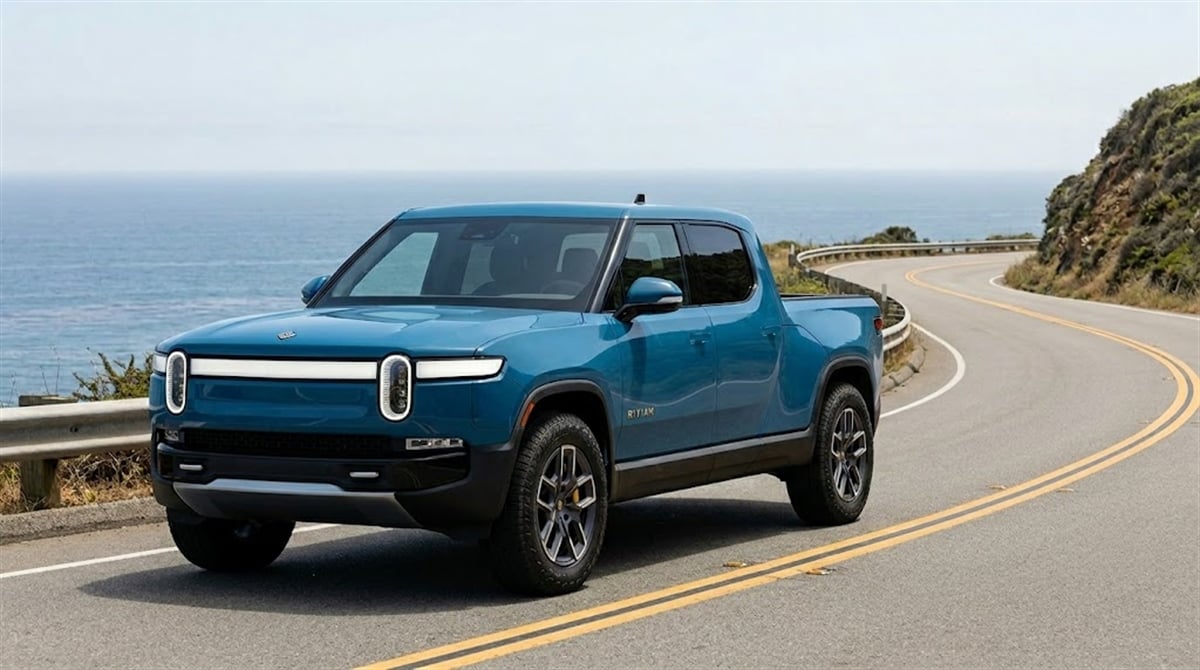
The era of the standalone electric vehicle startup, fueled by cheap capital and boundless growth narratives, is officially over. Definitive proof arrived when Volkswagen AG (OTC: VWAGY) executed a $1 billion equity purchase in Rivian Automotive, Inc. (NASDAQ: RIVN), overtaking Amazon (NASDAQ: AMZN) to become Rivian’s largest shareholder.
While some market participants might view this transaction as a simple liquidity event, a closer look reveals a structural shift toward industry-wide consolidation, where established manufacturing prowess aggressively integrates with cutting-edge software-defined vehicle platforms.

While the market correctly identified the Volkswagen deal as a lifeline, it has largely overlooked two concurrent catalysts that fundamentally de-risk Rivian's future. A newly inked $1.25 billion robotaxi partnership with Uber and a freshly amended $6.6 billion Department of Energy (DOE) loan are transforming Rivian from a capital-intensive manufacturer into a highly insulated, premier acquisition target for legacy giants desperate to deploy competitive software-defined vehicle (SDV) platforms.
The Brains for the Brawn: A Union of Necessity
The partnership between the German auto giant and the American EV upstart is a marriage of necessity. Volkswagen’s urgency stems from the well-documented, multi-billion-dollar failure of its in-house software division, Cariad. After years of delays and significant cost overruns that impacted key launches for Porsche and Audi, Volkswagen was forced to seek external expertise to salvage its next-generation Scalable Systems Platform (SSP).
The April 30, 2026, transaction, which gave Volkswagen a 15.9% stake, was triggered by the successful completion of winter testing for the joint venture's zonal architecture. This strategic dependency on Rivian's software is a tacit admission that building a competitive EV software stack from scratch is a barrier even for the world's largest automakers.
For Rivian, the capital is critical. The company posted a 25.8% year-over-year revenue contraction in its most recent quarter and operates with a deeply negative net margin of -63.62%. The Volkswagen cash infusion provides a crucial runway to fund the production ramp of its R2 platform without resorting to highly dilutive open-market capital raises. This strategic financing is essential for a company with a 1x debt-to-equity ratio that is also navigating a period of intense margin compression. Volkswagen's investment effectively creates a floor for the stock, providing the stability needed to execute its long-term strategy.
Hidden Aces: Uber and Uncle Sam Quietly De-Risk Rivian
Beyond the headline-grabbing investment, two other significant developments provide a clearer picture of Rivian's strategic value and fundamentally alter its risk profile.
Uber Validation
A recent SEC 8-K filing detailed a pivotal $1.25 billion partnership with Uber to develop a robotaxi fleet. The deal is anchored by an initial $300 million private equity placement from Uber, providing immediate, non-dilutive capital. This alliance serves as a powerful third-party validation of Rivian’s SDV and autonomous-driving technology. It repositions Rivian from a niche truck manufacturer to a core technology provider with a software stack attractive to other mobility players. Success in this venture opens the door to high-margin licensing revenue streams and a total addressable market far larger than vehicle sales.
Uncle Sam's Co-Sign
Rivian also secured an amended $6.6 billion low-cost loan from the Department of Energy. Management commentary from the latest earnings call confirmed these funds are specifically earmarked to expand the initial capacity of its Georgia manufacturing plant by 50%. This expansion is critical for the launch of the R2, a midsize platform projected to have a Bill of Materials (BOM) 50% lower than the current R1 platform. This structural cost reduction is the most credible catalyst for achieving positive gross margins. Government backing provides access to capital at favorable rates, a significant competitive advantage when the cost of capital is rising, and other EV startups are facing a funding crunch.
Why VW's Stake Matters More Than Amazon's
The shareholder structure tells a compelling story of this strategic shift. Amazon, previously the top shareholder, saw its stake diluted to 11.8%. Its holding was always tied to a commercial agreement for 100,000 electric delivery vans and to a customer relationship. Volkswagen’s growing stake is fundamentally different; it is a direct investment into Rivian's core intellectual property, integrating the startup's technology into the very foundation of its future product lineup. This is the difference between being a supplier and being a strategic partner on a path to potential acquisition.
This transition comes during continued, albeit pre-scheduled, insider selling from CEO RJ Scaringe and CFO Claire McDonough. While insider sales can be a headwind, the scale of institutional investment from players like Volkswagen provides a powerful counterbalance. The analyst community reflects this complex picture with a consensus Hold rating. However, the average price target of $18.52 suggests a greater than 25% upside from recent prices, indicating Wall Street recognizes the underlying value unlocked by these strategic partnerships.
Why Rivian's Future Is as a Target, Not a Competitor
The investment thesis for Rivian has undergone a fundamental pivot. The narrative is no longer centered on whether it can outsell established players in a fiercely competitive market. Its valuation is now more directly tied to its role as a strategic asset for legacy automakers facing an existential software crisis. The combination of Volkswagen's capital, Uber's validation, and the DOE's financial backing creates a solid foundation that insulates it from the macro headwinds battering less-supported EV players.
Investors might now consider that Rivian’s stock price may be driven less by quarterly delivery numbers and more by milestones related to its joint venture and the successful launch of its cost-efficient R2 platform. The primary risk remains execution, but Rivian's ability to secure powerful strategic partners suggests it holds technology that legacy players have determined they must buy, not build. This positions Rivian as a key player in the inevitable wave of EV consolidation.
Where Should You Invest $1,000 Right Now?
Before you make your next trade, you'll want to hear this.
MarketBeat keeps track of Wall Street's top-rated and best performing research analysts and the stocks they recommend to their clients on a daily basis.
Our team has identified the five stocks that top analysts are quietly whispering to their clients to buy now before the broader market catches on... and none of the big name stocks were on the list.
They believe these five stocks are the five best companies for investors to buy now...
The article "Consolidate or Die: Is Rivian The Ultimate Takeover Target?" first appeared on MarketBeat.