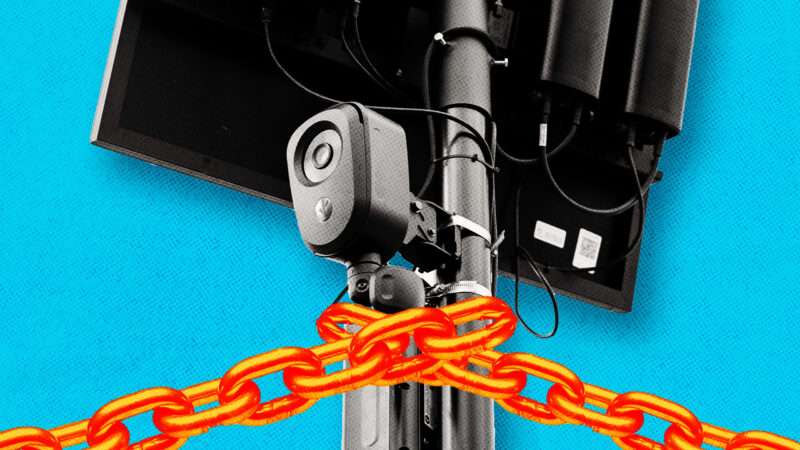
A Connecticut law that took effect at the beginning of October imposes new restrictions on police use of automated license plate readers (ALPRs), which enable what a federal judge recently described as "a type of indiscriminate mass surveillance." The law reflects the bipartisan backlash against AI-assisted cameras that record images of passing cars billions of times a week, building databases that police can use to track drivers, identify other vehicles in their vicinity, predict itineraries, and conduct searches based on a wide range of vehicle characteristics.
Connecticut previously imposed no statutory limits on ALPRs, a fact that underlines how readily police can access license plate data, which they can search without any sort of judicial review and often without meaningful internal supervision. But the law's provisions, while promising in some ways, fall short of the reforms recommended by critics who warn that unconstrained use of ALPRs threatens the privacy of innocent motorists across the country.