Get all your news in one place.
100's of premium titles.
One app.
Start reading
Medical Daily
Medical Daily
Joseph James

Connecticut Judge Dismisses Final Claim Against School Vaccine Law Without Religious Exemptions, Closing a Four-Year Case

Superior Court judge in Stamford on Monday dismissed the final remaining claim in a lawsuit challenging Connecticut's law that ended religious exemptions from school vaccine requirements, CT Mirror reported.

The ruling in Spillane v. Lamont closes the case after more than four years and leaves the state's school vaccine rules in place.
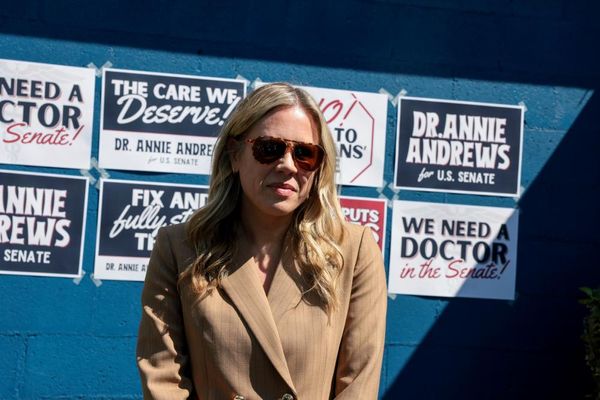
Attorney General William Tong said the decision confirmed that Connecticut's school vaccine requirements are "lifesaving and lawful."


Stamford Ruling Leaves School Rules in Place

For parents, the practical effect is continuity. Connecticut requires children to receive certain vaccines before enrolling in school, and the 2021 law that ended the religious exemption remains in force.

The lawsuit was filed in 2022 by two mothers from Orange and Greenwich. They argued that eliminating religious exemptions violated the state and federal constitutions and Connecticut's Religious Freedom Restoration Act, or RFRA.

In 2024, the Connecticut Supreme Court dismissed five of the six claims but sent the RFRA claim back to Superior Court for further review. The judge's dismissal order resolved that last claim.

Connecticut is one of just five states without a religious exemption for school vaccine requirements, according to a September 2026 analysis by the National Conference of State Legislatures.


Four Years of Legal Fights Over the 2021 Repeal

Connecticut lawmakers voted to end religious exemptions in 2021. This spring, the legislature passed a measure clarifying that repeal and creating the first-ever carve-out from the state's RFRA for school vaccine requirements. Democratic lawmakers led the effort and placed the measure inside a broader vaccine bill.

Before the vote, House Speaker Matt Ritter said the attorney general's office had told him there was a chance the state could lose the case under RFRA as written. Tong's motion to dismiss, filed about a month after the new law passed, relied on that measure.

The plaintiffs objected. "Governor Lamont and legislators changed the rules in the middle of the game," said Lindy Urso, counsel for the plaintiffs. "There's now a vaccine exemption to the First Amendment in Connecticut."

Republican lawmakers argued during the spring debate that the carve-out eroded religious freedom. State Sen. Saud Anwar, co-chair of the legislature's Public Health Committee, said the dismissal would help protect families from outbreaks of preventable diseases.

"Amid rapidly changing federal vaccine standards casting confusion and doubt on the effective, life-saving tool that has helped reduce disease in our communities for decades, it is reassuring to know Connecticut's standards will remain in place, keeping our children and communities better protected," Anwar said in a statement.


What the Ruling Means for Families

Medical exemptions remain available when a licensed clinician certifies that a vaccine is not medically advisable for a child. Some students who already held religious exemptions in kindergarten through 12th grade when the 2021 law took effect were allowed to keep them, while younger children entering school could no longer claim one.

Parents unsure of their child's status can contact the school nurse or district health office. Families who need vaccines can check with their pediatrician, a local health department, or a community health center. Children who are uninsured or enrolled in Medicaid may qualify for free vaccines through the federal Vaccines for Children program.

The ruling comes as exemptions rise nationally. Exemptions from one or more vaccines among U.S. kindergartners reached 4.2% in the 2025-26 school year, up from 3.6% the year before, according to the CDC. As of Aug. 13, the CDC had confirmed 2,566 measles cases and 38 outbreaks in 2026.

Measles spreads easily in schools and can be dangerous for infants too young to be vaccinated and for people with weakened immune systems. Early symptoms include high fever, cough, runny nose, and red, watery eyes, followed by a rash that spreads from the face downward. Families who suspect measles should call a clinic before arriving so staff can prevent exposure to others.


Supreme Court Petitions Keep the Issue Alive

The broader legal fight is not over. The U.S. Supreme Court recently denied an emergency request from a New York mother seeking a religious exemption for her kindergartner, though Justices Samuel Alito and Neil Gorsuch said they would have granted it, CIDRAP reported.

A separate case brought by Amish parents in New York, Miller v. McDonald, could return to the high court, and more than half a dozen related petitions have been filed since May. One legal scholar told CIDRAP the Court may wait until after it decides a separate religious liberty case scheduled for argument Nov. 3.

"It would not surprise me to see this Court strip states of its denials of religious exemptions given repeated, annual requests in manifold other cases seeking the Court's decision on this question," said James G. Hodge Jr., director of Arizona State University's Center for Public Health Law and Policy.

A future Supreme Court ruling could affect Connecticut and the other states without religious exemptions. For now, Connecticut's requirements stand, and MedicalDaily will track any federal decisions that could change them.


Key Questions Answered

What did the Connecticut court decide? A Stamford Superior Court judge dismissed the final claim in Spillane v. Lamont, a challenge to the state's 2021 law ending religious exemptions for school vaccines.

Can Connecticut students still get religious exemptions? Not new ones. Some K-12 students who held religious exemptions when the 2021 law took effect were allowed to keep them.

Are medical exemptions still allowed? Yes, when a licensed clinician certifies that a vaccine is not medically advisable.

How many states lack religious exemptions? Five, including Connecticut, according to a September 2026 analysis by the National Conference of State Legislatures.

Sign up to read this article
Read news from 100's of titles, curated specifically for you.
Already a member? Sign in here
Related Stories
Top stories on inkl right now
One subscription that gives you access to news from hundreds of sites
Already a member? Sign in here
Our Picks
Fourteen days free
Download the app
One app. One membership.
100+ trusted global sources.