Andy Burnham endured the baptism of fire that awaits new leaders attending the UN General Assembly this week — two red-eye flights in a couple of days and a brief sleep in the chic quarters of the UK consul’s luxurious residence on the 38th floor of 50 United Nations Plaza.
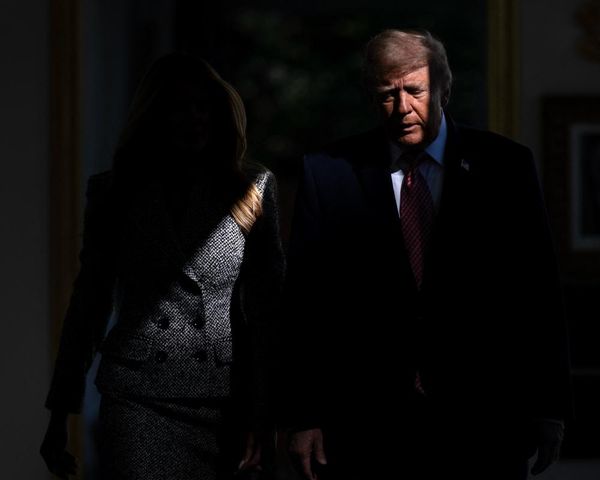
After a short encounter with Donald Trump, in which he dodged the body-slam that can greet hapless international visitors, he left with only one severe scolding — about the deal to return the strategically sensitive Chagos base to Mauritius. A “terrible” idea, as the US President pithily put it. Frankly, that is fine by Burnham (the controversial lease deal was signed by Keir Starmer).
Smart-casual in dark jeans and navy jacket, Burnham headed home to catch up on sleep before the Labour Party conference — kicking off this Sunday in Liverpool — crowns the “King of the North’s” premiership.
It will be the first time he has spoken live to the party as a whole — who will greet his clap-lines on reversing 40 years of “neo-liberalism” and not prod too closely at what falls inside and outside that breathless definition. They will relish promises of more “public accountability” of private utilities. They will be keen to reconnect to the EU, even if the realities of that are more testing. The most impassioned cheers will be for sanctions on Israel, from a party which has swung into a pro-Palestinian mode since the war in Gaza.
But Burnham also knows that he cannot afford to waste a chance to make clear to his followers that “Labour as usual” will not deal with the delayed welfare reforms — the shape still feels foggy. He walks a line between the promise to give “breathing space” to many Britons struggling with household bills and the stern realities of rising high borrowing costs and the need to establish himself as a credible steward of a precarious UK economy.
After a long period of absence from national politics he has been quick to find his feet — and the international circuit has been his way of putting an authoritative stamp on the job.
Even in late summer, Foreign Office planners were unsure whether the PM would travel to the General Assembly or keep his first in-person meeting with President Trump for the pomp of a Washington visit.
A sunlit early period in No 10 has been marred by his deep grief at the death of his father, who suffered from Alzheimer’s.
Professionally, he can feel content that he had, as one of his team puts it, “a solidly good nine out of 10 landing” — with a tight and supportive team behind him.
Light sweep of a new broom
His new era arrived with a splurge of micro announcements, intended to show empathy for cost-of-living struggles, with sticking plaster remedies, like six-month VAT relief on energy bills. That — and capping bus fares — feel like giveaways rather than solid indicators of direction; a “money off” government can only go so far on limited resources.
He has underlined his devolution plans by opening up a No 10 North and making clear that he wants physical presence of staffers as well as a foothold in the North West. It suits his desire to keep both the King of the North brand and his family life in the region intact.
Practicalities can be a headache — it means a lot more Zoom-addled colleagues, switching into calls from different places and technical hiccups to contend with, rather than huddling in a Downing Street back room over a cuppa.
Burnham’s strength is, however, self-presentation — in videos highlighting his persona and a strategic reboot after a shaky Starmer era. He raided City Hall to appoint Sarah Brown, Sadiq Khan’s experienced communications chief, and Grace Pritchard, who kept Ed Miliband’s energy and environment brief in the news. The key comms team has been heavily “feminised” — a different feeling to what was latterly a male praetorian guard.
The new Cabinet is an early meld of people Burnham wanted in jobs as allies — and other senior placements that flowed from that call. “It was all about who would be Chancellor,” confides one Cabinet figure surprised by where they ended up in the mix. Miliband made no secret that his bottom-drawer plan was for the chancellorship — but was happy enough to accept a heavyweight role at the Foreign Office — even if Burnham had originally flirted with bringing back his New York-based elder brother David to the role. “Positive noises”, as David saw it on that score, evaporated — a reminder that Burnham can be a touch mercurial and affably tough when he makes a call.
He was also clear that he wanted to front an amped-up sanctions policy, condemning Israeli settlements in the West Bank. That is still playing out — a politically popular move on the Left which was also presented as making the Starmer government seem slow-footed to take decisions; less popular with those who worry that it sacrificed practical presence helping Palestinians in on-the-ground projects for longer-term symbolic pressure on a heedless Israeli government.
Once he opted to give the chancellor job to John Healey, who had proven his grit by resigning as defence secretary over Starmer’s inability to fund a coherent defence plan, Burnham set out with some ruthlessness to reward ministers who had moved from the Starmer column to support his leadership putsch.
So, Wes Streeting, having withdrawn an earlier leadership bid himself and been out-run by Healey for No 11, settled at defence. Burnham ally Lisa Nandy simply didn’t move from the culture and media brief. That had the knock-on effect of Chris Bryant — who had been promised the culture, media and sport portfolio — ending up with the Northern Ireland brief instead. Yvette Cooper wanted to stay at the Foreign Office, but ended up back in health.
Merciless power player?
More prominent Starmtroopers like Bridget Phillipson ended up in sideways moves: others like the punchy business secretary Peter Kyle and ex Starmer Cabinet Office guru Darren Jones have been sent to the backbenches— there to repent sticking too close to Keir. All of this suggests that Burnham is a merciless power player — inserting Louise Haigh, a bold rebel over welfare under Starmer, into a role as de factor deputy PM and Cabinet Office mastermind of his strategy.
At the sharp end of Starmergeddon has been the last chancellor, Rachel Reeves. She will now head off to the US to relaunch herself as a senior figure on the economic circuit — with some sympathy from a previous chancellor, Rishi Sunak, who joked with her at his lavish party at the V&A last week that both of them looked a lot healthier since they left the job.
Burnham’s major risk is that he looks too “trad Labour”
Nailing down the personnel is one thing. The big plan to cure Britain’s ills and spell out a recipe for the next general election is another. And on that score, Burnham’s major risk is that he looks too “trad Labour” in undistinguished new thinking on growth and innovation to avoid the trap of turning fast into Labour-as-usual — many schemes and dreams and too few answers which would reassure the markets and stem borrowing costs.
Burnham no longer talks about “bond-market vigilantes” — one of his ministers jokes he has to turn a lot of corners to shake off language he used previously. He can, however, tend to vague or even inchoate choices. He needs to keep net zero commitments plausible enough to take on Zack Polanski — while it is common knowledge in the “Desnez” (Department of Energy Security and Net Zero) that approving controversial extraction at the Jackdaw gas field is likely to happen after the Holborn and St Pancras by-election is safely over, when Labour hopes to inflict a symbolic defeat on the Greens, as it did on Reform when Burnham triumphed in Makerfield.
Unsolved challenges
Past statements on rejoining the European Union have faded into Bregret speeches on why the UK should not have left the EU — but with no prospect of the “reconnection” amounting to much in this parliament.
The warning signs ahead are of a “challenging” Budget (which is a banal way of saying that the October financial statement is going to pave the way to more taxes). In the absence of attacking the triple lock on pensions before the next election, that leaves the welfare budget as the thorniest issue for a man who came to power on the wings of many soft-Left advocates — who rose up against Starmer’s previous efforts.
The Budget defines Burnham priorities, not least because it will mean displeasing some of the many lobby groups inside his party, which he has so far been able to charm by suggesting that he understands their concerns. That is already wearing thin among those like Andy Haldane, the formerly sympathetic ex-Bank of England economist who is warning of “a traditional tax-and-spend socialist government with better TikTok videos”.
Fudging choices is a smart choice for ambitious operators who want to woo MPs to back them in a power struggle — less so when the growth agenda of the UK is still so vague and borrowing costs are rising to punishing levels. Another prominent Labour-adjacent financier, Lord (Jim O’Neill also worries that any further business of bank taxes — the latter being the option most under consideration by Healey — will depress business sentiment.
The Burnham recipe for prosperity is one he knows from his mayoral experience — more devolution — and the jury is out on what gains that brings in what time frame and at what cost to London’s precarious prosperity. A changing economy also brings fresh questions — AI companies see the UK pitching itself between European regulation and US freedoms but worry that Britain will lose out by not picking a clearer path forward. This week that left the UK outside a Finnish-led initiative to constrain the dangers of frontier models; but Burnham has yet to tell his own story on technology and its rewards and risks. Conversely, talking about decades of Thatcherite remedies as a curse can sound as dated as a Happy Mondays track from the early days of Manchesterism — a mix of genuine spirit and tired hype. Last year, I watched a disconsolate Burnham slink away from an early challenge, defeated by a solid Starmer speech that rallied support in the conference hall and sent him home with his tail between his legs.
Twelve months on, Starmer is at home in Kentish Town pulling on his afterlife and his challenger is strolling with European leaders in Central Park. That must feel pretty good. Now the crown is his — but so is the unfinished business.
Anne McElvoy is executive editor at Politico and co-host of Politics at Sam and Anne’s podcast