
Get all your news in one place.
100's of premium titles.
One app.
Start reading
The Conversation
The Conversation
Environment
Barath Raghavan, Associate Professor of Computer Science and Electrical and Computer Engineering, University of Southern California

Computer science can help farmers explore alternative crops and sustainable farming methods

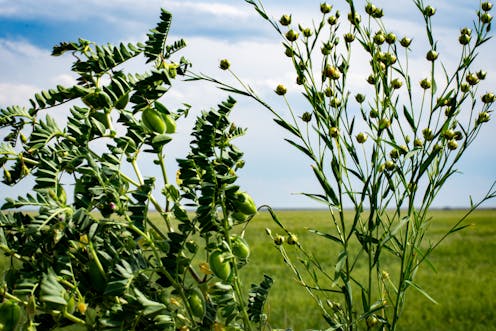
Chick peas intercropped with flax on a farm in Stanford, Mont. USDA NRCS Montana

Humans have physically reconfigured half of the world’s land to grow just eight staple crops: maize (corn), soy, wheat, rice, cassava, sorghum, sweet potato and potato. They account for the vast majority of calories that people around the world consume. As global population rises, there’s pressure to expand production even further.

Many experts argue that further expanding modern industrialized agriculture – which relies heavily on synthetic fertilizer, chemical pesticides and high-yield seeds – isn’t the right way to feed a growing world population. In their view, this approach isn’t sustainable ecologically or economically, and farmers and scientists alike feel trapped within this system.

Sign up to read this article
Read news from 100's of titles, curated specifically for you.
Already a member? Sign in here
Related Stories
Top stories on inkl right now
One subscription that gives you access to news from hundreds of sites
Already a member? Sign in here
Our Picks
Fourteen days free
Download the app
One app. One membership.
100+ trusted global sources.







