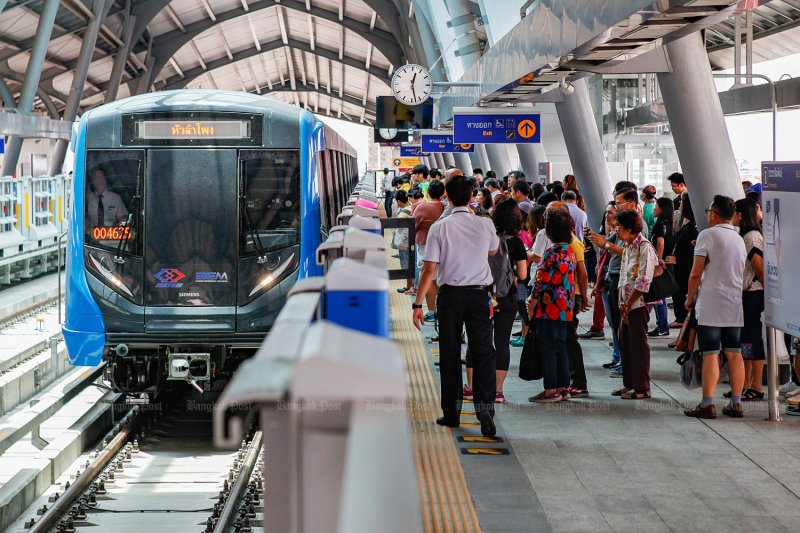
The Ministry of Transport plans to launch the first phase of its common ticketing system by the end of this year, alongside a long-term strategy to buy back electric railway concessions from private operators using funds raised through the Thailand Future Fund (TFF).
Deputy Prime Minister and Transport Minister Phiphat Ratchakitprakarn recently provided an update on the initiative, noting that both the Common Ticket Act and the Rail Transport Act have successfully cleared Senate review. The Transport Ministry is now working with the Ministry of Finance to structure a financing model that avoids adding to the country's public debt burden.

According to Mr Phiphat, the government aims to raise 200 billion baht through the TFF. These funds will be used to buy back electric rail operations from private concessionaires and transfer ownership to the Mass Rapid Transit Authority of Thailand.
While the total fundraising process and backend system preparation are projected to take 18 to 24 months, Mr Phiphat emphasised that his ministry is fast-tracking backend development to ensure the common ticketing policy can debut by the end of this year.
The initial rollout will include the BTS Green Line and the Airport Rail Link, with standard fares capped between 17 and 45 baht.
Furthermore, authorities are considering transitioning away from the traditional Rabbit card system in favour of EMV-based (contactless credit/debit card) or QR code payments. The second phase of the policy will integrate public buses and boats into the system.
Deputy Transport Minister Siripong Angkasakulkiat stated that the common ticketing policy is expected to be submitted for cabinet approval by the end of this month.
Under the plan, the government will compensate railway operators based on actual ridership, utilising data collected over the past five years by Bangkok Mass Transit System PCL and Bangkok Expressway and Metro PCL.