
Get all your news in one place.
100’s of premium titles.
One app.
Start reading
Space
Space
Science
Anthony Wood

Comet C/2024 E1 Wierzchos makes its closest approach to Earth tomorrow: Here's what you need to know

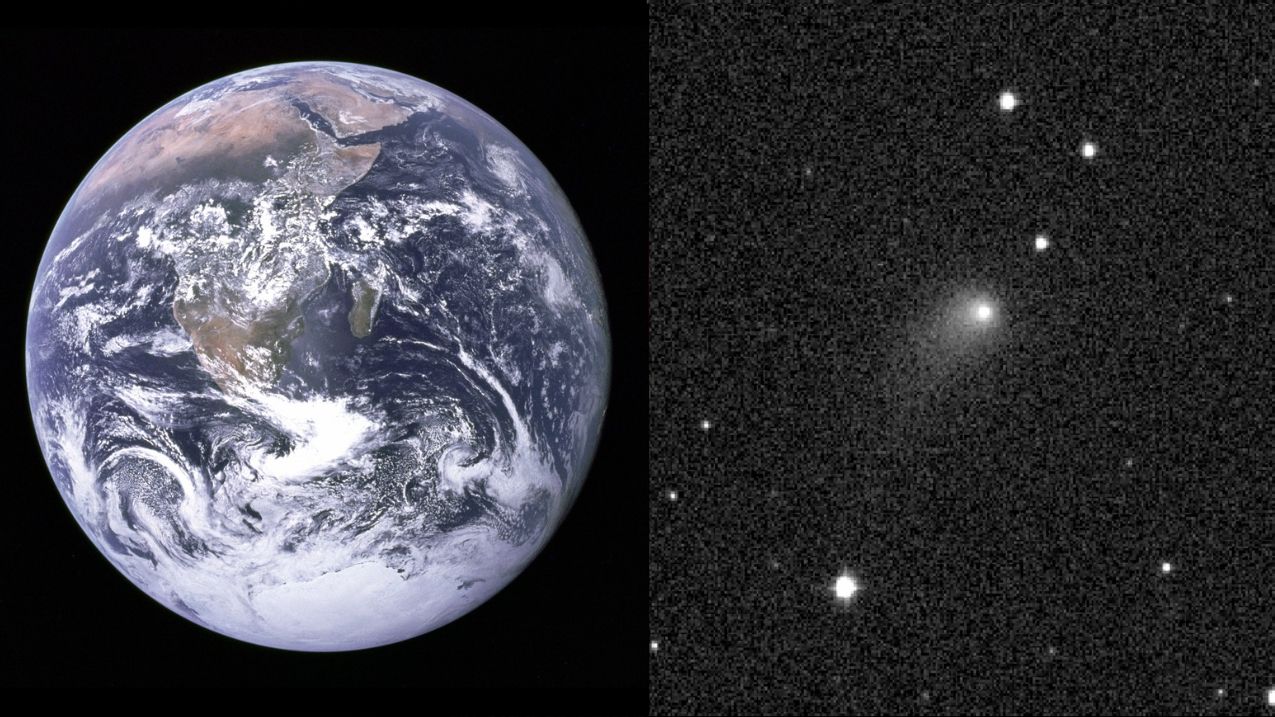
A two panel image showing a picture of the Earth from space on the left and the haxy light of a comet moving through a distant starfield on the right.

The icy solar system comet C/2024 E1 (Wierzchos) is set to make its closest pass of Earth tomorrow (Feb. 17), an event known to astronomers as perigee. But your ability to see the ancient wanderer will depend entirely on your location — and equipment.

Comet Wierzchos' flyby of Earth will occur on Feb. 17, when the icy body will glide 94 million miles (151 million kilometers) from our Blue Marble — about the same as the distance between Earth and the sun. The comet will pose no threat to our planet.

The event will take place less than a month after C/2024 E1 (Wierzchos)'s closest approach to the sun, which occurred on Jan. 20, triggering a peak in brightness as heat from our star vaporized frozen materials that had been buried in the comet's solid central nucleus. These gases fed the coma surrounding C/2024 E1 (Wierzchos), which then reflected the sun's light, increasing its visibility from Earth.

Will comet C/2024 E1 (Wierzchos) be visible?

Comet Wierzchos currently has a brightness, or magnitude, of about +8.2, placing it beyond the reach of the naked eye. For context, the unaided eye can spot objects with a brightness of +6.5 from a dark sky location. The lower the number, the brighter the object.

If the comet were in a favorable position, stargazers may have been able to spot it as a hazy patch of light through a pair of binoculars, or a backyard telescope. Sadly, comet Wierzchos will be travelling through the southern constellation of Grus on Feb. 17 and will appear less than 20 degrees — the width of two stacked fists at arm's length — above the southwestern horizon at sunset for viewers in the U.S., before setting swiftly out of view.

Celestron NexStar 8SE
(Image credit: Amazon)

We reckon the Celestron NexStar 8SE is the best motorized telescope out there as it's great for astrophotography, deep-space observing and it offers stunning detailed imagery. It is a little pricey but for what you get, it's good value. For a more detailed look, you can check out our Celestron NexStar 8SE review.

Each subsequent night will see the comet positioned slightly higher above the horizon at sundown. By early March, it will have passed into the faint constellation Eridanus — the "heavenly river" — and will have reached a more favorable altitude in the post-sunset sky. By then, its brightness will likely have dimmed beyond +8 as it races ever farther from the sun, according to the Comet Observation Database (COBS) run by the Crni Vrh Observatory in Slovenia, which would still make it bright enough to be a viable telescopic target.

Stargazers looking to upgrade their gear should read our picks of the best telescopes and binoculars for exploring the night sky, while photographers should read our guide to imaging wandering comets, along with our roundups of the top cameras and lenses for astrophotography.

Sign up to read this article
Read news from 100’s of titles, curated specifically for you.
Already a member? Sign in here
Related Stories
Top stories on inkl right now
One subscription that gives you access to news from hundreds of sites
Already a member? Sign in here
Our Picks
Fourteen days free
Download the app
One app. One membership.
100+ trusted global sources.