
Get all your news in one place.
100's of premium titles.
One app.
Start reading
The Conversation
The Conversation
Maja Jakarasi, PhD student, Department of Cultural Anthropology, University of the Western Cape

Colonial powers tried to stifle traditional healing in Zimbabwe. They failed and today it’s a powerful force for treating mental illness

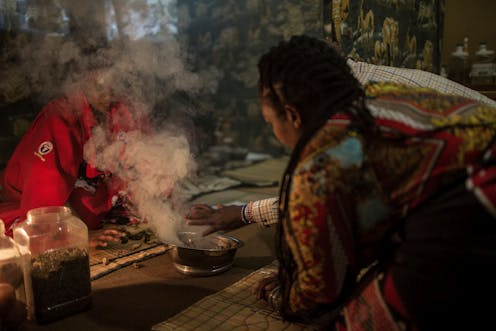
Traditional healers use a number of approaches to treat mental illnesses. Gulshan Khan/AFP via Getty Images

In Zimbabwe’s Shona language, mental illness is known as chirwere chepfungwa or kupenga. Before British colonial settlers arrived in 1890, traditional healers (n’anga) played an important role in helping people to manage their mental as well as their physical health.

But, from the late 19th to the mid 20th century, the British colonisers, particularly Christian missionaries, cracked down on the work of the n’anga. They insisted that communities should abandon their traditional beliefs and healing practices. Instead, people were cajoled and threatened to embrace western biomedicine, relying on its psychiatric and psychological methods to treat mental illness.

Sign up to read this article
Read news from 100's of titles, curated specifically for you.
Already a member? Sign in here
Related Stories
Top stories on inkl right now
One subscription that gives you access to news from hundreds of sites
Already a member? Sign in here
Our Picks
Fourteen days free
Download the app
One app. One membership.
100+ trusted global sources.







