Last year, on Feb. 15, the San Diego County Sheriff’s Department issued a press release announcing that a 67-year-old man named Gilbert Gonzalo Gil had been found dead in his cell at Vista Detention Facility the previous night, 16 or so hours after he was booked for being under the influence of a controlled substance. Gil’s exact cause of death, the statement explained, would be disclosed “pending laboratory results and further evaluation,” though it was suggestively noted that he had tested positive for COVID-19 before dying and that an autopsy conducted by the county medical examiner’s office had revealed traces of methamphetamine in his system.
To Gil’s daughter, 41-year-old Jennifer Schmidt, the press release raised far more questions than it answered. She had reason to doubt that he’d died of COVID-19, having seen her father symptom-free hours before his arrest. Furthermore, she believed that the erratic behavior leading to his arrest—a concerned family member had dialed 911 for medical help; instead, cops showed up and hauled Gil out of his bedroom in handcuffs—stemmed from complications of his hyperglycemia and dementia, not drug use. “I was confused,” she says. “I didn’t believe my dad just went to jail and died.”
That feeling intensified days later when Schmidt visited the county crematorium to see her father’s body and noticed a “big, red mark” stretching from his forehead up into his wispy, silver hair. “My gut told me that something wasn’t right,” she says.
Carmen Mandato/Getty Images
Looking for help, grasping for advice, Schmidt found that her best next step was to hire a forensic pathologist who could perform a second autopsy on her father, providing an expert opinion independent of the criminal legal system. But, Schmidt says, “I just couldn’t afford it. I was discouraged. I was like: I’m gonna have to depend on what the county says.”
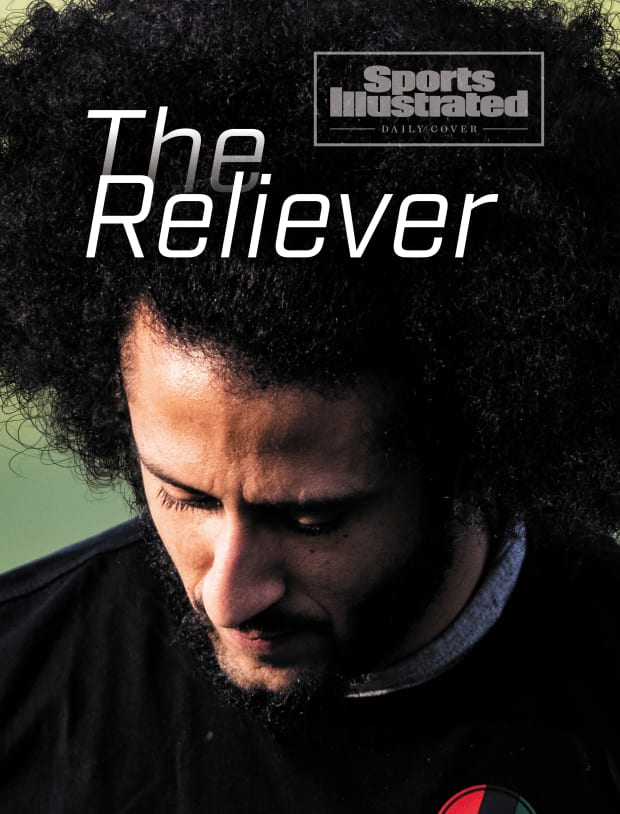
The following week, though, Schmidt saw a news segment on TV covering the launch of a new charity providing free autopsies after police-related and in-custody deaths. Surprised as Schmidt was by this serendipitous timing, she was more taken aback when she learned that the Know Your Rights Camp Autopsy Initiative was the brainchild of an NFL quarterback turned activist whom she once regarded with skepticism.
Left with no other options in her quest for clarity around her father’s death, Schmidt visited the Initiative’s nascent website. She clicked on an autopsy request form, typed out a summary of her father’s death and hit submit, hoping for the best but expecting much less.
“I thought it would have to be a high-profile case for them to call me back,” Schmidt says. “I was like: Colin Kaepernick? Yeah, right. Never going to help me.”