Get all your news in one place.
100's of premium titles.
One app.
Start reading
The Times of India
The Times of India
World
TOI World Desk

Cold War Nukes Still Missing: Three US bombs vanished in accidents; experts say recovery unlikely

At least three US nuclear bombs that were lost during the Cold War have never been recovered. One disappeared into waters near Tybee Island, Georgia, in 1958, while another went into the Philippine Sea in 1965 after an aircraft slipped from the USS Ticonderoga. A third was lost after a B-52 crash near Thule Air Base in Greenland in 1968. The weapons remain among the US military's unresolved nuclear-weapon losses. The incidents happened during a period when US aircraft routinely carried nuclear weapons during training and airborne-alert operations. Some weapons were recovered quickly; others disappeared into the sea or were left in locations where recovery proved impossible. The missing weapons were not identical cases since their locations, depths and circumstances differed, and so did the information available about what happened to them.

Get breaking news anytime, anywhere. Download the TOI app now!

The Tybee bomb disappeared after a forced landing

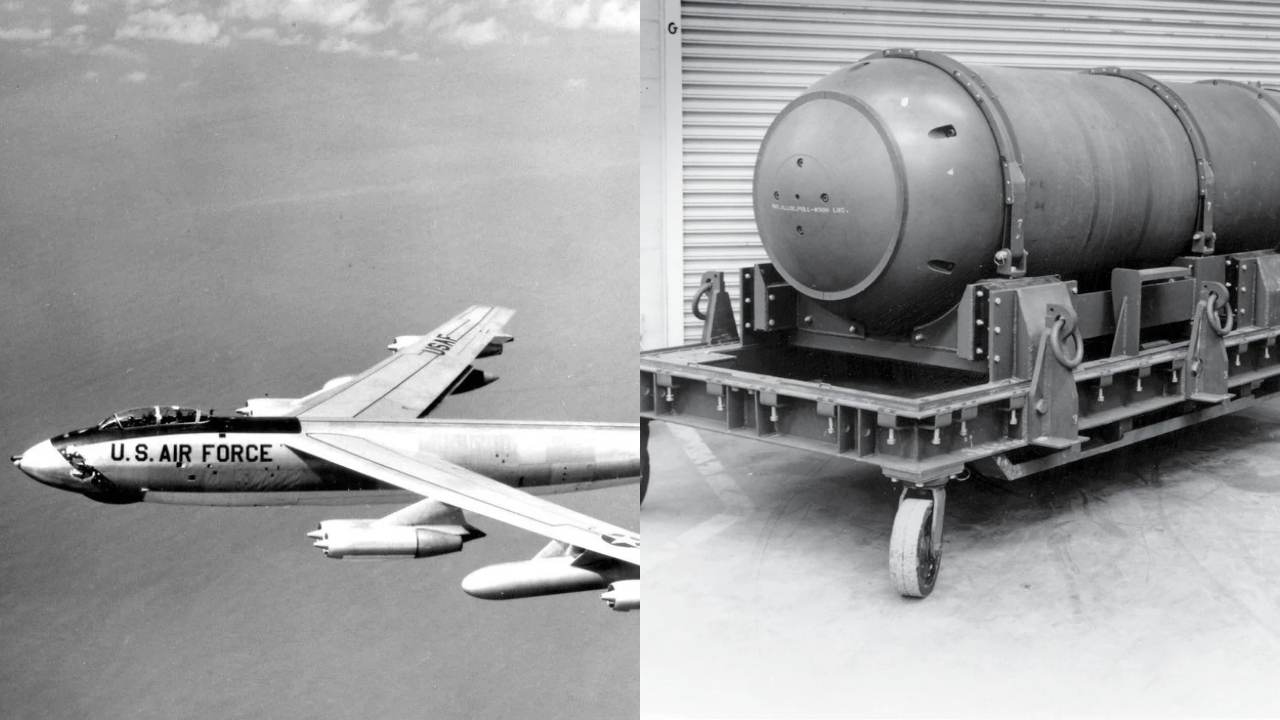
A B-47 bomber that was carrying a Mark 15 thermonuclear bomb was involved in a collision during a training mission near the South Carolina coast on February 5, 1958. The damaged aircraft needed to make an emergency landing. The pilot jettisoned the weapon before landing and dropped it into the waters near Tybee Island, Georgia. Search teams spent almost 10 weeks looking for it before the Air Force declared it irretrievably lost on April 16, 1958.

A receipt written by the pilot said that the weapon did not contain its nuclear capsule, while a later Defense Department document described the bomb as complete. BBC Future reported that the weapon is thought to be buried under several feet of silt in Wassaw Sound. In the late 1990s, a retired military officer and his partner searched the area with a Geiger counter after narrowing the likely location to Wassaw Sound. They found a patch with elevated radiation, but the US government determined that the signal came from naturally radioactive minerals rather than the bomb.

One weapon is thousands of feet underwater

The second missing weapon disappeared on December 5, 1965, when an A-4E Skyhawk that was carrying a B43 nuclear bomb rolled toward an aircraft elevator aboard the USS Ticonderoga. The aircraft went over the side of the carrier and disappeared into the Philippine Sea, and the pilot, aircraft and bomb were never recovered. BBC Future reported that the weapon is believed to be lying about 16,000 feet, or roughly 4,900 metres, underwater near a Japanese island.

The third case occurred in Greenland in 1968, when a B-52 that was carrying four nuclear weapons caught fire and crashed near Thule Air Base. The crew escaped, but the aircraft and its weapons were destroyed in the crash. The incident produced widespread radioactive contamination from the conventional explosives and nuclear materials in the weapons, although there was no nuclear detonation.

The three missing weapons are different from the fourth bomb involved in the 1966 Palomares accident in Spain. That weapon also disappeared underwater, but it was eventually located and recovered after an extensive search using ships, aircraft and the deep-sea submersible Alvin.

Finding a nuclear bomb underwater is not like finding a crashed aircraft

Nuclear weapons did not carry the underwater locator beacons used on aircraft flight recorders, so search teams had to establish probable locations and examine the seabed. Radiation detection was also not a straightforward solution, since nuclear weapons are designed to shield their radioactive material, meaning the detectable radiation signature can be relatively weak at a distance. That leaves investigators dependent on narrowing the search area and conducting visual or physical searches. The Tybee search demonstrated the problem, since even after researchers narrowed the suspected location and detected an unusual radiation signal, the anomaly turned out to be naturally occurring radioactivity in the seabed.

The Philippine Sea weapon presents an even greater physical challenge, because a bomb that is sitting almost 16,000 feet below the surface would be far beyond the depth at which ordinary diving operations could work, and would require specialized deep-ocean equipment. BBC Future reported that experts considered it unlikely that the three missing US weapons would ever be found. Their locations are known only within broad areas, and decades underwater or beneath sediment make conventional recovery methods difficult.

Sign up to read this article
Read news from 100's of titles, curated specifically for you.
Already a member? Sign in here
Related Stories
Top stories on inkl right now
One subscription that gives you access to news from hundreds of sites
Already a member? Sign in here
Our Picks
Fourteen days free
Download the app
One app. One membership.
100+ trusted global sources.