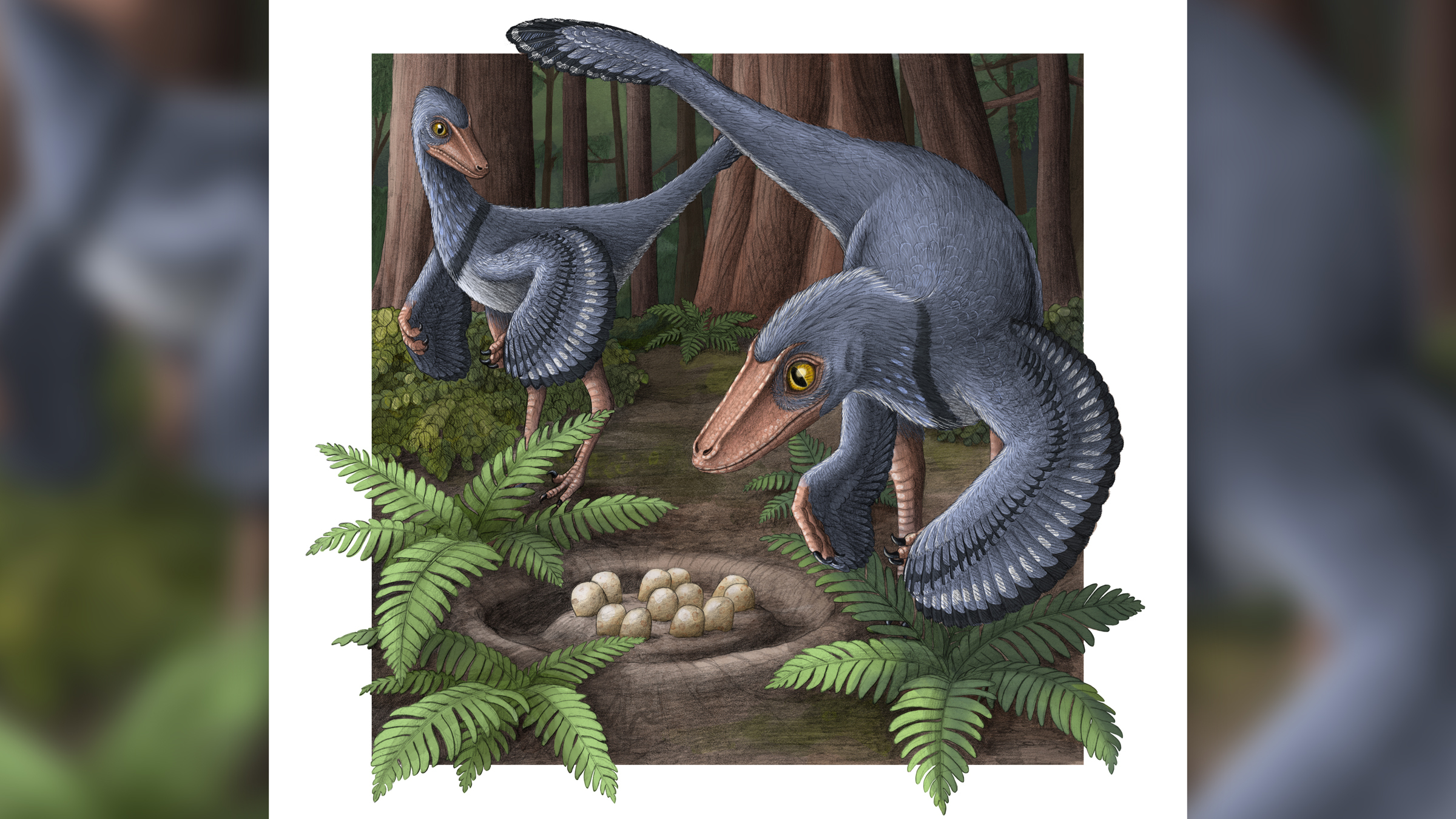
Bird-like dinosaurs that lived up to 74 million years ago didn't hog nests; instead, these beaked dinosaurs shared communal nests where several female nestmates often laid more than 20 eggs together, which these feathery dinos then brooded to keep warm, new research suggests.
Most dinosaurs are thought to have laid eggs "en masse" and buried them in the ground for incubation, like crocodiles and other cold-blooded reptiles do today. But not Troodon, a small predatory dinosaur that was closely related to modern birds and which lived in the late Cretaceous, 74 million to 66 million years ago. Researchers were already aware of brooding behavior in some theropods — a group of bipedal, mostly meat-eating dinosaurs that includes Tyrannosaurus rex and Velociraptor — and recorded an ultra-rare dinosaur fossil brooding atop its eggs in 2021.