
Get all your news in one place.
100's of premium titles.
One app.
Start reading
The Conversation
The Conversation
Environment
Joseph Curti, Ph.D. Candidate in Ecology and Evolutionary Biology, University of California, Los Angeles

Cities contain pockets of nature – our study shows which species are most tolerant of urbanization

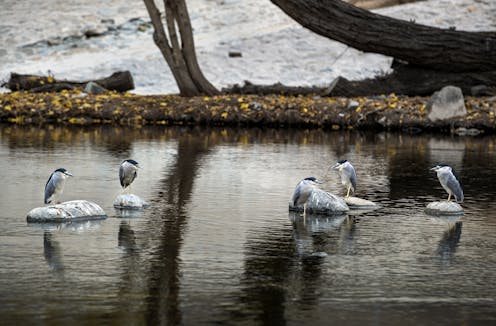
Black-crowned night herons perch on rocks in the Los Angeles River in Los Angeles. Mel Melcon / Los Angeles Times via Getty Images

The Earth is losing animals, plants and other living things so fast that some scientists believe the planet is entering its sixth mass extinction. But there’s some surprising good news: Urban areas may be key to slowing down or even reversing this crisis.

This idea may seem counterintuitive, since studies show that urbanization is a big driver of biodiversity loss. Cities alter the environment with artificial lighting and noise pollution, which affect many species. And urban land cover is expected to increase by 2.5% globally between 2000 and 2030 as more people move to cities.

Sign up to read this article
Read news from 100's of titles, curated specifically for you.
Already a member? Sign in here
Related Stories
Top stories on inkl right now
One subscription that gives you access to news from hundreds of sites
Already a member? Sign in here
Our Picks
Fourteen days free
Download the app
One app. One membership.
100+ trusted global sources.







