Seven and a half months into her confinement at a federal lockup in Brooklyn, Cilia Flores has picked up an odd second identity: a line item on the internet's most-watched betting exchange. Traders on Polymarket have poured more than $1.37 million into a single wager — not whether Nicolás Maduro's wife walks free, but when. As of today, "December 31" leads every other date on the board, priced at roughly 17 cents on the dollar. That's the frontrunner, not a favorite; five out of six dollars wagered still say she stays put through year's end.
A Front-Runner, Not a Forecast
Framing this as traders "increasingly" betting on freedom overstates the picture. Eighty-three percent of the money still sits against a year-end release, and Polymarket's own market notes admit that nothing concrete — no bail motion, no plea talks, no docket entry — has actually moved the needle recently. A parallel contract on Maduro's own custody status tells a starker story: his odds of walking free by December 31 sit at just 7%, less than half his wife's. That split hints traders see age, health, or a lesser role in the case as reasons Flores, 69, might exit first, though nothing in the public record confirms any such calculus. It's also worth noting the bar for a "yes" here is low: under the contract's rules, house arrest, parole, or bond all count as a win, so even that 17% already includes outcomes short of true freedom.
From a Caracas Residence to a Brooklyn Cell
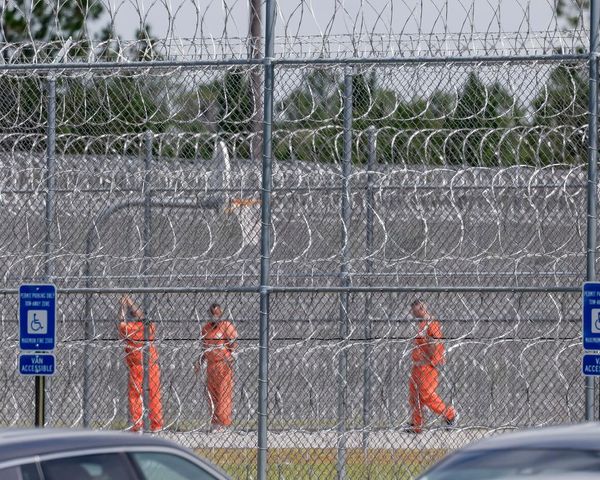
The couple's ordeal began before dawn on January 3, when U.S. forces pulled them from their home outside Caracas and had them on a plane to New York before the day was out. Both stood for arraignment in a Manhattan courtroom two days later and have sat without bail ever since inside the Metropolitan Detention Center in Brooklyn. Prosecutors built a lighter case against Flores than against her husband: she answers to three counts tied to cocaine importation and illegal weapons, while Maduro carries a fourth charge — conspiracy to commit narco-terrorism — that she does not face. Whatever momentum existed for a fast resolution stalled out in July, when Judge Alvin Hellerstein set June 1, 2027 as the trial date, with defense motions attacking the indictment due by early September and a hearing on those motions not scheduled until November 17. The defense had earlier tried a different route out, arguing the case should be tossed after U.S. Treasury sanctions froze Caracas out of paying the couple's legal bills; Hellerstein refused, though he let the funding restriction lapse that April, briefly reviving chatter about some kind of negotiated exit that never materialized.
A Real Thaw, Just Not This One
None of the market's movement lines up with what's actually happening between Washington and Caracas, even though plenty is happening. Interim leader Delcy Rodríguez's government and a faction of the opposition just wrapped up their first face-to-face negotiating round in Caracas, producing, on August 12, the first written agreement either side has signed since Maduro's fall — though notably still without a date for new elections. National Assembly President Jorge Rodríguez ran the government's side; exiled former lawmaker Dinorah Figuera led the opposition delegation, a track that runs entirely separate from the parallel push Nobel laureate María Corina Machado has waged from outside the talks. Energy diplomacy is moving too: this week in Houston, Venezuela's state oil company signed its first American production deals since Maduro's ouster, with Dallas-based Hunt Oil and SLB, the oilfield-services giant, both putting pen to paper, per NPR's reporting. But none of this — not the talks, not the oil contracts — has been tied by any outlet to Flores' custody status, and nothing in the court file suggests prosecutors are weighing a swap or an early plea.
The Market Has Its Own Baggage
Polymarket's read on anything Venezuela-related carries a credibility asterisk. In April, the Justice Department charged a master sergeant in the Army's Special Forces who had helped plan the January raid with using his advance knowledge of the mission to place roughly $33,000 in bets that paid out more than $409,000 hours before Maduro and Flores were captured. That case didn't touch the contract now tracking Flores specifically, but it left the platform's politically sensitive Venezuela markets under a cloud that hasn't fully lifted.
Why Doral Is Still Watching
In a city where close to four in ten residents trace their roots to Venezuela, the couple's legal fate has become something like a mood ring for how far the country's transition has really come. Doral Mayor Christi Fraga described the January capture as a "light at the end of the tunnel" for a community that poured into the streets to celebrate it. Seven and a half months later, that celebration has settled into something quieter — residents parsing court filings and betting-market swings for clues, aware the honest answer might be a trial still nearly two years out, a deal nobody's confirmed, or something nobody's predicted yet.