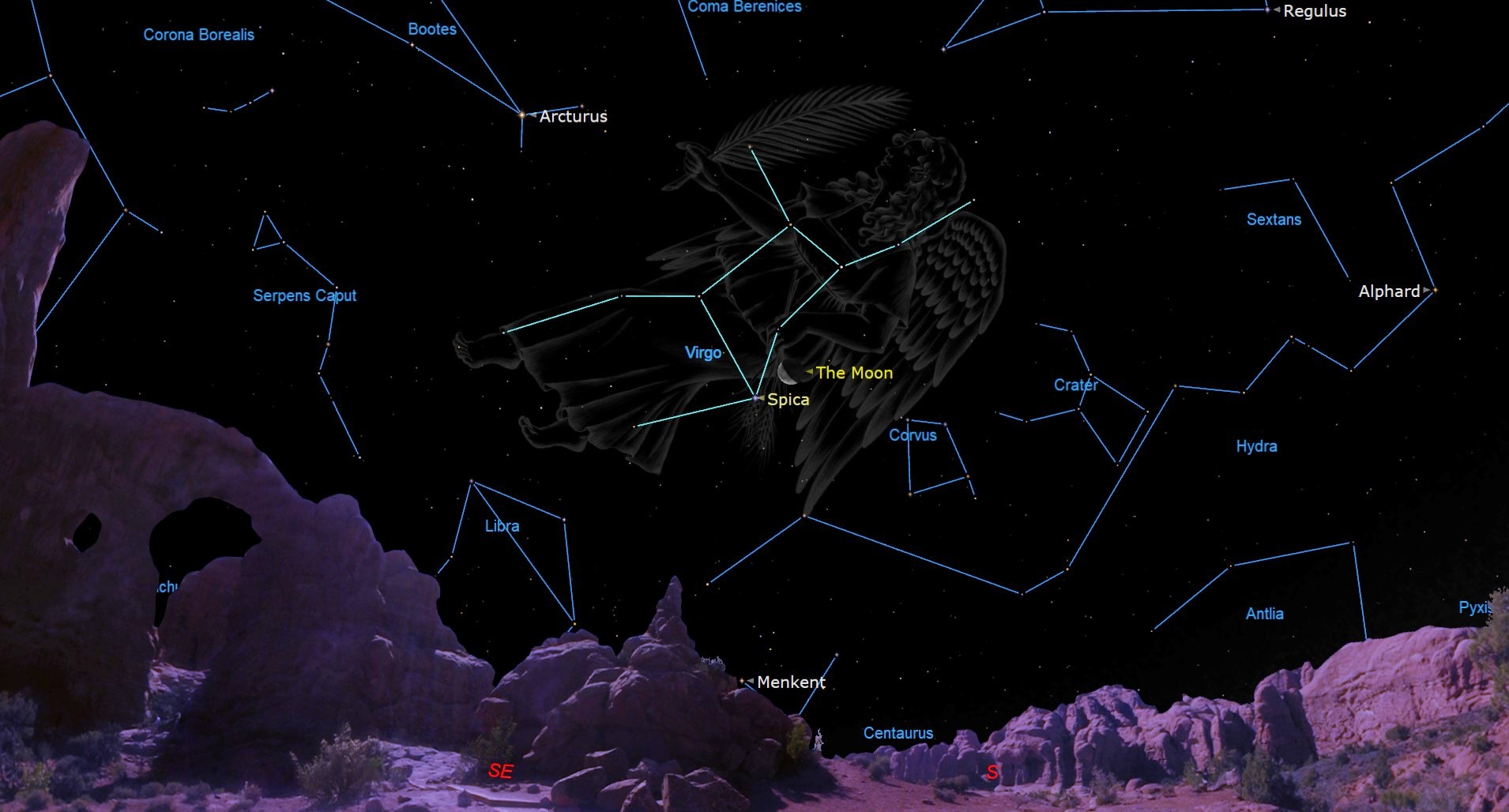
Christmas is here. And the night sky tonight obliges by presenting a beautiful display of celestial sights, perfectly timed out to coincide with the holiday.
In ancient times, Dec. 25 was the date of the lavish Roman festival of Saturnalia, a sort of bacchanalian thanksgiving to the god of agriculture, for whom the slowest moving of the then-known planets, Saturn, was named. Saturnalia was celebrated on the date of the winter solstice by the calendar then in use, and it also marked the fact that the sun had stopped creeping southward in the noon sky and would thenceforth cross the meridian higher each day, warming Earth and reawakening nature. This holiday of the Romans was a version of similar celebrations by other early peoples.