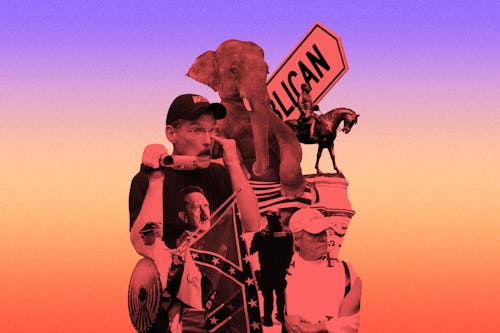
By now the images have become an indelible part of American history: screaming white faces, lit by tiki torches, marching lockstep through the night; masked bigots, clad in the makeshift uniforms of their respective hate groups, holding shields emblazoned with Nazi symbols; anguish and confusion and resolve in the eyes of protesters scrambling to confront, or maybe escape, the violence and mayhem in their community.
Five years ago, the Unite the Right rally in Charlottesville, Virginia, thrust this country’s latest iteration of right-wing white nationalism into the national spotlight, not as an aberration or subculture relegated to the fringes of whatever most people would consider “respectable” society, but instead as a pivotal political bloc — one with deep, longstanding roots in America’s history of ultranationalist racism, which emerged over those days as a newly vital force within a Republican Party in the throes of its own Trumpian metamorphosis.