
Get all your news in one place.
100's of premium titles.
One app.
Start reading
LiveScience
LiveScience
Kenna Hughes-Castleberry

Chinese lander reveals giant 'cavity' of radiation between Earth and the moon — and it could change how lunar exploration is done

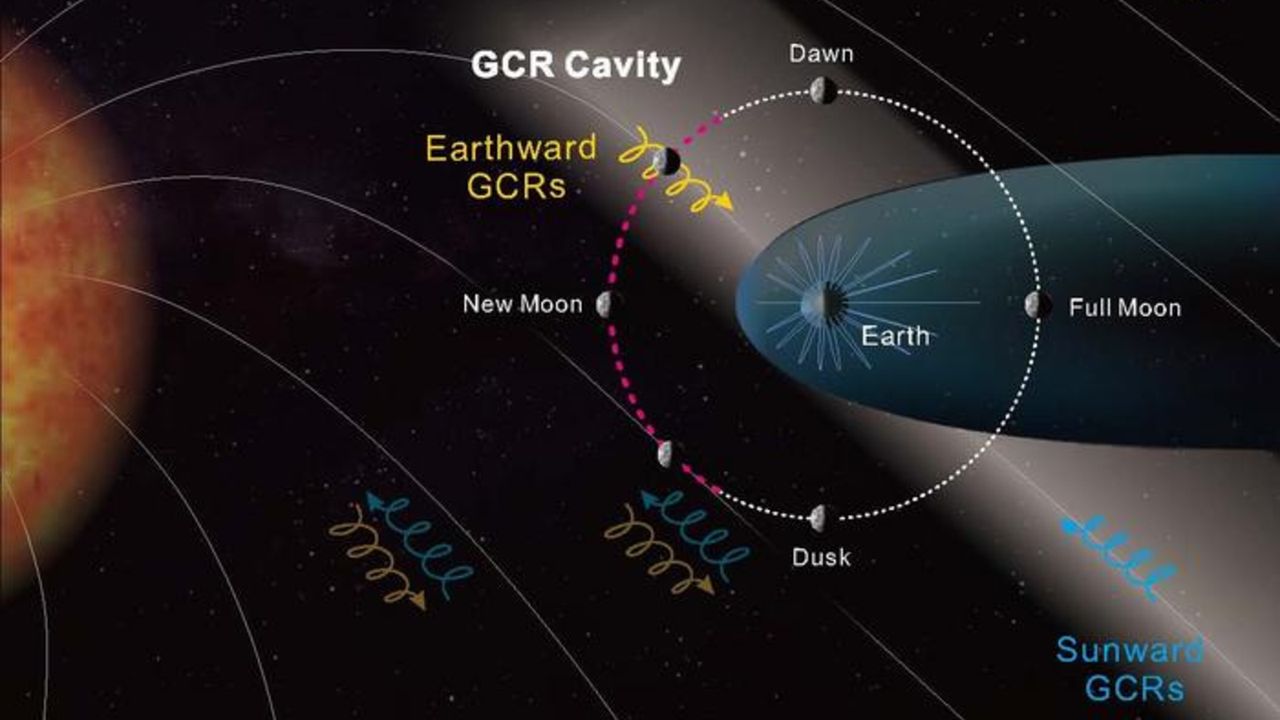
A diagram showing the Earth in a blue oval surrounded by a white and red dotted line showing the moon's orbit, with labeled areas for different levels of cosmic radiation.

Could being a "morning person" improve your health … on the moon? Scientists have identified what appears to be a "cavity" of reduced cosmic radiation near Earth's moon. The finding could help lower astronauts' exposure to harmful radiation on future lunar missions by timing some surface operations for local morning hours.

The discovery, based on data from China's Chang'e-4 lunar lander, suggests Earth's magnetic field may affect distances in space farther than scientists previously expected. According to the researchers, the finding challenges the long-held assumption that galactic cosmic rays are roughly uniform throughout the space between Earth and the moon outside our planet's protective magnetic field.

Sign up to read this article
Read news from 100's of titles, curated specifically for you.
Already a member? Sign in here
Related Stories
Top stories on inkl right now
One subscription that gives you access to news from hundreds of sites
Already a member? Sign in here
Our Picks
Fourteen days free
Download the app
One app. One membership.
100+ trusted global sources.