China will strengthen coordination with other countries to remove bureaucratic barriers and make travel more convenient for international tourists, Beijing's tourism chief has told an Apec meeting attended by ministers from Hong Kong and other jurisdictions.
Sun Yeli, China's minister of culture and tourism, also called for closer cooperation within the Apec community to promote tourism as a regional economic driver.

He highlighted that the "high-quality development of cultural tourism" was a key area in the country's latest five-year blueprint covering 2026-30.
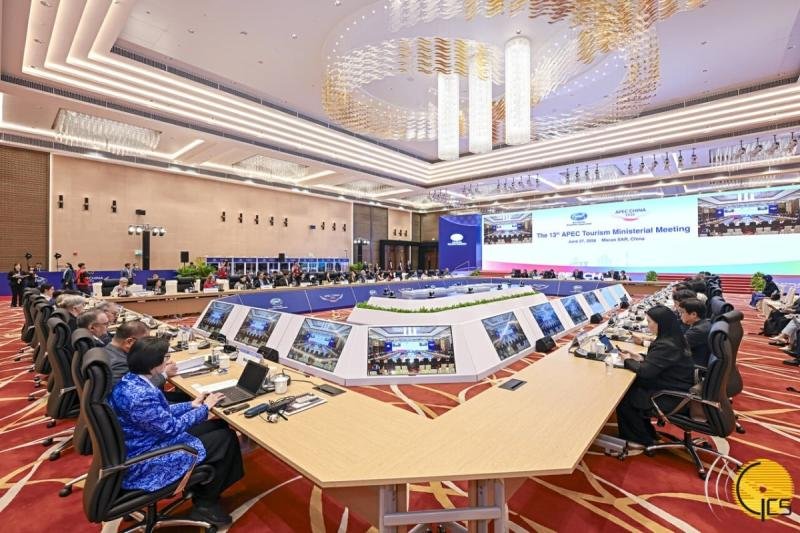
Sun was addressing the 13th Asia-Pacific Economic Cooperation (Apec) tourism ministerial meeting, held in Macau on Saturday.
"China is willing to strengthen policy alignment with the governments of other countries and introduce more measures in areas such as mutual visa exemption, fast-track customs clearance, cross-border payments, and tax refunds for departing tourists to continuously improve tourism facilitation," Sun told the meeting.
By the end of last year, China had established mutual visa exemption agreements with 29 countries and unilaterally offered visa-free entry to travellers from 48 countries. Sixty-five entry ports are covered under the 240-hour visa-free transit policy.
Sun also called for closer collaboration within the Apec community to pursue "digital and intelligent innovation" and "foster more new business models" to promote and upgrade tourism.
"[We should] share the value of tourism and work together to build an Asia-Pacific community, continue to unleash the economic and social potential of tourism, and better leverage its important role in serving a better life and promoting economic development," Sun said.
The meeting, themed "Digital Innovation, Collaborative Empowerment: Leveraging Tourism for an Asia-Pacific Community", was held at the China-Portuguese-speaking Countries Commercial and Trade Service Platform Complex in Macau. More than 300 official representatives gathered to discuss tourism sector development and pathways for cooperation.
In his speech, Sun also praised Macau, which reverted from Portuguese to Chinese administration in 1999, as an important "bridgehead" and a "key window" for cultural exchange between China and the outside world.
Earlier, Washington decided not to send high-level representatives to the conference, saying Beijing required officials from the US consulate in Hong Kong to obtain separate official visas to enter Macau. The process could take as long as a week, a delay Washington said would hinder the provision of immediate consular help to Americans in the city during emergencies.
The United States was reportedly represented by lower-level "technical experts" at the forum.
Hong Kong's secretary for culture, sports and tourism, Rosanna Law Shuk-pui, told the conference that the city was also seeking to introduce more innovative technologies to enhance travellers' experiences.
"Currently, we are developing an AI-powered itinerary-planning feature and collaborating with map service providers to integrate our data into a dedicated Hong Kong travel map," she said.
"This will empower visitors with tailored information on attractions, events, dining and offers, while generating personalised itineraries that reflect their interests.
"By bringing these capabilities together, visitors can plan their ideal trip in just a few clicks, enjoying an experience, an 'Only in Hong Kong' experience, that is convenient and uniquely their own."
Law, however, also stressed the importance of the "human element".
"Tourism does not thrive on technology alone, but also on the warmth of human connection. While AI can personalise journeys and digital tools enhance convenience, they can never replace the real local stories and human interactions that truly define travel," she said.
Earlier in the week, Macau also hosted the 67th Apec tourism working group meeting. Maria Helena de Senna Fernandes, director of the Macau Government Tourism Office, shared the city's economic diversification strategy with attendees.
China is hosting the 2026 Apec meetings. About 300 Apec-related meetings and events have been scheduled to take place in multiple Chinese cities throughout the year.
In October, the Apec finance ministers' meeting will be held in Hong Kong, followed by the Apec economic leaders' meeting in Shenzhen in November.