Germany's economy has been struggling with weak growth for years. In the economic policy debate, this is mainly attributed to high costs, a lack of innovation and structural problems that have built up over many years.
Many economists believe most of the reform effort needs to happen at home. Clemens Fuest, president of the Ifo Institute, has called on the federal government, as he explained in an interview with Capital , to implement far-reaching changes in order to stimulate investment, foster innovation and generate fresh growth momentum. What is needed, Fuest argues, is 'a comprehensive approach to creating stronger long-term growth in Germany'.
A new study, however, calls this widely held view at least partly into question. Under the title 'China shock 2.0 – the cost of Germany’s complacency', economists Sander Tordoir and Brad Setser from the UK think tank Centre for European Reform argue that Germany’s economic weakness is primarily the result of pressure from Chinese industry. In key markets, they say, Chinese firms are becoming increasingly dominant and are able to squeeze out European competitors.
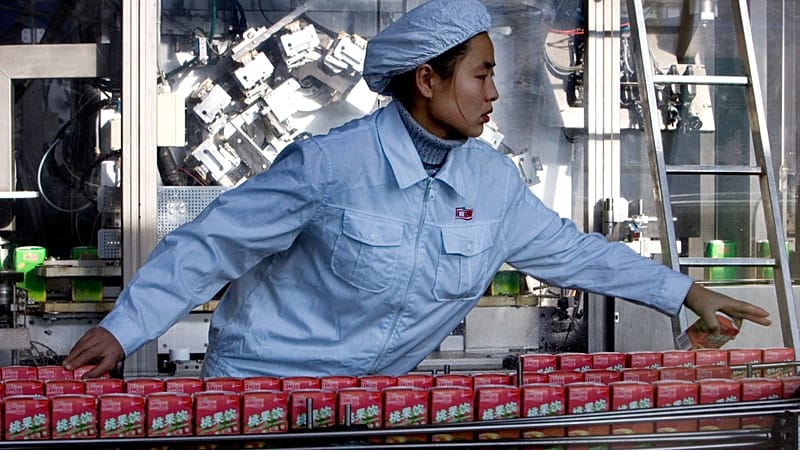
In recent years China has carved out a particularly strong position in areas such as raw materials, rare earths and basic chemicals for the pharmaceutical industry. The same applies to future-oriented sectors such as chips, robotics, batteries and electric cars. In the authors’ view, China now dominates many of these markets both technologically and economically.
This shift is most visible in the car industry. Since the end of the Covid-19 pandemic, Chinese manufacturers have significantly expanded their position on the global market. For Tordoir and Setser, this is a sign of how quickly industrial power relations can change – with potentially serious consequences for traditional manufacturing locations.
China's exports are rising
The authors expect European companies to lose further market share in the coming years – not only on global markets but also within Europe itself. They cite Germany’s solar industry, once seen as a global showcase sector and now all but gone, as an example. The decline of industrial heartlands in the United States in the 2000s also serves them as a warning of what could happen in Germany’s industrial regions.
While many economists mainly criticise high labour costs, bureaucracy and a lack of competitiveness, Tordoir and Setser locate the root of the problems in China’s targeted economic and industrial policy. Through market barriers, extensive state support, strategic control of raw materials and direct policy interventions, China has secured its companies substantial advantages.
According to the study, the consequences are already clearly visible. China’s exports have recently grown much faster than global trade as a whole, while Germany has been recording declines in its business with China since 2023 in particular. This, the authors argue, is having a significant impact on industrial value creation and employment.
Tordoir and Setser derive specific policy recommendations from their analysis. They call for stronger protective measures against Chinese competition. These include higher import tariffs in sensitive industrial sectors, greater consideration of European products and stricter rules for Chinese companies wishing to manufacture in Europe. They also regard joint-venture requirements modelled on China as a possible option.
Germany holds back on tougher China stance
Germany has so far responded rather cautiously to such proposals. Reasons for this include its close economic ties with China and concern about possible retaliation. At the same time, Europe continues to depend on Chinese supplies in key areas, such as critical raw materials and industrial intermediate goods.
In a bid to strengthen economic relations between Germany and Beijing, Federal Economics Minister Katherina Reiche (CDU) is travelling to China herself this week. She is accompanied by a delegation of around 40 business representatives looking to drive forward potential cooperation projects.
At the same time, discontent is growing within the European Union: France, Spain, Italy, the Netherlands and Lithuania have called in an informal position paper for a tougher response to China’s trade practices. Germany did not back the initiative. In March, Chancellor Friedrich Merz (CDU) urged the conclusion of a trade agreement with Beijing, a proposal Brussels rejected.
This text was translated with the help of artificial intelligence. Report a problem : [feedback-articles-en@euronews.com].