Get all your news in one place.
100’s of premium titles.
One app.
Start reading
The Times of India
The Times of India
World
TOI World Desk

China’s great green wall: How 66 billion trees turned a ‘dead’ desert into a carbon sink

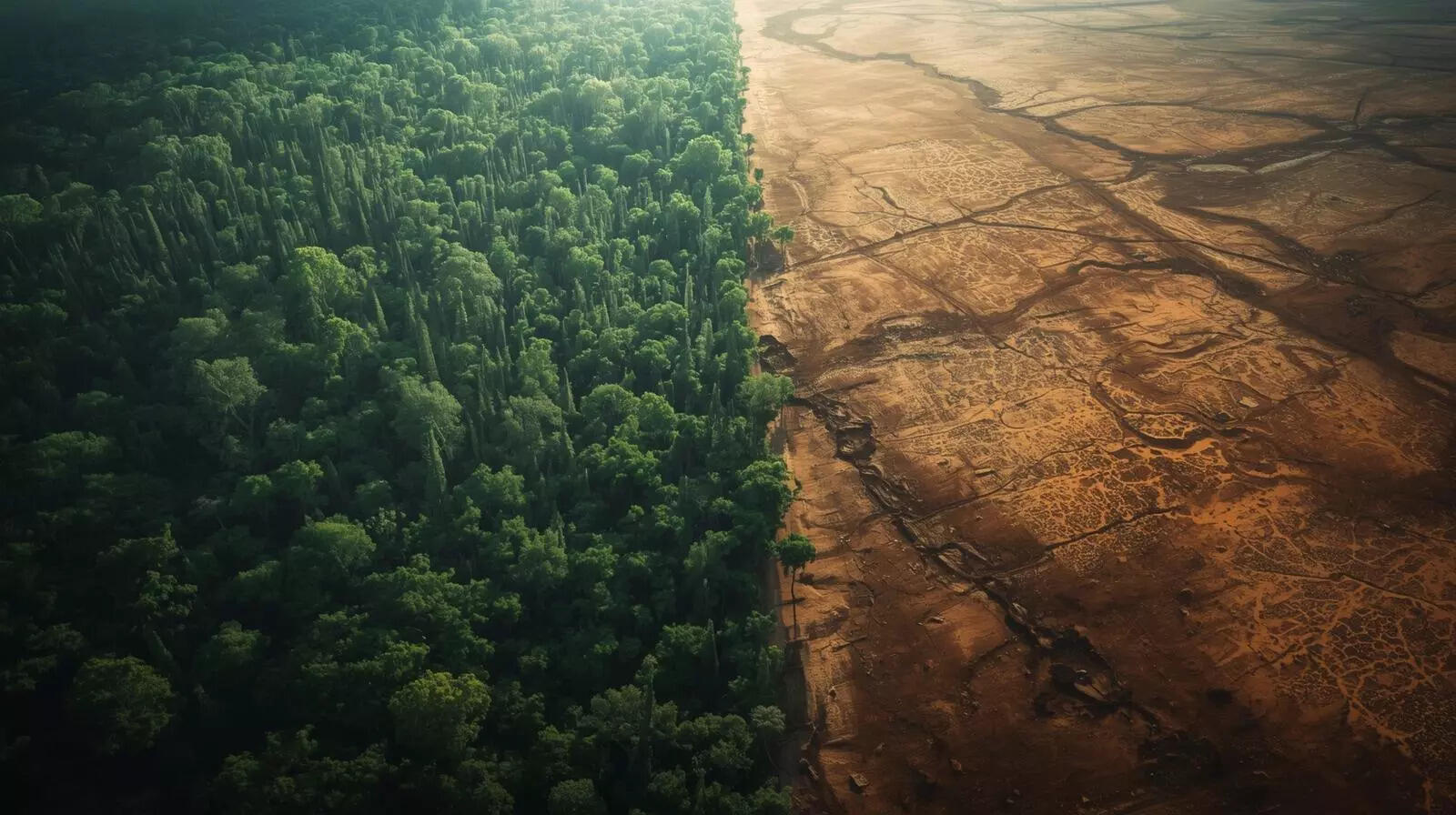
Across northwestern China, a desert long described as empty is showing measurable ecological change. New research examining the Taklamakan Desert finds rising vegetation cover and seasonal carbon uptake linked to decades of state-backed planting efforts. The findings suggest parts of this hyperarid region are beginning to function as a modest carbon sink. Scientists analysed satellite records alongside ground observations and detected stronger summer photosynthesis and declining net carbon emissions in restored zones. The work connects these trends to the country’s vast shelterbelt programme, often called the Great Green Wall. While uncertainties remain about scale and durability, the data indicates that even extreme drylands can respond to sustained ecological engineering, with possible implications for carbon management and desert control.

China’s Great Green Wall increased vegetation cover along desert marginsFor much of modern climate science, the Taklamakan was treated as a biological void. According to the Royal Geographical Society, rainfall averages between 100 and 250 millimetres a year across much of northern China. The nearby mountain ranges block moist air, leaving long dry seasons.

Yet during the wetter months from July to September, precipitation edges up. Researchers recorded average rainfall of about 16 millimetres per month in that period. Vegetation cover increases modestly but consistently. Satellite indices show rising photosynthetic activity. Atmospheric carbon dioxide concentrations fall by roughly three parts per million compared with the dry season baseline.

Long-term datasets suggest vegetation cover has been increasing gradually year on year. Net ecosystem exchange measurements indicate strengthening carbon uptake, particularly along the desert margins. These areas coincide with afforestation zones.

Three north shelterbelt program reshapes desert marginsThe greening aligns with the timeline of the Three-North Shelter Forest Program, launched in 1978. Known informally as China’s Great Green Wall, the programme aims to slow the spread of the Gobi Desert and stabilise soils near the Taklamakan Desert.

More than 66 billion trees have been planted across northern China since the project began. Official plans outline billions more by mid century. Strips and patches of forest act as windbreaks, reducing soil erosion and limiting sand deposition on farmland and settlements.

Researchers who compared flora indices with data on the severity of dust storms found a strong link between more plants and less severe storms in several areas. Since the late 1990s, the number of dust storms in some northern provinces has dropped sharply. Changes in weather also play a part.

Desertification pressures remain severe in northern ChinaThe backdrop is long standing land degradation. Rapid urban growth and farmland expansion after the 1950s left large tracts exposed to wind erosion. Around 3,600 square kilometres of grassland are estimated to be lost annually to desert expansion, alongside significant topsoil loss.

The combined area of the Gobi and Taklamakan deserts exceeds 1.6 million square kilometres. Dust from these regions has been linked to high particulate levels in cities including Beijing, where storms can trap pollution close to the ground.

In some areas such as parts of Gansu province, desert expansion continues despite planting efforts. In the southern Taklamakan, exceptionally loose geological conditions have made vegetation establishment difficult. Not all trends move in the same direction.

Water stress and ecological limits shape long-term outcomesAfforestation in arid zones carries trade offs. Trees require water, often drawn from already stressed aquifers. In parts of Minqin county, groundwater levels have fallen sharply over recent decades. Some plantations have required repeated replanting as saplings fail in dry conditions.

Ecologists have also raised concerns about monoculture planting. Poplar and willow dominate many shelterbelt areas. Limited species diversity can reduce resilience to pests and disease. In response, funding has been directed toward mixed and indigenous plantings.

The new carbon data does not resolve these tensions. It does, however, add evidence that human intervention can alter surface processes in even the driest landscapes. How durable that shift proves to be will depend on rainfall patterns, water management and planting choices in the years ahead.

Sign up to read this article
Read news from 100’s of titles, curated specifically for you.
Already a member? Sign in here
Related Stories
Top stories on inkl right now
One subscription that gives you access to news from hundreds of sites
Already a member? Sign in here
Our Picks
Fourteen days free
Download the app
One app. One membership.
100+ trusted global sources.