
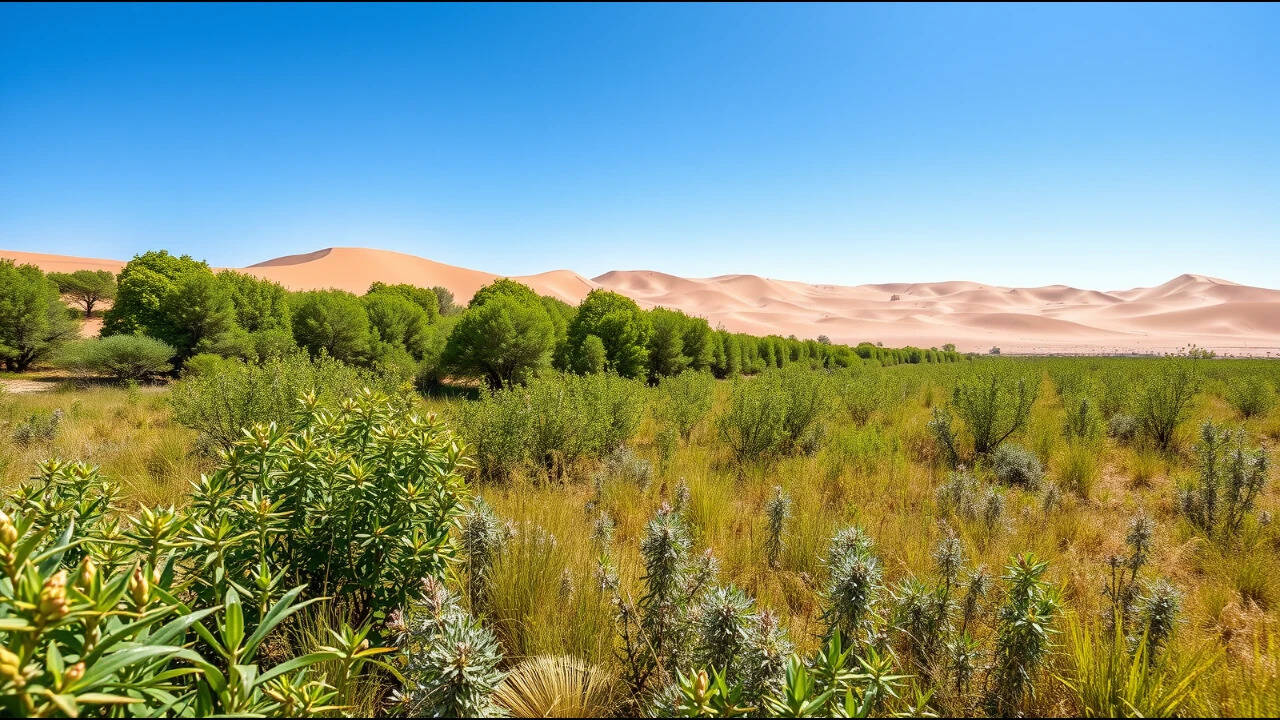
In November 2024, China completed a 3,046-kilometre green belt around the Taklamakan Desert, filling the final gaps in a project that has been under construction for decades. The belt forms part of the Three-North Shelterbelt Program, launched in 1978 as one of the world's largest ecological restoration efforts, designed to combat desertification, reduce the movement of sand and protect land across northern China. Now, researchers are examining another consequence of that transformation: how the expanding vegetation is changing the relationship between carbon and water across the region. A 2026 study titled Nonlinear carbon–water coupling in terrestrial ecosystems: Insights from China’s Three-North Shelterbelt Forest region , published in Regional Sustainability, analysed changes in net primary productivity, carbon use efficiency and water use efficiency across the Three-North Shelterbelt region between 2000 and 2020. The researchers found that both productivity and water use efficiency increased significantly, while carbon use efficiency showed a small, statistically insignificant decline, revealing a much more complicated picture than simply measuring whether the landscape has become greener. Together, these findings underscore a broader truth about large-scale ecological restoration, that transforming a landscape's appearance is far simpler to measure than understanding the complex, interconnected shifts it triggers within an ecosystem's underlying carbon and water cycles.
Get breaking news anytime, anywhere. Download the TOI app now!














