Get all your news in one place.
100's of premium titles.
One app.
Start reading
The Economic Times
The Economic Times

China now has nearly 500 J-20 stealth fighters, says a report. Where does India's AMCA stand?

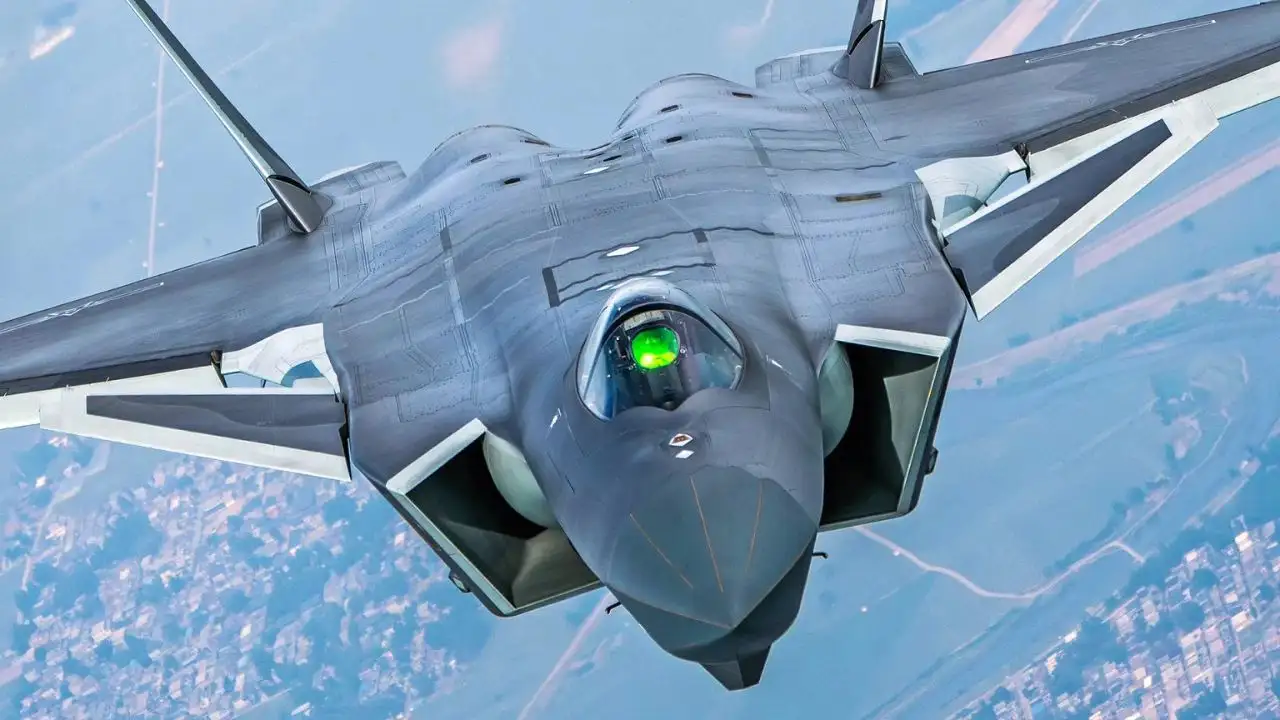
China's J-20 Mighty Dragon has evolved into the backbone of the People's Liberation Army Air Force (PLAAF), with open-source estimates suggesting the country has now produced around 500 fifth-generation stealth fighters. The rapid expansion of the programme, supported by successive upgrades and increasing domestic manufacturing capabilities, has drawn global attention as Beijing continues to strengthen its military aviation sector.

According to a recent report by The War Zone (TWZ), defence analyst Andreas Rupprecht estimates that approximately 500 J-20s have been delivered. The assessment is based on production serial numbers, satellite imagery, factory observations and operational deployments, as China has not officially disclosed the size of its J-20 fleet.

From prototype to frontline stealth fighter

The J-20 first flew in 2011 after appearing on the runway at Chengdu's manufacturing plant in late 2010. Initially viewed by some Western observers as a technology demonstrator rather than a production-ready fighter, the aircraft entered operational service in late 2016, becoming the world's third operational fifth-generation stealth fighter.

Since then, the aircraft has undergone continuous upgrades. Early production models relied on Russian-built engines, but newer variants are increasingly powered by China's domestically developed WS-10C engines, while the more advanced WS-15 engine is undergoing testing. China has also introduced a two-seat version of the aircraft and incorporated improved avionics, airframe refinements and enhanced weapons capabilities.

Production rate expands rapidly

The J-20 programme has grown significantly over the past several years.

By the end of 2019, Western estimates suggested around 50 J-20s had been built, including pre-production aircraft. At the time, unconfirmed Chinese reports indicated an annual production capacity of 48 aircraft.

By late 2022, Western defence assessments estimated the PLAAF had received at least 200 J-20s across four production batches.

The International Institute for Strategic Studies (IISS) later assessed that at least 150 J-20s had entered frontline service by early 2023. The think tank also noted that annual production had likely doubled over the previous three years and projected that China's J-20 fleet would surpass the US Air Force's F-22 Raptor inventory by the end of 2023.

Think tanks project continued fleet expansion

A mid-2024 assessment by Janes estimated that the PLAAF inducted more than 70 J-20s over an 11-month period beginning in July 2023, bringing the operational fleet to approximately 195 aircraft. Satellite imagery indicated that 12 air brigades were operating the stealth fighter, with three fully equipped with the type. The report also found that all five of China's Theatre Commands had inducted the J-20.

The UK-based Royal United Services Institute (RUSI) estimated that annual J-20 production had reached approximately 120 aircraft by late 2025. It assessed that around 300 aircraft were already in service across at least 13 PLAAF regiments, while noting that total production was likely higher because many newly built fighters were awaiting delivery.

RUSI also projected that by 2030 the PLAAF could operate around 1,000 J-20s of all variants.

Analyst estimates around 500 aircraft delivered

Rupprecht's latest assessment indicates that about 500 J-20s had likely been delivered by mid-2026.

According to the analysis, the aircraft has been deployed across 14 frontline PLAAF brigades and three flight test and training bases operating mixed fleets. Four frontline units are also reported to have begun replacing early-production aircraft with the upgraded J-20A variant.

India's AMCA expected in 2035

India's Advanced Medium Combat Aircraft (AMCA), the country's first indigenous fifth-generation stealth fighter, is expected to begin entering service with the Indian Air Force from 2035, with its maiden flight targeted for 2029. The programme has gained renewed strategic importance following Operation Sindoor, after reports claimed Pakistan was in talks with China to acquire the fifth-generation J-35 stealth fighter. While neither Beijing nor Islamabad has officially confirmed such a deal, the reports have intensified focus on India's efforts to accelerate the AMCA programme and strengthen its indigenous fifth-generation fighter capability amid a rapidly evolving regional air power balance.

China expands broader combat aircraft programmes

Alongside the J-20, China continues to develop and manufacture several other combat aircraft, including the carrier-capable J-35, the J-16 multirole fighter and a next-generation sixth-generation combat aircraft.

Analysts say China's ability to sustain high-rate J-20 production while advancing multiple fighter programmes reflects major advances in its aerospace manufacturing sector, supported by indigenous engines, avionics, composite materials and increasingly efficient production lines.

Although Beijing has not officially confirmed the size of its J-20 fleet, the programme has become a key symbol of China's expanding military aviation ambitions and growing aerospace capabilities.

Sign up to read this article
Read news from 100's of titles, curated specifically for you.
Already a member? Sign in here
Related Stories
Top stories on inkl right now
One subscription that gives you access to news from hundreds of sites
Already a member? Sign in here
Our Picks
Fourteen days free
Download the app
One app. One membership.
100+ trusted global sources.