
Get all your news in one place.
100's of premium titles.
One app.
Start reading
LiveScience
LiveScience
Sascha Pare

China has planted so many trees around the Taklamakan Desert that it's turned this 'biological void' into a carbon sink

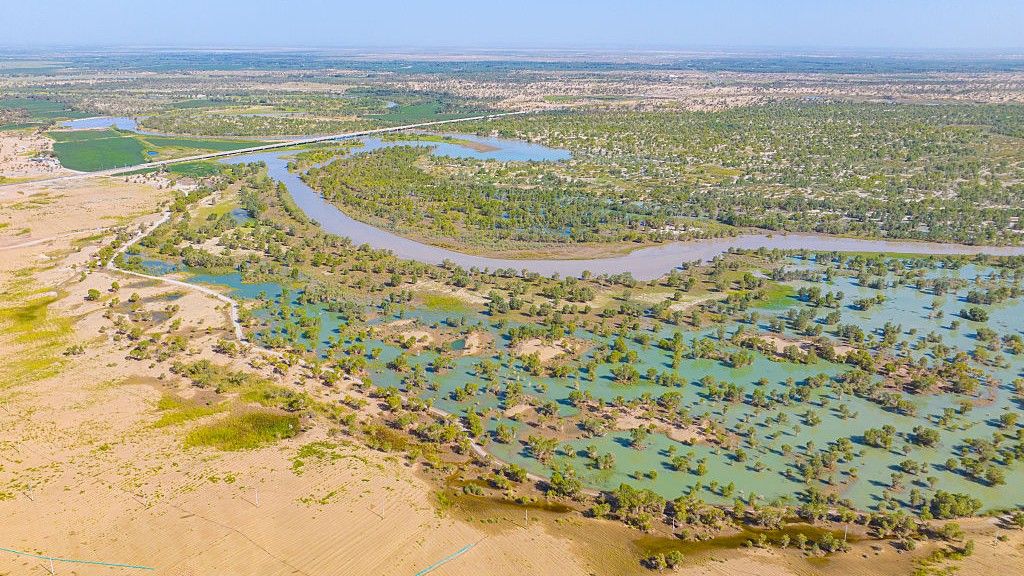
View of the Tarim River at the edge of China's Taklamakan Desert. We see waterways and vegetation on the river banks.

Mass tree planting in China is turning one of the world's largest and driest deserts into a carbon sink, meaning it absorbs more carbon from the atmosphere than it emits, new research reveals.

The Taklamakan Desert (also spelled Taklimakan or Takla Makan) is slightly larger than Montana, stretching across about 130,000 square miles (337,000 square kilometers). It is encircled by high mountains, which block moist air from reaching the desert for most of the year, creating extremely arid conditions that are too harsh for most plants.

Sign up to read this article
Read news from 100's of titles, curated specifically for you.
Already a member? Sign in here
Related Stories
Top stories on inkl right now
One subscription that gives you access to news from hundreds of sites
Already a member? Sign in here
Our Picks
Fourteen days free
Download the app
One app. One membership.
100+ trusted global sources.







