Get all your news in one place.
100’s of premium titles.
One app.
Start reading
Euronews
Euronews
Quirino Mealha

China bets on province the size of Belgium to reshape global trade

As of December 2025, new laws came into effect making Hainan a separate customs zone and consolidating a favorable regulatory environment in the southernmost province of China.

The move contrasts with the current global trend of protectionism, as many countries move to tighten trade rules and investment controls.

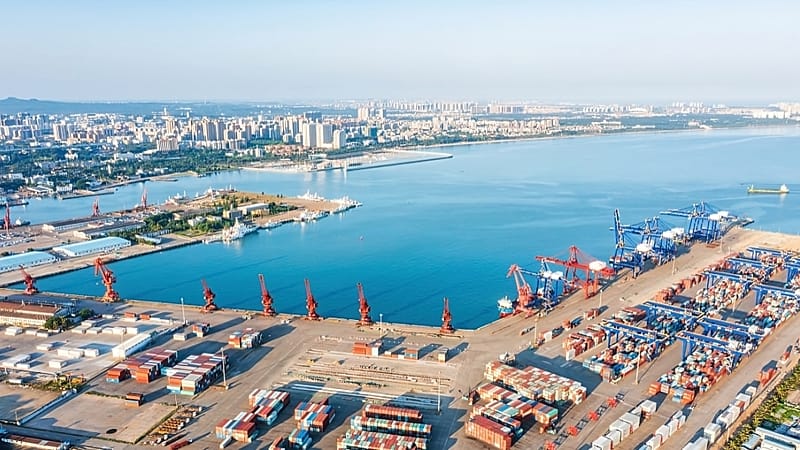
Hainan is now effectively the world's largest free trade port by area. Encompassing over 35,000 square kilometers, it is roughly fifty times bigger than Singapore and even slightly bigger than Belgium.

China is attempting to offer a solution for the "growing uncertainties in the global economy" and trying to replicate the success of Singapore, with a free trade port the size of a European nation.

According to the state-run Xinhua news agency, the launch of "special customs operations" is not merely a policy tweak but a fundamental restructuring of how the island province interacts with international markets.

The unique framework, instituted by the Chinese Communist Party, could make Hainan the most business-friendly jurisdiction in the world.

This is not the first time the state-led economy, described as a socialist market economy, takes a page from the capitalist playbook to boost its global dominance.

Special economic zones (SEZs) have been successfully implemented in China since the late 1970s, as part of the country’s economic open-door policy. These SEZs allow Beijing to experiment with capitalist mechanisms, in limited areas, while maintaining broader state control over the economy.

In 2020, the CCP unveiled a comprehensive plan to shift Hainan from a mere special economic zone to a strategic hub designed to rival Hong Kong, Singapore and Dubai.

Creating a completely separate trade and investment system for the province was the objective until the end of 2025. Going forward, the party projects that Hainan will reach "institutional maturity" by 2035 and achieve a “strong global influence” by the middle of the century.

First line open, second line controlled

The province comprises Hainan Island and various smaller islands in the South China Sea, and now operates under a “two-line” customs system designed for greater openness while maintaining domestic security.

The first line marks the boundary between Hainan and the global economy, where most trade barriers have been removed. Under the new legislation, the majority of goods can enter the province freely, with a significantly expanded list of zero-tariff imports covering raw materials, equipment and consumer products.

The second line functions as a filter between Hainan and mainland China. There, standard customs rules apply, with goods subject to tariffs and controls intended to protect domestic markets.

Xi Jinping speaks at the Asia-Pacific Economic Cooperation summit in South Korea, November 2025 (Xi Jinping speaks at the Asia-Pacific Economic Cooperation summit in South Korea, November 2025)

However, the system creates a powerful incentive for manufacturers. Goods entering Hainan that achieve at least 30% added value within the province can enter mainland China duty-free, a policy designed to encourage additional production on the islands rather than using it solely as a transit hub.

For example, Australian beef can be imported into Hainan duty-free. Then, if the beef is sliced and packaged for China-destined hotpot products on the island province itself, it can enter mainland Chinese supermarkets with the same exemptions.

China’s strategic gateway

The scope of the CCP’s plans for Hainan extends well beyond customs arrangements.

The province applies a flat corporate tax rate of 15%, lower than those in Hong Kong (16.5%), Singapore (17%) and mainland China (25%).

Hainan is now also operating under a distinct regulatory framework in several other areas, which differs significantly from regulation on the mainland.

For instance, if a pharmaceutical product or medical device is approved by one of many regulatory agencies anywhere in the world, it can be used on the island province despite being banned on the mainland.

Similarly, companies registered in Hainan can apply for broader internet access, allowing them to bypass the so-called “Great Firewall of China”, a system of laws and technologies enforced by the CCP to control online activity nationwide.

Foreign companies can also open special bank accounts in Hainan, with capital flows exempt from mainland foreign-exchange controls, while foreign universities are permitted to establish campuses without a Chinese partner.

Visa-free entry to the province has also been expanded from 59 to 86 countries, now including the United States, Germany and Australia, as well as several countries in the Middle East and South America.

Visitors can stay for up to 30 days without a visa for business, medical treatment or tourism, as the authorities also promote the island province as a major travel destination.

Amid rising tensions in the global economy, Hainan serves as China's "pressure valve" offering a low-tax, zero-tariff, high-access gateway to Asia-Pacific markets.

Sign up to read this article
Read news from 100’s of titles, curated specifically for you.
Already a member? Sign in here
Related Stories
Top stories on inkl right now
One subscription that gives you access to news from hundreds of sites
Already a member? Sign in here
Our Picks
Fourteen days free
Download the app
One app. One membership.
100+ trusted global sources.