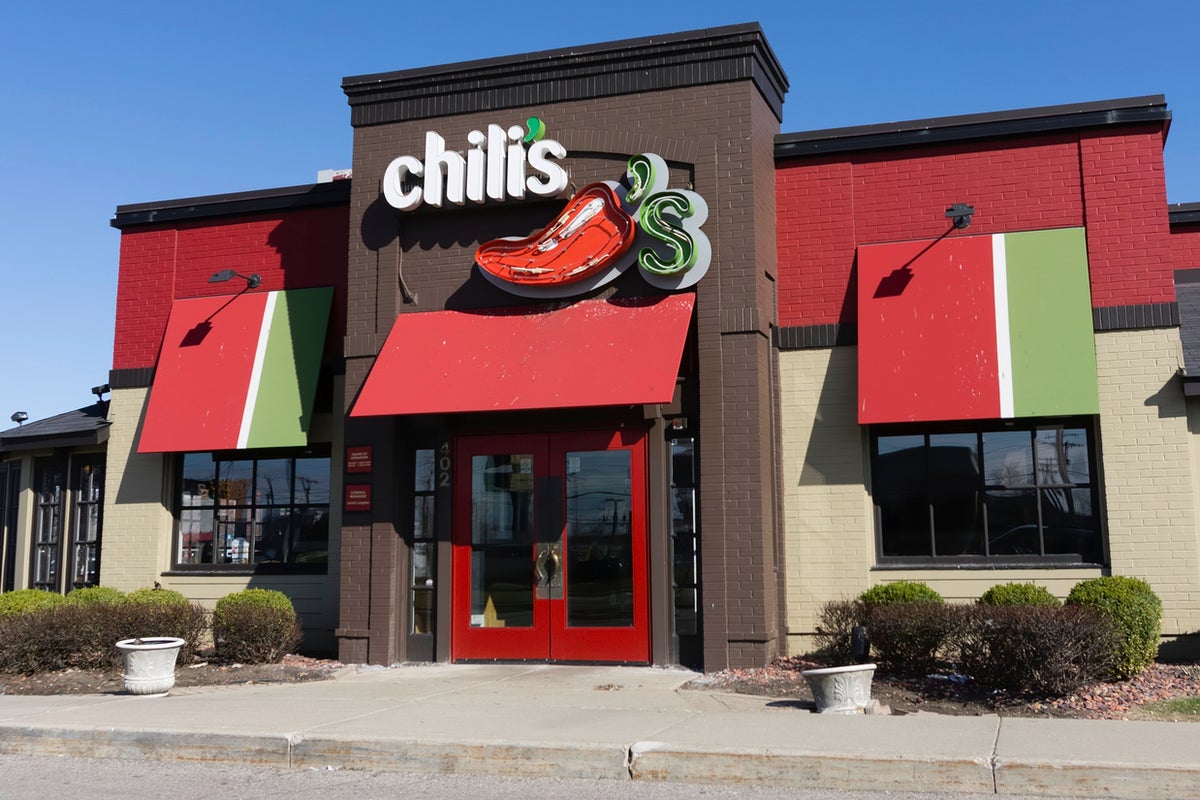
Baby back ribs for all!
Chili’s is ready to expand across the U.S. after a major sales turnaround, with plans to add 20 to 30 locations per year through fiscal 2029, according to parent company Brinker International.

The Tex-Mex chain plans to grow its restaurant count by 2 percent to 3 percent annually, Brinker CEO Kevin Hochman said during parent company Brinker International’s 2026 Investor Day, according to Restaurant Dive.
The company has identified up to 300 potential sites for new restaurants, CFO Mika Ware said. While that doesn’t mean all 300 will become Chili’s, the company says it sees room to grow in those markets.
The expansion follows five years of strong sales growth. Same-store sales – a measure of sales at restaurants open for at least a year – have climbed 71 percent during that time.
The Chili’s expansion comes as more customers are also coming through the doors. Weekly visits rose from about 3,400 per restaurant in fiscal 2023 to 4,200 in fiscal 2026, helping push average annual sales from about $3.3 million to $5 million, Ware said.
Chili’s is looking at both familiar territory and new markets, including areas where it has relatively few restaurants and smaller communities where it believes a location could work. Washington state is one example. Chili’s has just one streetside restaurant there, while its closest competitors have about 35 to 40 locations, Ware said.
The chain also plans to keep growing in some of its strongest markets, including California, Texas and Florida.
“California, Texas, Florida, have been really strong markets for us, and that’s where we have the most Chili’s,” Ware said, according to Restaurant Dive. “Just when we think we’ve already built as many Chili’s as we can build in Texas and Florida, it’s just not true. We have eight in the pipeline right now.”
Chili’s is also eyeing the Carolinas, Georgia, Virginia, the Washington, D.C., area and Ohio.
Hochman pointed to Ohio as one state where the chain has room to grow, saying its two closest competitors have about four times as many restaurants there.
“You look at our next two competitors, which have much lower market share than us. You add up their boxes; they have four times the number of restaurants that we do in Ohio,” Hochman said, without identifying the competitors.
Chili’s is also trying a new “small town strategy,” looking beyond major suburbs for potential locations.
In the Northeast, where real estate can be particularly expensive, the company could convert existing restaurants into Chili’s locations or acquire smaller restaurant chains to gain access to their real estate, Ware said.
Chili’s credits its sales surge in part to its focus on value, including its “Better Than Fast Food” campaign, along with a simpler menu and faster service.
The chain has also invested $180 million in front-of-house improvements, brought back bussers and added handheld ordering devices and updated kitchen screens, Aaron White, chief people officer at Brinker, said, per Restaurant Dive. Those efforts helped Chili’s record five straight years of same-store sales growth, including a 5.6 percent increase in the fourth quarter of fiscal 2026.
Now, the company is putting that momentum toward expansion. New Chili’s restaurants cost about $5 million to $6 million to build, but newer locations are generating more than $5 million in sales, Ware said.
The company also plans to remodel about 110 existing Chili’s restaurants a year starting in fiscal 2028, according to FSR Magazine.