A measles outbreak that began in a Chicago migrant shelter in the spring of 2024 cost an estimated $8.7 million in under eight weeks, or about $152,636 for each of the 57 people infected. The estimate comes from CDC and Illinois public health scientists in an economic evaluation newly published in JAMA Network Open.
The findings, summarized by CIDRAP, put a price on a question many health departments now face. As of Sept. 24, the CDC had confirmed 3,659 measles cases nationwide in 2026, with 95% linked to outbreaks, according to its measles cases and outbreaks page.
For families, the bill is more than a line in a city budget. The Chicago outbreak led to 17,113 missed school days, which meant lost classroom time for children and lost work time for parents who stayed home with them. Much of the medical spending went to keeping contagious patients isolated in hospitals because the shelters had no safe place to separate them.
Hospital Beds Carried the Largest Share of the Bill
The researchers counted three kinds of costs between March 7 and April 30, 2024. Direct medical costs reached $4.4 million, mostly for hospital stays. Public health response costs totaled about $3.6 million. Lost productivity among people in isolation or quarantine, and among parents caring for children kept out of school or day care, came to $683,895.
Within the public health response, staff time was the biggest single item. Personnel costs reached $1.8 million, followed by $1.4 million for vaccination, $200,489 for laboratory testing, $104,263 for transportation and $63,023 for other materials.
That breakdown explains why measles is so costly even when case counts look modest. Every case sets off contact tracing, and in this outbreak authorities traced 3,569 contacts. Nurses, epidemiologists and outreach workers had to find people, check vaccine records and arrange doses or quarantine. That work does not shrink much when an outbreak is small.
A companion CDC modeling report described how fast the vaccination push moved. From March 8 to 10, workers gave 882 MMR doses to shelter residents without proof of vaccination, raising coverage among residents to 93%. The model suggested that prompt mass vaccination and active case-finding likely reduced the chance of an outbreak reaching 100 or more cases.
"Measles outbreak responses are highly intensive, requiring rapid case identification and isolation and contact management," the authors wrote.
Total health-sector and payer costs, which combine the public health response and medical care, came to $8 million, or $2,246 for each shelter contact.
Crowded Shelters Turned Hospitals Into Isolation Wards
A CDC report on the outbreak found that 51 of the 57 patients, or 89%, were hospitalized for isolation, complications or both. No deaths were reported. In late February 2024, about 12,000 people were living in 27 temporary migrant shelters operated by the city.
The median patient age in the new analysis was 3 years, so young children made up much of the caseload. Children under 5 face a higher risk of measles complications, and babies under 12 months are usually too young for the routine first MMR dose.
The authors argued that speed paid off. "Though the outbreak placed a considerable cost burden on both public health and health care systems, rapid disease identification and mass vaccination among shelter residents prevented a more costly and larger outbreak," they wrote.
Their recommendations are practical: fund isolation and quarantine spaces outside hospitals, and vaccinate new shelter residents when they arrive. Both steps cost money up front, but the study suggests they cost far less than hospital beds used for isolation.
MedicalDaily Evidence Check
This is an economic evaluation of one outbreak, not a clinical trial. It estimates costs from records and standard cost assumptions, so the totals are modeled figures rather than audited spending. It covers 57 cases in a specific setting- shelters for people newly arrived in the country- and the per-case cost may not apply to outbreaks in schools or close-knit religious communities.
The study does not change medical guidance. The CDC still says two doses of MMR vaccine are about 97% effective at preventing measles. What the study adds is a clearer picture of where money goes once prevention fails.
The Chicago numbers fit earlier research. MedicalDaily previously reported on a separate Johns Hopkins analysis that found launching any measles response carries a high fixed cost before a second case is counted. The Chicago analysis shows how that cost climbs when patients cannot isolate at home.
Checking Your Family's Protection
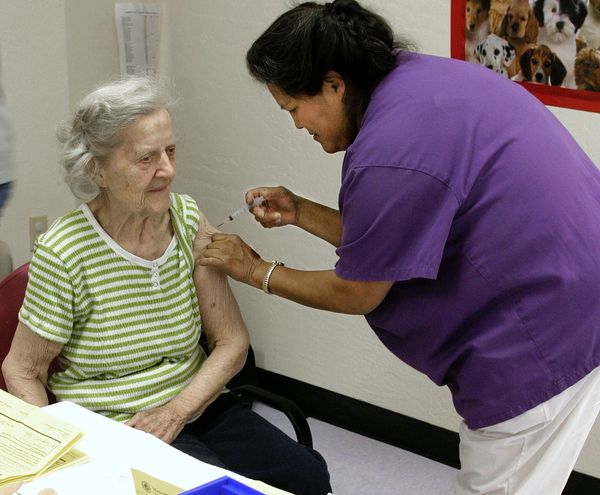
Most people with two documented MMR doses are well protected. Families can check records through a pediatrician, a state immunization registry, or old school files. Adults unsure of their status can ask a clinician about a blood test or a catch-up dose.
Early measles symptoms include high fever, cough, runny nose, and red, watery eyes, followed by a rash that starts on the face. Anyone with those symptoms after a possible exposure should call ahead before visiting a clinic or emergency room so staff can protect others in the waiting area.
Cost should not block protection. The Vaccines for Children program covers eligible children at no cost, and many local health departments offer low-cost shots for adults. The CDC's measles vaccination guidance explains who needs which doses.
Key Questions Answered
How much did the Chicago shelter outbreak cost?
An estimated $8.7 million in total societal costs, or $152,636 per case, according to the JAMA Network Open analysis.
Where did most of the money go?
Direct medical costs, mostly hospital stays, accounted for $4.4 million. Personnel was the largest part of the public health response at $1.8 million.
How many people were infected?
Fifty-seven people contracted measles, and authorities traced 3,569 contacts.
Why were so many patients hospitalized?
The shelters had no safe space to isolate contagious people, so many were hospitalized for isolation as well as for complications.
Does this study change vaccine advice?
No. The CDC still recommends MMR vaccination, and two doses are about 97% effective.
What should families do now?
Confirm MMR records, ask a clinician about catch-up doses if needed, and call ahead before seeking care for suspected measles.
Published by Medicaldaily.com