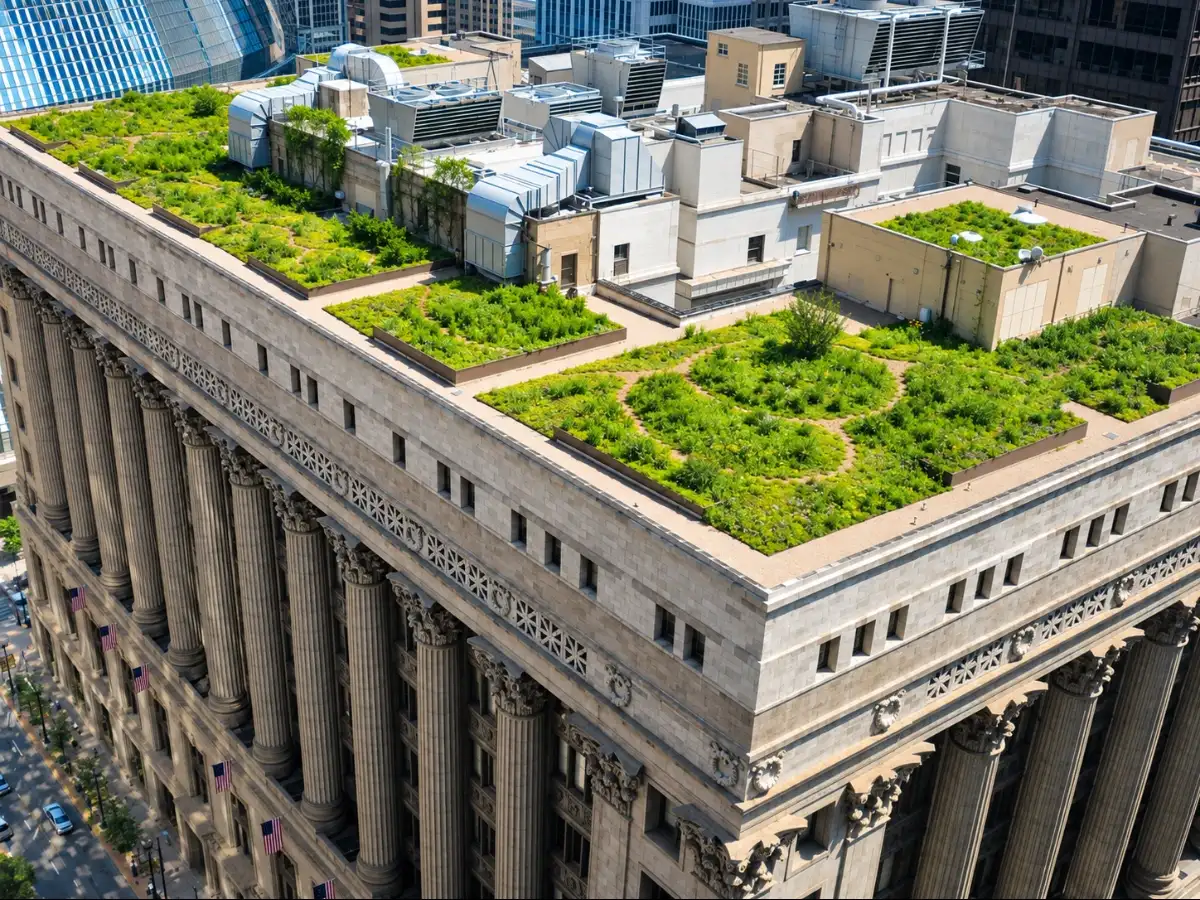
In 2000, Chicago began doing something unusual with its own city hall. Instead of leaving the rooftop bare, city officials planted grass, shrubs, vines and trees across 20,300 square feet, creating a roof with about 20,000 plants. The EPA's Heat Island Community Actions Database shows that this particular rooftop’s surface temperature now runs about 100 degrees Fahrenheit cooler compared to the other conventional roofs nearby, while saving almost $5,000 in energy expenses annually. Even more than 20 years later, it continues to be an example of a functioning green roof.
What a green roof actually is