
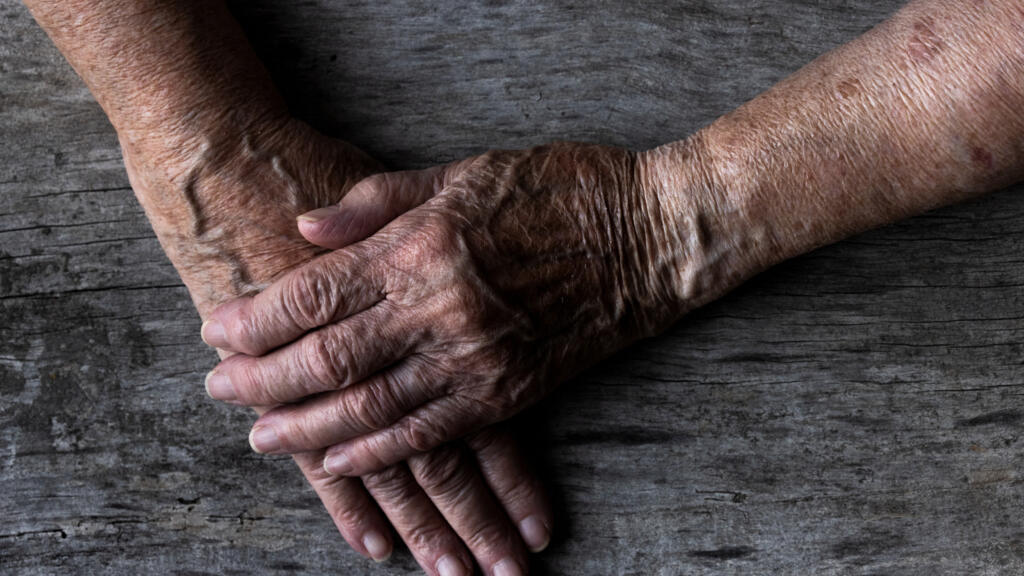
A charity’s investigation into 'solitary deaths' has shed light on the often unseen consequences of social isolation among older people in France.
At least 32 elderly people in France were found dead in their homes in 2025 weeks, months or even years after they had died – a stark illustration of what one charity describes as the most extreme form of social isolation.

The figures were published on Tuesday by the charity Petits Frères des Pauvres, which compiled the cases from reports in regional media.
The deaths were recorded in towns and cities across France – including Évreux, Nice, Le Mans, and Montpellier – and are described by the organisation as “the ultimate consequences of extreme loneliness”.
Some of the cases underline just how invisible many elderly people have become. In Bordeaux, the skeleton of a woman in her seventies was discovered in her garden in March 2025, nearly two years after her death.
In the suburb of Montrouge, south of Paris, a decomposed body was found in a social housing studio in September – three years after the man had died – when a bailiff entered the flat as part of an eviction procedure, according to Le Parisien daily.
Half a million elderly people live in isolation in France - report
An underestimated phenomenon
The charity believes the true scale of the problem is far greater.
“This figure is underestimated,” it said, arguing that France currently lacks any reliable way of measuring the number of so-called solitary deaths each year.
While many public bodies, community organisations and funeral service professionals share that assessment, “no one is able to reliably quantify the annual number of lonely deaths in France,” the charity noted.
After failing to persuade public authorities to act, Petits Frères des Pauvres now plans to create its own national “observatory of solitary deaths” by the end of the year.
Yann Lasnier, the charity’s general delegate, told reporters that a scientific committee would be established in the first half of 2026.
It will bring together researchers, sociologists, geriatricians, frontline workers, representatives of local authorities and funeral directors, with the aim of developing a shared framework for understanding the phenomenon.
Two million French seniors live in poverty: charity report
Towards a national observatory
One of the first challenges, Lasnier said, is agreeing on a definition. Solitary deaths can include people who die on the streets, unclaimed bodies in morgues or hospitals, and those who pass away at home with no one present at their funeral – categories that are currently treated separately.
The committee will be tasked with establishing a common definition, exploring ways to prevent and detect such deaths earlier, and identifying practical solutions.
The charity estimates that around 750,000 elderly people in France have no meaningful social ties, with little or no interaction across five key social networks – family, friends, work, associations and neighbours.
The future observatory aims to collect reliable data on how often solitary deaths occur and in what circumstances, analyse risk factors, and make concrete recommendations to public authorities and social organisations.
Early findings already suggest an over-representation of men, particularly among those aged between 60 and 75.
By shining a clearer light on an often hidden tragedy, the charity hopes the initiative will not only improve understanding, but also help reconnect older people before isolation becomes fatal.
(With newswires)