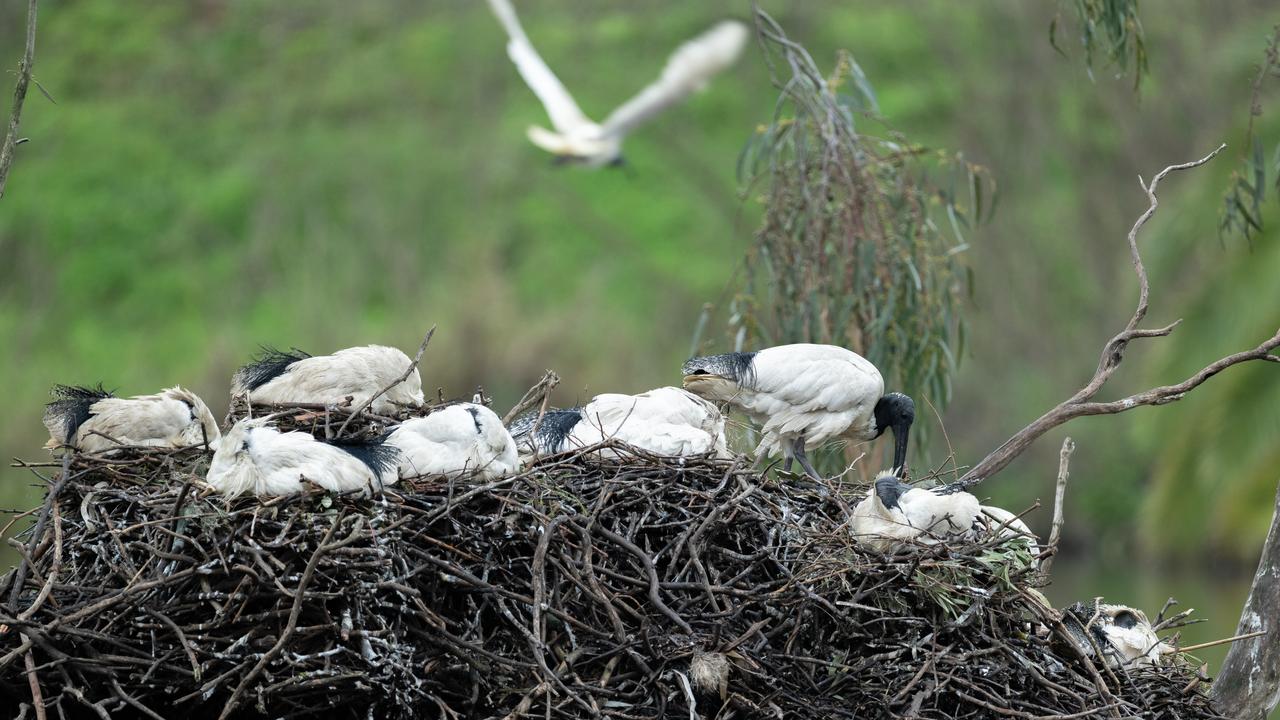
Volunteers have grave fears over the future of a local colony of native birds as the H5 flu strain continues spreading across South Australia and other parts of the country.
Testing at CSIRO's Australian Centre for Disease Preparedness confirmed a further 28 positive detections in SA among wild seabirds on Saturday.
Among them were 26 greater crested terns, 15 on the state's Limestone Coast and 11 on Kangaroo Island, Australia's Chief Veterinary Officer Beth Cookson said.
Two silver gull cases were also detected on the Limestone Coast, at Port MacDonnell and Robe.
SA chief vet Skye Fruean said there was no particular reason why the state had so far encountered most of Australia's 203 confirmed cases.
"Unfortunately, we were just unlucky to be the first place where this did spread into our resident birds," she told ABC.
"I expect there will be other spread in other states and territories with time but ... I don't know how quickly that will happen."
Meanwhile in Victoria's southwest, avid birdwatcher Tracey Gray has been preparing alongside dedicated locals for the arrival of H5, abiding by the key advice: avoid, record, report.
Concerns grew this week when two sick birds were discovered on Port Fairy's Griffiths Island, a sanctuary for plants, birds and animals which also has a large breeding colony of short-tailed shearwaters.
While the birds, which included a crested tern and a suspected albatross, are yet to be confirmed to have the virus, the discovery is concerning.
"The (terns) are a local species that move up and down our coast from Portland, Yambuk to Port Fairy. They move, separate and nest together," Ms Gray told AAP.
"We are concerned about them because that local transmission is potentially the largest issue here.
"Our crucial species is our short-tailed shearwaters that nest on Griffiths Island and they will return at the end of September and they breed on land in colonies. That is of real concern for us."
Ms Gray, who is president of volunteer group Friends of Griffiths Island, said the size of the colony might not be able to absorb the impacts of the virus.
"We're really challenged at the moment because we know the vastness of the coast area," Ms Gray added.
"We're also really looking for good action on the response line."
During a community meeting in Portland on Wednesday night, local residents and wildlife volunteers voiced concerns about the rapidly unfolding situation.
Fears are also rising for Australia's seals after a pup which washed up at Warrnambool on the southwest coast on Wednesday night was identified as a potential case.
It is potentially the first seal on the Australian mainland infected with the virus, while a case has also been confirmed in a bird near the endangered Australian sea lion colony at Seal Bay on Kangaroo Island.
Department of Energy, Environment and Climate Action Director Wildlife and Landscape Protection Eve Graham on Wednesday said the seal population appeared healthy following recent checks.
She offered a glimpse into the response at the community meeting, revealing that helicopters using thermal imaging cameras were monitoring seal colonies along Victoria's coastline.
"(That) has helped us see our colonies are still healthy which is excellent," Ms Graham added.
The crested terns population however remained of concern, she added.
The Victorian government on Friday moved to impose "proactive, precautionary measure" that will see producers forced to keep poultry temporarily housed in higher-risk areas.
The decision was made after a meeting with industry representatives who voiced support, Victorian Agriculture Minister Michaela Settle told reporters.
Bird flu has not been detected in poultry or in the agricultural production systems.