
Get all your news in one place.
100’s of premium titles.
One app.
Start reading
Android Central
Android Central
Technology
Michael L Hicks

CES 2026 laid out a Black Mirror future of wearable AI that's always listening, watching, ready to help, and 'knows everything about you.' I'm not enthusiastic

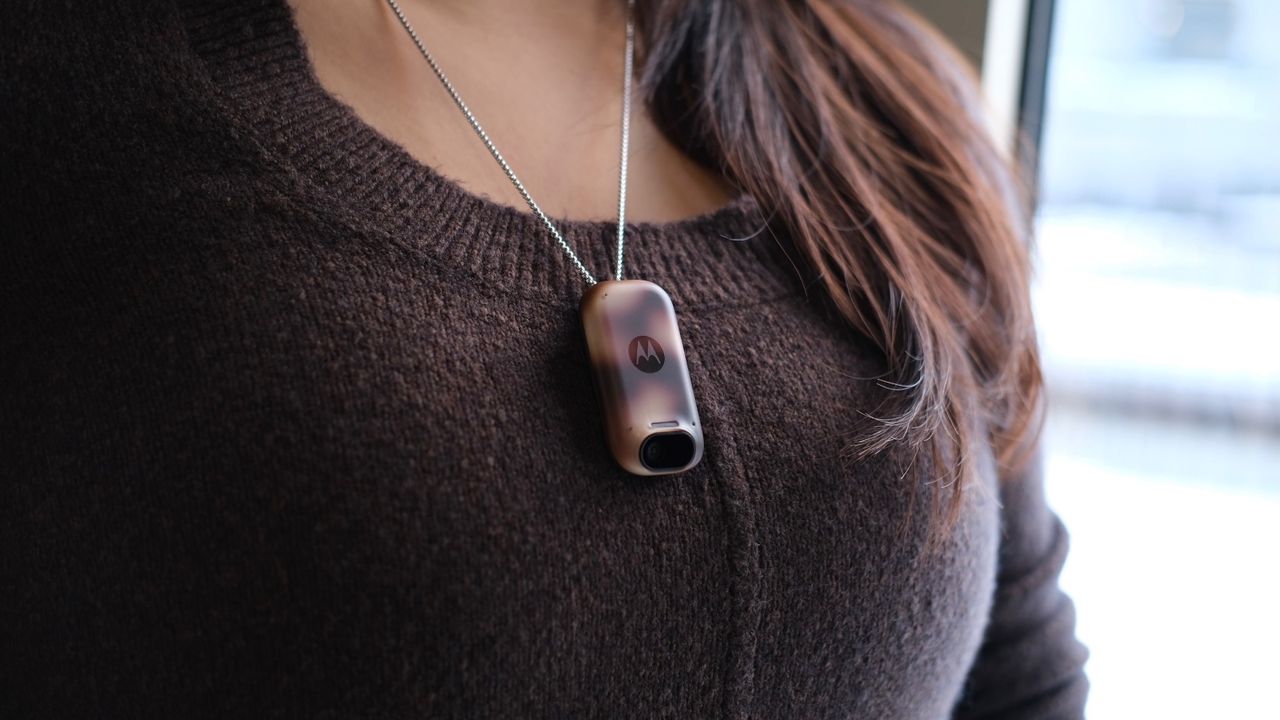
The Motorola Project Maxwell pin hanging off a necklace, worn by a woman.

Wearable AI isn't a new concept. The Humane pin and Rabbit R1 tried to make futuristic, portable AI assistants a "thing." Their notorious failure hurt that idea, but didn't kill it, as CES 2026 proved. At least a dozen tech brands, most notably Lenovo, pushed a specific AI concept: small wearable gadgets that record and transcribe everything around you, to remember later.

People have accepted AI wearables like Ray-Ban Meta glasses or smartwatches, with familiar form factors and features besides AI. But tech brands still think they can sell people on an indispensable, specialized AI that you wear everywhere.

It's not unreasonable to make AI transcription the hook for this concept. Recording apps like Otter are quite popular for meeting notes, and a portable, all-day transcription tool would be quite helpful for things like conventions. But the endgame is to record and analyze everything in your life, and that's not hyperbole.

Outside the optimistic, credulous CES environment with carefully crafted demos, it's fair to ask whether this always-recording AI future is another bubble ready to burst — or, if these devices do work as intended, if that's a good thing.

CES 2026's surplus of wearable AI gadgets, briefly summarized

Pebble Index 01 (Image credit: Pebble)

The Pebble Index 01 side-stepped Oura's litigiousness by avoiding health sensors and focusing on transcription: tap the button, say something, and the recording is sent to your phone for a voice-to-text reminder. Straightforward and fun, it's much less ambitious and automated than the other wearable AI tech at CES.

Mobvoi, a former Wear OS smartwatch maker, pivoted to the TicWatch Note, an all-day smartwatch with "instant, one-press recording for meetings, ideas, and voice moments," as well as "on-watch live translation." That sounds reasonable, but Mobvoi also makes some vague promises about "AI-driven holistic analysis," creating a database out of your words synced with your location and health data.

(Image credit: Lenovo)

The Pebble Ring's polar opposite in ambition is Qira. Lenovo's AI assistant is an "ambient system-level intelligence" that "moves with you across PCs, tablets, smartphones, wearables, and more." It can transcribe meetings or write emails for you, but Lenovo foresees Qira watching what you're doing and offering "proactive, contextual suggestions" for what to do next.

Plenty of tech brands want to create an "agentic AI" that acts independently, and (in consumer contexts) anticipates what users want. No one has pulled it off yet, but Lenovo will have to prove that Qira's inferences are actually accurate or helpful, but it thinks it can pull it off by monitoring every action you take, whether on your devices or in real life.

Project Maxwell (Image credit: Lenovo)

Lenovo's wearable AI plans start with Motorola Project Maxwell, a proof-of-concept for recording nearby sound and video at all times. But Lenovo EVP Luca Rossi told PC Mag that they're considering other wearables, from smart glasses to "ambient AI sensing devices" around your house.

They want to create a "personal AI twin" that always knows what you're doing, "no matter which platform you are on," all to ensure that Lenovo knows "everything about you."

(Image credit: Memories.ai)

Other tech brands at CES may not have Lenovo's platform reach, but they have the same ambition. SwitchBot's robots were among our favorite CES 2026 gadgets, but the brand also unveiled its "second brain": the 18-gram AI MindClip that records all of your conversations and sends them to the cloud to transcribe and summarize, so you can "think more clearly" about what happened during your day.

Likewise, the Plaud NotePin S — designed as a pin, necklace, or bracelet — can transcribe and "extract" detailed summaries and flowcharts from your conversations, simply by tapping a button.

Memories.ai's Project LUCI, a multimodal pin with a 109º camera equipped with a privacy switch, was targeted to developers rather than consumers "after seeing several high-profile AI wearables fail," according to the CEO. But he's still making lofty promises, saying the pin is already capable of "remembering people you meet, turning daily life into meaningful video highlights, or providing full real-world context to AI agents."

(Image credit: Luna)

There were a few other all-encompassing wearable AI gadgets at CES, like the Looki L1 that "sees, hears, and understands your life," but I have to stop at some point.

Some other wearable AI gadgets help with one key feature. Amazfit's V1tal Food Camera, for example, strictly focuses on wearable nutrition data: snap a photo of your plate, and AI will analyze its caloric and macronutrient value. I can't see people buying glasses just for this, but this convenient concept would make any smart glasses stand out.

The Luna band uses AI to differentiate itself from other screenless smart bands like Whoop 5.0 and Polar Loop. At any time, you can speak to it to express your current energy level or mood, the food you're eating, or other information, and it'll analyze your words to log your lifestyle and provide "real-time, voice-led health guidance."

How much wearable AI will people tolerate?

(Image credit: Michael Hicks / Android Central)

During Rossi's interview about Qira and Maxwell, he stressed that users will control "which data they want or permit to go out of their device," but he was more dismissive concerning others' privacy, likening using wearable AI to "going around with a phone with a camera," saying people can already invade people's privacy if they want.

I think that's actually an apt comparison! When people see you wearing one of these AI pins, they'll assume they're being recorded and/or filmed at all times. That's liable to put people on edge, as if you were pointing your phone camera at them — unless it becomes a societal norm to accept constant multimodal AI analysis.

Meta's smart glasses can have this same effect on some people, but they've generally earned social acceptance because they don't look out of place on your face, and because it's obvious when you tap the button to start filming. A dongle on your shirt collar may not get the same grace.

Can any of these AI assistants live up to their promises?

SwitchBot AI MindClip (Image credit: SwitchBot)

Putting aside societal acceptance, these wearable AI gadgets face several hurdles if they want to move beyond the venture capital stage and actually resonate with consumers.

First, can these devices successfully last all day while sending data to and from the cloud, or will they start to overheat (like the Humane pin) because designers prioritized a small form factor?

Second, just how good will these all-day transcriptions be? Given how inaccurate my Otter transcriptions tend to be, I'm curious how well these AIs will truly "understand me." Will they successfully tell different speakers apart and counterbalance ambient noise, music lyrics, and other data noise?

And third, will these "second brain" wearables that summarize our lives really help us, or just give us an excuse to not pay attention, knowing the AI will tell us later what we're supposed to remember?

Assuming these wearable AI tools work as intended, I could see a market for them. The same folks who rely on ChatGPT for work, data searches, or general advice would want a way to incorporate more personalized data from the real world, so the AI can remind them of what they need to know.

Personally, as much as I get frustrated when I forget something important, I think I'd rather find ways to improve my memory than to become less dependent upon it, because an AI is surveilling my life and can remember things for me.

Sign up to read this article
Read news from 100’s of titles, curated specifically for you.
Already a member? Sign in here
Related Stories
Top stories on inkl right now
Our Picks
Fourteen days free
Download the app
One app. One membership.
100+ trusted global sources.