One of Britain’s most mysterious landmarks, the Cerne Abbas Giant, is currently undergoing a significant, once-in-a-decade restoration, with 17 tonnes of fresh chalk being applied to its ancient outline.
The colossal figure, whose origins remain shrouded in mystery, typically receives this extensive revamp every seven to 10 years, but work has commenced earlier this year due to the escalating impact of climate change and shifting weather patterns.
The Dorset landmark has been under the stewardship of the National Trust for over a century. Each decade, dozens of their dedicated staff and volunteers commit approximately 300 hours to meticulously renewing the 55-metre (180ft) tall chalk effigy.
Luke Dawson, lead ranger for the National Trust’s West Dorset & Cranborne Chase area, emphasised the urgency of the task.
He stated: "We want to keep on top of it because we’re seeing that it’s starting to overgrow a lot more and fade, and it’s something that people have travelled from all over the country to come and see, and the world even in some instances."
The intricate renewal process begins with cattle grazing on Giant Hill, which effectively clears the surrounding grass and ensures the figure remains visible.
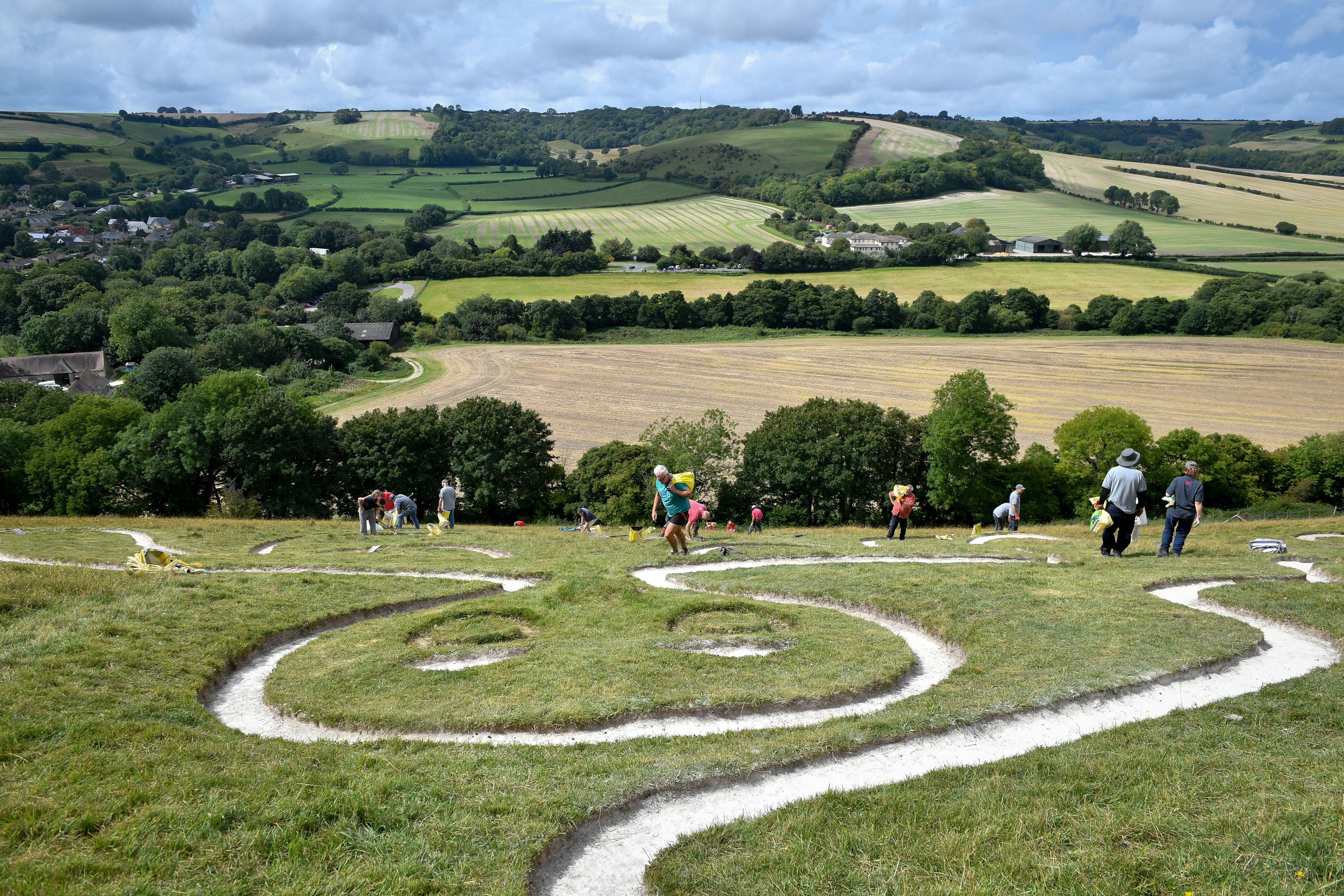
Following this, the previous layer of chalk is carefully removed. Rangers and their teams then use spades to carve sharp new outlines before the re-chalking phase commences.
The steep hill, sloping at a gradient of around one in three, is vulnerable to erosion and requires the chalk to be packed tightly by hand to avoid water damage, weeds and algae from forming.
In previous years, the re-chalking process would usually take place in September, but have started earlier due to changes in weather patterns.
In 2019, just days after laying fresh chalk, intense rainfall washed it away.
“The erosion was in part because of that September rain,” Mr Dawson said.
“With the algae, it’s one that we just can’t predict.
“If that algae does not get killed off over winter, coupled with the fact that we’re getting wetter summers, it just promotes that algal growth in damp conditions.
“Rather than a nice white chalk sheen, you are getting a dull grey-green kind of sheen like slime, so it’s something we have got to constantly check.”
The National Trust this year decided to carry out the work in May and trial a new technique which consists of mixing the chalk with water to create a plaster of Paris-type consistency before laying it down.
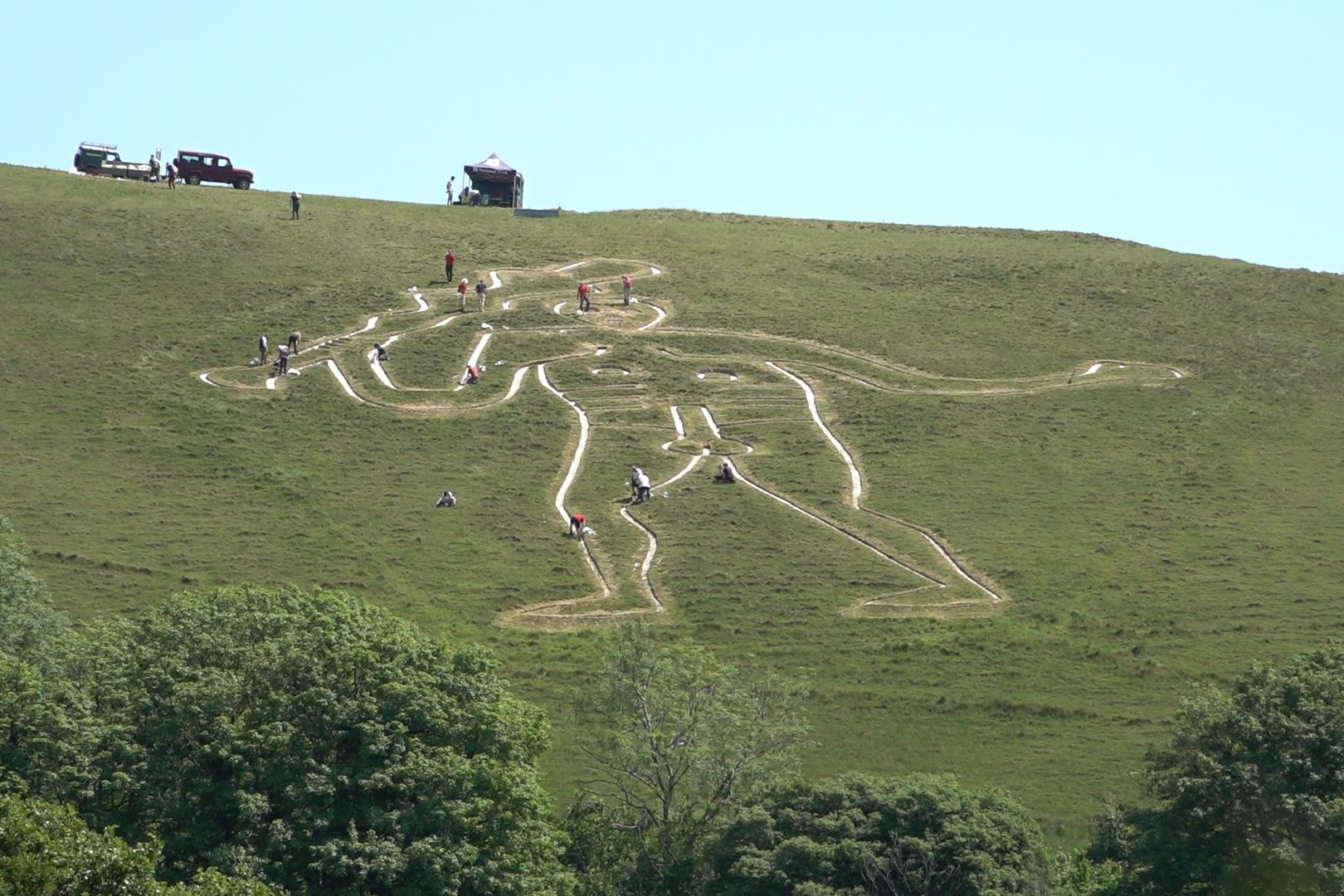
The origin of the figure is unknown and continues to fuel debates.
While local records only register its existence in the 17th Century, in 2021, carbon dating analysis proved its existence around 700 to 1100 AD.
Scott Welland, visitor, operations and experience manager at the National Trust in West Dorset, said: “One theory is that during that period, the grass grew back.
“So maybe during that period he disappeared and no one was aware that he was there until that 1600s period.
“But we still don’t know why he’s there and why they created him and that’s a mystery.”
The figure and its wildlife recently entered a new chapter, as the National Trust secured ownership of more than 130 hectares of land surrounding the Giant just months ago.
The appeal, backed by Sir Stephen Fry, reached its £330,000 target in just 60 days and will now secure the protection of species like the Duke of Burgundy butterfly on the site of special scientific interest.