Get all your news in one place.
100's of premium titles.
One app.
Start reading
Bangkok Post
Bangkok Post
Business

Central bank insists the baht is stable

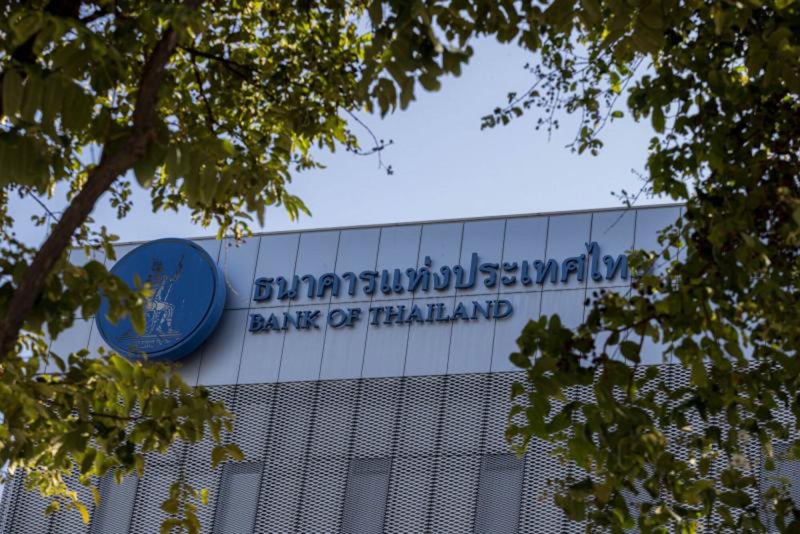
The Bank of Thailand says it is confident about the baht's stability despite recent depreciation against the US dollar amid heightened external uncertainties.

Given the baht's resilience and Thailand's strong external fundamentals, the central bank's Monetary Policy Committee (MPC) sees no need to convene a special meeting, unlike its counterpart in Indonesia, said Chayawadee Chai-anant, assistant governor for corporate relations and spokesperson for the regulator.

Since the onset of the Middle East conflict, the baht has weakened by 5.4% against the dollar. However, foreign investors have recorded net sales of Thai assets totalling only US$1.3 billion.

Foreign funds have begun returning to Thailand's long-term bond and equities markets, reflecting an improvement in investor sentiment, Ms Chayawadee said on Wednesday.

The prolonged conflict in the Middle East has raised concerns about energy security worldwide, including in Southeast Asia. Governments across the region have adopted various measures to manage the oil shock and support their economies. However, some of these measures have affected asset prices, foreign exchange markets and interest rates.

On Tuesday, Bank Indonesia held a special meeting and decided to raise its policy rate to ease pressure from the rapid depreciation of the rupiah against the dollar. Since the war against Iran started, the rupiah has weakened by more than 8%, one of its sharpest declines on record.

The decline followed sustained foreign investor selling of Indonesian equities and bonds totalling roughly $3.9 billion. Investors have fretted over domestic stability, particularly Indonesia's fiscal policy direction and the possibility that its stock market could be downgraded from emerging market to frontier market status.

"Although the baht has also depreciated against the dollar, its movement has remained orderly and stable," Ms Chayawadee said, adding the central bank does not need to hold a special MPC meeting to consider changing the policy rate.

Pipat Luengnaruemitchai, chief economist at Kiatnakin Phatra Financial Group, forecasts the MPC will keep its policy rate at 1% throughout this year, possibly raising rates around the middle of next year, depending on economic conditions and inflation.

Don Nakornthab, the central bank's assistant governor for monetary policy, wrote on his personal Facebook page the economic circumstances of Thailand and Indonesia are fundamentally different. While Indonesia's macroeconomic indicators appear stronger than Thailand's, particularly in terms of fiscal metrics, the country continues to face significant structural vulnerabilities that remain a concern for investors.

These concerns include the growing debt burden of state-owned enterprises, which some view as a potential "ticking time bomb", as well as questions about governance and transparency surrounding the newly established sovereign wealth fund Danantara.

Combined with a current account deficit driven by energy-related challenges, any loss of market confidence could trigger a rapid outflow of the short-term capital on which Indonesia is dependent, wrote Mr Don. Moreover, Indonesia's foreign reserve buffer is considerably smaller than Thailand's.

"Viewed from this perspective, the likelihood of Thailand facing a currency crisis in the near term remains relatively low," he wrote on Facebook.

Thailand's biggest challenge is not the risk of a currency crisis, but rather the need for structural reforms to restore competitiveness and put the economy back on a stronger growth trajectory, wrote Mr Don.

Sign up to read this article
Read news from 100's of titles, curated specifically for you.
Already a member? Sign in here
Related Stories
Top stories on inkl right now
One subscription that gives you access to news from hundreds of sites
Already a member? Sign in here
Our Picks
Fourteen days free
Download the app
One app. One membership.
100+ trusted global sources.