Get all your news in one place.
100’s of premium titles.
One app.
Start reading
Radio France Internationale
World
Melissa Chemam

Caught between conflict and crisis, Syria faces 'incredibly fragile moment'

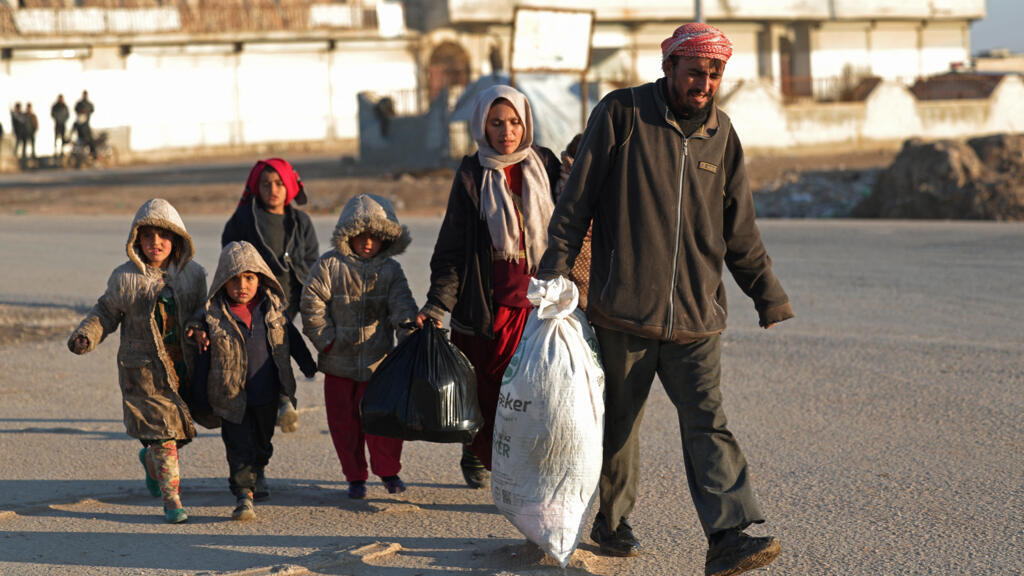
A family flees from the vicinity of Humaymah village, east of Aleppo, in Syria on 16 January, 2026. © AFP - OMAR HAJ KADOUR

After more than a decade of war, a surge of violence in northern Syria is forcing thousands of people to flee – even as others return to a fractured country under a fragile interim government. With two-thirds of the population in need of urgent assistance and the UN humanitarian response underfunded, the Danish Refugee Council's Charlotte Slente tells RFI why aid groups fear catastrophic consequences as cold weather and economic collapse push millions to the brink.

Clashes in and around Aleppo have displaced around 170,000 people since mid-January, as the Syrian army seeks to extend its control over previously Kurdish-controlled areas.
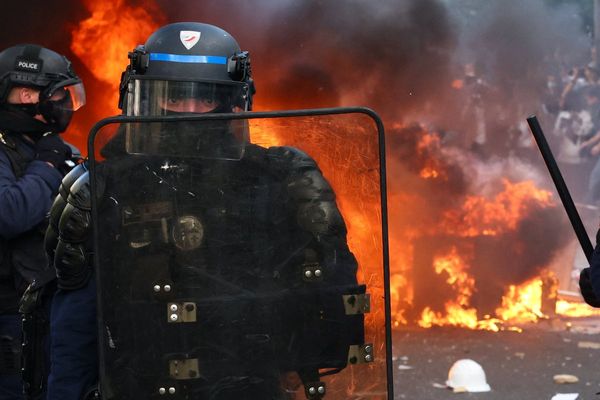
Ongoing hostilities between government forces and armed groups continue to trigger displacement in several parts of the country, according to the UN.

While political transition is underway after the fall of Bashar al-Assad at the end of 2024, reconstruction and recovery efforts are hindered by instability and lack of funding.

Access to healthcare remains unreliable, and basic services are severely disrupted. A harsh winter and long-term drought are exacerbating the crisis.

More than 16 million Syrians are expected to need humanitarian assistance in 2026 – yet the UN's response plan is only 33.5 percent funded, leaving a $3.2 billion gap.

"It is an incredibly fragile moment for Syria," said Slente, secretary-general of the Danish Refugee Council (DRC), speaking to RFI on a visit to the Syria, including areas in and around Damascus.

"This is a country where two out of every three Syrians need humanitarian assistance, and 90 percent of the population lives below the poverty line."

A year after Assad's fall, Syrian hopes for transitional justice are fading

Returning to ruins, landmines

Around 3 million Syrian refugees and internally displaced people have returned home since the fall of the Assad regime, over 1 million from other countries and nearly 2 million from within Syria.

"Syria has had a new government in place for the last year," Slente said, "and it's time to sort of recap on our programming here and adapt our programming to the new realities on the ground. A vast percentage of the population here are in dire need of humanitarian assistance on the ground."

Many people are returning to their homes to find almost nothing after more than 13 years of civil war, she added.

One of the DRC's priorities now is to work on getting rid of the landmines that still litter areas where fighting took place, and pose a deadly threat to returnees.

The organisation recently finished training local teams to help clear mines, Slente said.

"We are helping build the capacity here of the National Mine Action Centre in the Ministry of Emergencies that needs to coordinate that very big endeavour of clearing Syria of unexploded ordinance and landmines. It means that now we can get more jobs done on the ground with the clearing of mines, getting them out of fields and villages, so that people can actually be safe when they move around the territory."

As Syrian workers return home from Turkey, local businesses feel the loss

Upheaval in Kurdish north

In north-eastern Syria, near the border with Turkey, civilians say they are still fearful.

After months of tension, Kurdish-led forces have ceded swathes of territory to advancing government troops. Under a deal agreed last week, Kurdish forces and administrative institutions are to be integrated into the state.

It is a blow to the Kurds, who had sought to preserve the de facto autonomy they exercised after seizing swathes of territory in battles against the Islamic State jihadist group during the civil war.

"We are afraid that they will attack our regions and that massacres and genocide will occur," one woman told RFI's reporter in the Kurdish-majority city of Qamishli, where government forces entered on Tuesday.

Another resident said he was hoping for "a positive resolution to the conflict, so that no more bloodshed occurs".


This episode was mixed by Nicolas Doreau.

Sign up to read this article
Read news from 100’s of titles, curated specifically for you.
Already a member? Sign in here
Related Stories
Top stories on inkl right now
One subscription that gives you access to news from hundreds of sites
Already a member? Sign in here
Our Picks
Fourteen days free
Download the app
One app. One membership.
100+ trusted global sources.