Once the technicolor cover of the New York Knicks’ NBA championship run was removed, the New York Mets were exposed. The Kings of Queens had no clothes. No situational hitting, no team defense, no depth, no signs of player growth and no chance that a piecemeal roster construction built on run prevention was ever going to work.
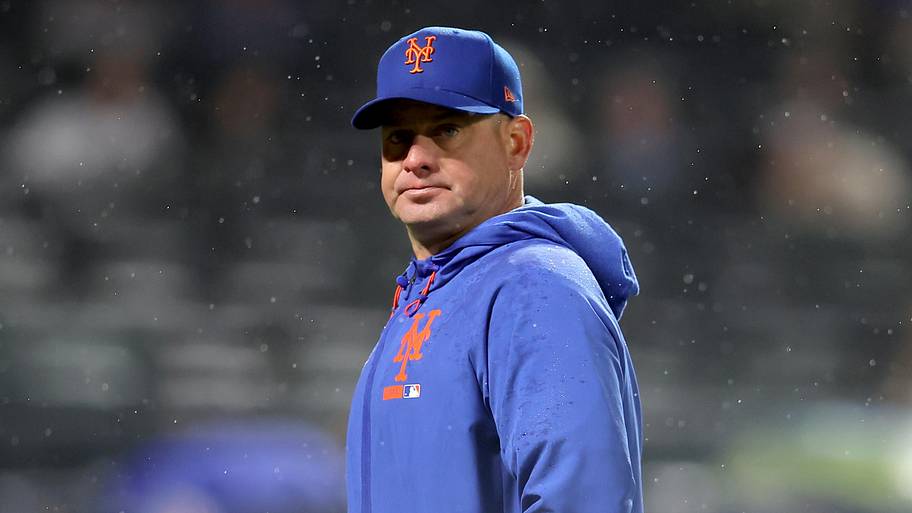
Over the past six games, four of them at home, the Mets went 0–6 while getting outscored 54–22 and committing 11 errors. It was the kind of dispirited, dysfunctional baseball that gets a manager fired, which is what owner Steve Cohen and president of baseball operations David Stearns decided Friday they needed to do to manager Carlos Mendoza.
Mendoza survived a horrible March/April when managers such as Rob Thomson in Philadelphia and Alex Cora in Boston could not. But he could not survive this wretchedness.
All six Mets errors tonight pic.twitter.com/gdPw2hH1OA
— Talkin' Baseball (@TalkinBaseball_) June 25, 2026
How bad was it? It marked only the second time in franchise history the Mets went 0–6 while getting outscored by 32 runs.
The other time? Almost exactly a year ago, also under Mendoza, when they were outscored by 33 runs.
One year and two weeks ago, the Mets, coming off a jubilant, fun-filled run to the NLCS, owned the best record in baseball. Since June 12, 2025, they are 72–102—the worst team in the league other than the Rockies—while spending more money than any franchise that missed the playoffs two straight years.
It has been a colossal, systematic failure, but the way baseball works these days the manager is more disposable than ever. Cohen spent two years trying to get Stearns to run his team, and to pivot away from the chief architect less than three years into the job would require a teardown that looms as too massive, especially midseason. Team presidents set cultures and processes and, more so than ever, hire coaches. Managers are fungible middle managers. The fallout is less messy.
The state of managing is so bad that the most tenured manager in the National League East is Clayton McCullough of the Marlins, who has been on the job for a year and a half. In less than the past 24 months, half the managers in baseball have been fired.
This is not to say Mendoza is blameless. A manager takes responsibility for how his players play. Are they well prepared? (Didn’t look like it.) Do they execute the fundamentals well, such as relays and backing up bases? (No.) Do they win games on the thin margins, when defense, baserunning and situational hitting come to the fore? (No, they were 7–13 in one-run games this year and 30–39 over the past two seasons.)
But in Mendoza’s defense, he was given a bad hand to play. The major faults of the team were outside his control, including having Francisco Lindor and Juan Soto in the same lineup just 12 times and the decision Stearns made over the winter to pivot away from his coaching staff, Pete Alonso and Edwin Diaz in the name of “run prevention.” Stearns grew sick watching his team give games away in the second half last season and vowed to double down on pitching and defense. The plan failed.
Here are just some of the ways in which the Mets failed Mendoza:
- Stearns blew up the coaching staff. Among his hires were bench coach Kai Correa, renowned as a defensive guru, and pitching coach Justin Willard. The results are not there. The Mets are giving up 4.63 runs per game, up from 4.41 last year. The defense has dropped from 21st in Outs Above Average to 23rd.
- Stearns let first-base coach and running game expert Antoan Richardson depart. Unfathomably, the Mets dropped from the most efficient base stealing team in MLB last season (89% success rate) to the worst this season (68%). They rank 24th in overall baserunning.
- The offense is demonstrably worse, dropping from 9th in runs per game to 24th. The team’s batting average (.231) is its worst since 1972, its on-base percentage (.297) the worst since 1967 and its two-strike batting average (.150) the worst in franchise history—yes, worse even than the 1962 Mets, a 120-loss team with the pitchers batting.
- The major league development of the team’s young players is horrendous. Mark Vientos (OPS+ of 79), Brett Baty (68) and Ronnie Mauricio (49) have gone backward. Their trade value has plummeted. Catcher Francisco Alvarez doesn’t hit well enough to carry his poor framing, blocking and game calling. He has just four hits all season to the opposite field, only one for extra bases. Kodai Senga, 33, isn’t young, but he also has regressed, as did the since traded David Peterson, 30.
- Stearns’ trade of Brandon Nimmo for Marcus Semien was ill-advised from the start. Trading Nimmo wasn’t the mistake because of the impending arrival of A.J. Ewing and Carson Benge, similar outfielders. The mistake was counting on a bounce back from Semien at age 35. It’s been more than a decade since any qualified second baseman that old posted an OPS+ of 100 (Ben Zobrist). Stearns made such a bet knowing he must pay Semien at ages 36 and 37, as well.
- Both Stearns and Cohen were too eager to be done with Alonso. For all his inelegance at first base and old-school skills, Alonso still never misses a game, has a knack for driving in runs and getting on base (with a career high walk rate this year with Baltimore) and plays with a goofy joy that can’t be suppressed, all qualities this team needs. Stearns whiffed on thinking Luis Robert Jr. and Jorge Polanco could stay healthy and that Bo Bichette is an infielder.
- The bench has been exposed as inadequate. M.J. Melendez, a .191 hitter over his past 214 games, has been gifted 144 plate appearances. The collection of Melendez, 27, Eric Wagaman, 28, Vidal Brujan, 28, Jared Young, 30, Zack Short, 31, Austin Slater, 32, Andy Ibanez, 33, and Tommy Pham, 38, have returned a .194 batting average. The Mets’ bench has the eighth most plate appearances and fifth worst batting average (.192). They have no big success stories when it comes to major league finds.
On the positive side, Ewing and Benge are high-energy players with some upside, if the Mets can fix their organizational problem of how to continue to develop players once they reach the majors. Nolan McLean is a wizard at spinning the baseball. Luke Weaver and Devin Willliams have improved from down seasons last year.
In past generations of baseball, you would say Stearns is on the clock now that he jettisoned a coaching staff one year and the manager the next. That’s not how the game works anymore. Presidents of baseball operations have much more power than managers. An owner admits defeat and commits to an organizational overhaul if he tosses his top decision maker. So, Stearns will get this trade deadline to see if he can squeeze trade value out of Freddy Peralta, who is having his worst season as soon as he put on a Mets uniform, and the next winter to try to pivot from his pivot.
Interim manager Andy Green is a smart baseball man with a high regard for fundamentals, so he is a fine stopgap. After that, Stearns will see if he can convince Cora to return to the grind of managing after the Red Sox created the equivalent of a welcomed “gap year” for him. Despite Mendoza getting canned, it’s still an attractive job with great resources. It would be fascinating to hear how Stearns explains to Cora or any potential manager the path forward for the Mets. Because right now, with the way the Mets have been exposed, that path is not apparent.