Closing summary
That’s it from the US politics live blog for today, thank you for tuning in. We’re closing earlier than usual at the moment to focus our resources on the Guardian’s round-the-clock global live blog on the crisis in Ukraine. Please click here to follow all the news developments in Russia’s war, condemned by Joe Biden as “premeditated and unprovoked”.
Here are the main news events from today in US politics.
- International nuclear talks with Iran could produce a deal soon, despite tricky hurdles remaining, the US has indicated.
- Joe Biden promised the “strongest unified economic impact campaign on Vladimir Putin in all history” in announcing new sanctions on Russian oligarchs.
- The White House announced new sanctions on a host of Russian elites and what it called ‘cronies’ close to Russian president Vladimir Putin.
- The US is firmly resisting Ukraine’s appeals for it to impose a no-fly zone for Russian military aircraft over Ukraine, saying that would likely bring the US minto direct military conflict with Russia, which the US is steadfastly avoiding.
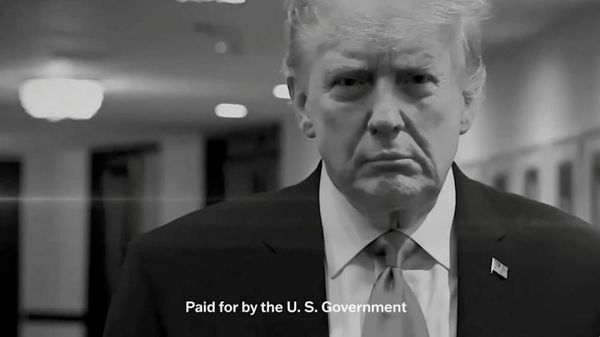
- Donald Trump may have committed federal crimes, including criminal conspiracy, in his various attempts to overturn his defeat by Joe Biden in the 2020 election, including inciting the insurrection at the US Congress on January 6, 2021, the bipartisan House committee investigating the deadly Capitol attack said in a court filing.
Updated
Given the situation in Ukraine, the US politics live blog is closing down earlier than usual at the moment, to provide more resources to our round-the-clock, round-the-world Ukraine crisis live blog covering developments in the war perpetrated by Russia.
So we won’t have live coverage of Joe Biden signing a new law that will provide greater justice for victims of sexual assault and sexual harassment.
The Washington Post has the goods on this, however. Here are the details.
President Biden is poised to sign into law Thursday a bill that ends forced arbitration in workplace sexual assault and harassment cases, allowing survivors to file lawsuits in court against perpetrators.
The new law would nullify agreements between employees and their employers in which the employees waive their rights to sue in the case of sexual assault or harassment and instead are required to settle their disputes by arbitration.
A bill-signing ceremony is scheduled for 5 p.m. Thursday at the White House.
“President Biden has long spoken against forced-arbitration clauses in employment contracts, and today marks an important milestone in empowering survivors of sexual assault and sexual harassment and protecting employee rights,” White House press secretary Jen Psaki said Thursday afternoon.
Critics of forced arbitration say that the practice has served only to further cultures of abuse in workplaces and that the new law would be critical for holding perpetrators of sexual misconduct accountable. About 60 million Americans are subject to arbitration clauses, and many of them do not know it because the provisions are buried in the fine print of their employment contracts.
“We can’t ignore a basic reality of these clauses: They deprive victims of sexual harassment and assault of their basic rights by mandating that they seek remedy only behind the closed doors of private arbitration, with no other alternative,” Senate Majority Leader Charles E. Schumer (D-N.Y.) said on the Senate floor Thursday morning.
The Ending Forced Arbitration of Sexual Assault and Sexual Harassment Act, which was first introduced in 2017 by Sens. Kirsten Gillibrand (D-N.Y.) and Lindsey O. Graham (R-S.C.), was a rare product of bipartisan congressional support. The #MeToo movement helped spur momentum for the bill after more victims spoke out about how they could not sue perpetrators because they had unwittingly signed such clauses.
Last month, the House passed the bill, 335-97; the Senate passed it on a voice vote. Gillibrand touted it then as “one of the most significant workplace reforms in American history,” while Graham defended the bill against some Republican criticism that it would be bad for businesses.
“It does not hurt business to make sure that people who are harassed in the workplace get treated fairly,” Graham said then.
Former Fox News host Gretchen Carlson, who was a key proponent of the bill, said in advocating for it that she had been shocked to learn that her employment contract included a forced arbitration clause. Her lawyers initially said the clause meant she could not sue then-Fox News CEO Roger Ailes, whom she accused of sexual harassment.
The full report is here.