Summary so far
We are pausing our live coverage. Here is where things stand at midnight in the Canadian province of Saskatchewan:
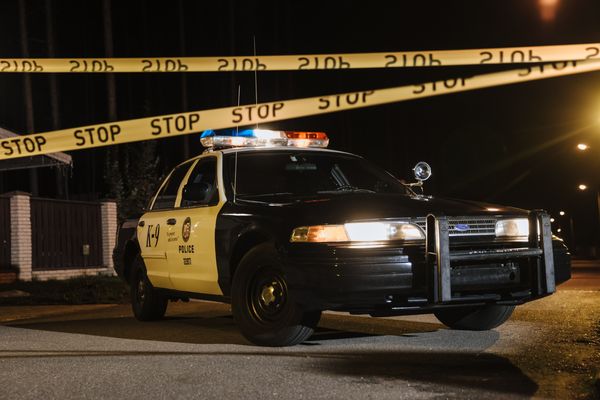
Ten people were killed and at least 15 wounded in a spate of stabbings in 13 locations across an Indigenous community and a nearby village in the Canadian province of Saskatchewan on Sunday.
Police first began receiving reports of stabbings around 5.40am on Sunday in the James Smith Cree Nation community. Reports of additional attacks quickly followed in the nearby village of Weldon, north-east of Saskatoon. Both communities are sparsely populated with 3,400 and 200 people respectively.
At least 15 people were taken to hospital although “there may be additional injured victims who transported themselves to various hospitals”, Rhonda Blackmore, commanding officer of the Saskatchewan Royal Canadian Mounted police, said. Mark Oddan, a spokesperson with Stars air ambulance, said two helicopters were sent from Saskatoon, and another from Regina.
Some of the victims appear to have been targeted but others appear to have been attacked at random, Blackmore said. She did not provide a motive.
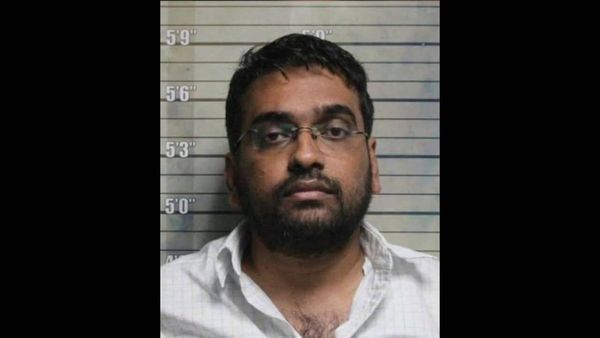
Police identified the suspects as Damien Sanderson, 31, and Myles Sanderson, 30 and asked them to turn themselves in. Both are said to have black hair and brown eyes, though the relationship between them is unclear. The pair were last sighted driving a black Nissan Rogue with licence plate 119 MPI in Saskatchewan’s capital of Regina, about 200 miles (320km) south of the attacks in the James Smith Cree Nation and the village of Weldon.
Canada’s prime minister, Justin Trudeau, described the attacks as “horrific and heartbreaking” in a statement of support to the families of those killed. “The attacks in Saskatchewan today are horrific and heartbreaking,” he said in a tweet. Trudeau later vowed that those responsible for today’s “abhorrent attacks” must be “fully brought to justice”. Trudeau said the government of Canada has been “in direct communication” with the James Smith Cree Nation community leadership and is “ready to assist in any way we can”.
The Federation of Sovereign Indigenous Nations (FSIN), which represents First Nations groups in Saskatchewan, released a statement offering its “deepest condolences” and “solidarity” after the attacks. “Our hearts break for all those impacted. This is the destruction we face when harmful illegal drugs invade our communities,” chief Bobby Cameron of the FSIN said in the statement.
Chakastaypasin chief, Calvin Sanderson, one of the elected leaders of the three communities that make up the James Smith Cree Nation, spoke of the impact the attacks have had on the close-knit community. “Everyone’s been affected … They were our relatives, friends. Mostly we’re all related here, so it’s pretty hard … It’s pretty horrific,” he told the Associated Press.
Three victims have been identified, according to friends and family members who spoke with local media. Wes Petterson, a 77-year-old widower who frequently helped out his neighbours, was reportedly killed. “He didn’t do anything. He didn’t deserve this. He was a good, kind hearted man,” Weldon resident Ruby Works told the Associated Press. Lana Head, a mother of two, and her partner were also reportedly killed. Head’s former partner Michael Brett Burns told APTN News that Head and her current male partner died of their wounds.
Updated
The spate of stabbings across Saskatchewan on Sunday is among the deadliest mass killings in Canadian history.
In 2020, a man disguised as a police officer shot people in their homes and set fires across the province of Nova Scotia, killing 22 people. The attack became the deadliest gun rampage in Canadian history. In 2019, a man used a van to kill 10 pedestrians in Toronto.
Attacks of such a nature are less common in Canada than in the United States and deadly mass stabbings are more rare than mass shootings.